

How Many Weeks Pregnant Are You After Embryo Transfer? A Proven Complete Guide

By Emily Johnson, Content Writer & Fertility Advocate · Medically reviewed by Dr. Sarah Ahmed, Medical Content Advisor
/table of contents
Wondering how many weeks pregnant after embryo transfer you are? The direct answer: on the day of a day-5 blastocyst transfer, you are already 2 weeks and 5 days pregnant. By the time you take your first pregnancy test, about 10 days after transfer, you are roughly 4 weeks and 1 day pregnant. This surprises almost everyone, because the calendar days since transfer are far shorter than your official pregnancy count. IVF pregnancies are dated from a calculated “last menstrual period,” not from the transfer itself.
In this guide, we explain exactly how many weeks pregnant you are after embryo transfer at every stage — day-3, day-5, and day-6 transfers — why doctors date IVF pregnancies this way, and when an early ultrasound confirms your dates. For the quick date math behind your estimated due date, our 5-day transfer due date guide walks through the calculation with a worked example.
Enter your transfer date and embryo age. Gestational age = embryo age + 14 days on transfer day, plus each day since.
Estimates only. Your clinic confirms the official gestational age at your first ultrasound. All calculations happen in your browser — nothing is stored or sent anywhere.
How Many Weeks Pregnant After Embryo Transfer: The Direct Answer
How many weeks pregnant after embryo transfer you are depends on one variable: the embryo’s age on transfer day. Doctors convert the transfer date into gestational age with a simple rule — the embryo’s age plus 14 days. A day-5 embryo is developmentally “ahead” of a day-3 embryo, so it counts as further along.
- Day-5 transfer: 2 weeks and 5 days pregnant on transfer day.
- Day-3 transfer: 2 weeks and 3 days pregnant on transfer day.
- Day-6 transfer: 2 weeks and 6 days pregnant on transfer day.
Each passing day then adds one day to your count. Ten days after a day-5 transfer, you are 4 weeks and 1 day pregnant; fourteen days after, you are 4 weeks and 5 days. That is why the standard beta hCG blood test, drawn 9–14 days after transfer, effectively tests you at “week 4” — the same week a naturally conceiving person would miss their period.
Why IVF Pregnancies Are Dated Differently
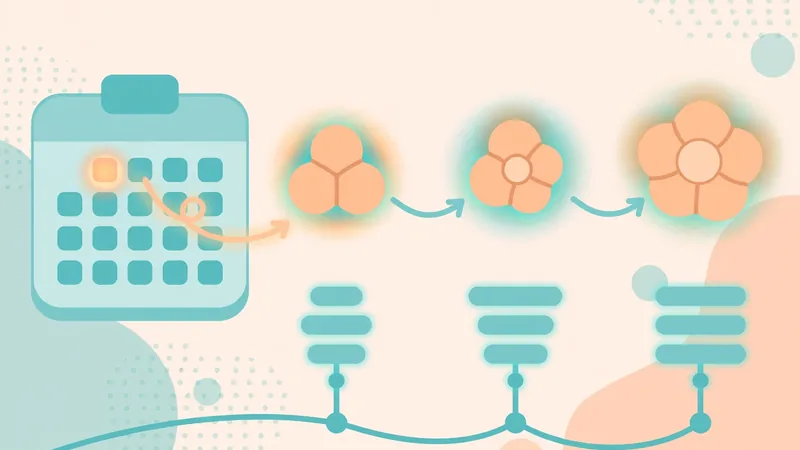
In a natural conception, doctors date pregnancy from the first day of the last menstrual period (LMP), even though conception happens about two weeks later. The convention exists because ovulation is hard to pinpoint, so the LMP is the most reliable fixed reference. That is why someone is “4 weeks pregnant” at a missed period, even though the embryo is only about 2 weeks old.
IVF removes that uncertainty — we know the exact transfer date and embryo age — yet clinics keep the same gestational-age convention so every prenatal milestone lines up with standard obstetric care. Instead of starting the count at transfer, your clinic calculates a “theoretical LMP”: transfer date minus (14 days + embryo age). For a day-5 transfer on October 1, the theoretical LMP would be September 12, and the due date would land 261 days after transfer. This convention is the entire reason the question of how many weeks pregnant after embryo transfer you “really” are causes so much confusion.
Week-by-Week Timeline After a Day-5 Transfer
Here is what happens at each stage, counted in gestational weeks — the schedule your clinic follows once a transfer is successful.
Weeks 2–3: The Two-Week Wait
Between days 6 and 12 after a day-5 transfer, the blastocyst implants and begins producing hCG. Some people notice light spotting or mild cramping; most feel nothing. Progesterone medications can mimic early pregnancy symptoms, so symptoms during this window are not reliable.
Week 4: The Positive Test
A blood test (beta hCG) around 9–14 days after transfer confirms pregnancy. You are now 4 weeks pregnant — the same week a natural conception would show a missed period. In a healthy early pregnancy, hCG roughly doubles every 48–72 hours.
Weeks 5–6: First Ultrasound
About 2–3 weeks after transfer, the first ultrasound checks for the gestational sac and yolk sac, and a heartbeat is often visible by the end of week 6. This scan also confirms whether one or two embryos implanted. If you are expecting twins, our twins due date guide explains dating for multiples.
Weeks 7–12: Graduating to Obstetric Care
By week 8, the embryo is called a fetus, and most people “graduate” from the fertility clinic to a regular obstetrician around weeks 8–10. First-trimester screening happens at weeks 11–13. For a deeper look at the dating math behind these milestones, see our embryo transfer due date calculator guide.

Day-3 vs Day-5 vs Day-6 Transfer Dating Compared
A quick comparison of how many weeks pregnant after embryo transfer you are at key moments:
| Transfer type | On transfer day | At beta test (day 10) |
|---|---|---|
| Day-3 embryo | 2 weeks 3 days | 3 weeks 6 days |
| Day-5 blastocyst | 2 weeks 5 days | 4 weeks 1 day |
| Day-6 blastocyst | 2 weeks 6 days | 4 weeks 2 days |
Day-5 transfers are the most common in the United States because blastocysts implant at higher rates, which is why most IVF week counts you see online assume a day-5 transfer. If your clinic transferred a day-3 embryo, simply subtract 2 days from any day-5-based count.
Fresh vs Frozen Transfer: Any Difference in Dating?
No. Whether the transfer was fresh or frozen, the calculation is identical: transfer date, embryo age, plus 14 days. An embryo’s time spent frozen does not age it — a day-5 blastocyst frozen for three years is still a day-5 embryo on transfer day. Our frozen embryo transfer due date page covers FET-specific dating in detail. The answer to how many weeks pregnant after embryo transfer you are is the same for fresh and frozen transfers.
When an Ultrasound Refines Your Dates
IVF dates are already among the most accurate in obstetrics, but the first-trimester ultrasound (usually at 6–8 weeks) still measures the embryo’s crown-rump length to confirm them. If the measurement differs from the transfer-based date by more than 5–7 days, your doctor may adjust the estimated due date — though with IVF, significant adjustments are uncommon. Either way, the official answer to how many weeks pregnant after embryo transfer you are stays anchored to your transfer date and embryo age, not to the calendar days since the procedure. From that point on, your pregnancy follows the standard prenatal schedule. The American College of Obstetricians and Gynecologists (ACOG) recommends the same screening schedule for IVF pregnancies once dates are confirmed, and the American Society for Reproductive Medicine (ASRM) notes that IVF dating precision is one of assisted reproduction’s clear advantages.
Frequently Asked Questions
How many weeks pregnant after embryo transfer am I on transfer day?
You are 2 weeks and 5 days pregnant for a day-5 transfer, 2 weeks and 3 days for a day-3 transfer, and 2 weeks and 6 days for a day-6 transfer. Doctors add 14 days plus the embryo’s age to convert the transfer date into gestational age.
How many weeks pregnant am I 10 days after a day-5 embryo transfer?
About 4 weeks and 1 day. Add the 10 days to the 2 weeks and 5 days already counted on transfer day. This is why the standard beta hCG test lands in week 4, the same week a natural conception would show a missed period.
Why am I counted as pregnant before the embryo even implants?
Obstetric dating starts from a calculated last menstrual period, not from conception or implantation. IVF uses a theoretical LMP (transfer date minus 14 days plus embryo age) so your milestones align with standard prenatal care schedules.
Does a frozen embryo transfer change how weeks are counted?
No. Frozen embryos do not age while cryopreserved, so a day-5 frozen blastocyst is dated exactly like a day-5 fresh blastocyst.
Can my due date change after the first ultrasound?
It is possible but uncommon with IVF. If the first-trimester ultrasound differs from your transfer-based date by more than about 5–7 days, your doctor may adjust the estimated due date. IVF dates are usually so precise that adjustments are rare.
Which week count should I tell people I am?
Use the gestational age your clinic gives you — for example, 5 weeks at your first ultrasound. That is the number your obstetrician, your medical records, and every screening schedule will use.
About the Author
Emily Johnson is a Content Writer & Fertility Advocate who has spent years translating complex fertility topics into clear, practical guidance for IVF patients. Meet Emily on our team page.
Medical Review
Dr. Sarah Ahmed, Medical Content Advisor, reviewed this article for clinical accuracy. Meet Dr. Ahmed on our team page.
Medical disclaimer: This article is for informational purposes only and is not medical advice. Pregnancy dating is an estimate, and every cycle is different. Always confirm your dates, test results, and any health decisions with your fertility clinic and obstetrician.
