
IVF Due Date vs Ultrasound Due Date: Which One Counts?

Table of Contents
Short answer: your IVF transfer date counts — not the ultrasound. When you conceive through IVF, the exact date of fertilization is known, so your clinic calculates your due date from the embryo’s age on transfer day (transfer date + 263 days for a day-3 embryo, or + 261 days for a day-5 embryo). Your first-trimester ultrasound usually confirms those dates within a day or two; it rarely changes them. Below, we explain how each method works, what the official medical guidance says, why scans sometimes disagree, and what to do when your dates don’t match.
How Your IVF Due Date Is Calculated
IVF dating starts from a known fact: the day your embryo was created and transferred. Because fertilization happens in the lab on a documented date, there is no guessing about ovulation or cycle length — the two unknowns that make natural-conception dating fuzzy.
The formula your clinic uses is simple: add the embryo’s age at transfer to the standard 38-week (266-day) gestation from fertilization. In practice:
- Day-3 embryo transfer: transfer date + 263 days
- Day-5 embryo transfer: transfer date + 261 days
This is the same math our IVF pregnancy calculator uses. For the deeper story of how your transfer date anchors the whole timeline, see how your transfer date sets your timeline.

How Ultrasound Dating Works
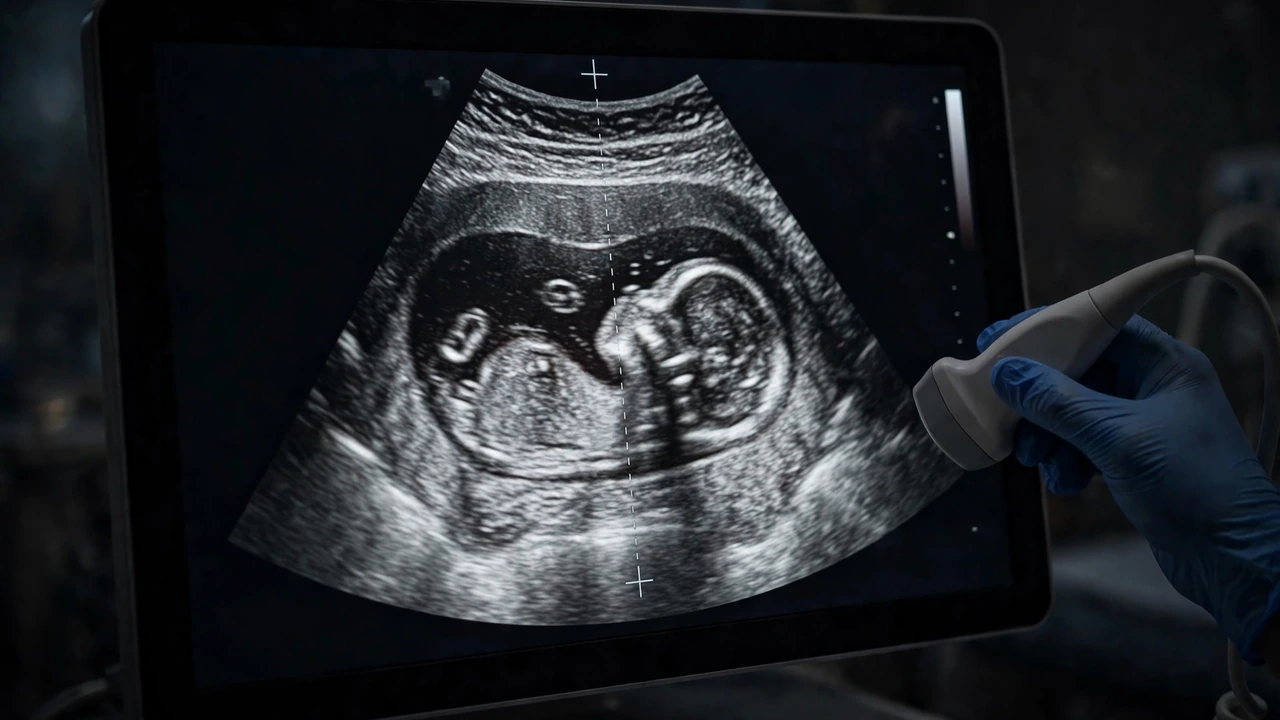
Ultrasound dating measures the baby directly instead of counting from a calendar. In the first trimester, the sonographer measures the crown-rump length (CRL) — the distance from the top of the embryo’s head to its bottom — and converts it to a gestational age using standard growth charts. Because early embryos all grow at nearly the same rate, this measurement is remarkably consistent from one pregnancy to another.
For pregnancies where conception timing is unknown (natural conception with irregular cycles, for example), a first-trimester ultrasound is considered the most accurate way to establish gestational age. That reputation is well earned — but IVF pregnancies are a special case, because conception timing is already known.
IVF Due Date vs Ultrasound Due Date: Which One Counts?
When both numbers are in front of you, the official answer is clear. The American College of Obstetricians and Gynecologists (ACOG), together with the American Institute of Ultrasound in Medicine and the Society for Maternal–Fetal Medicine, states in Committee Opinion No. 700: Methods for Estimating the Due Date:
If a pregnancy resulted from assisted reproductive technology (ART), the ART-derived gestational age should be used to assign the estimated due date (EDD). For instance, the EDD for a pregnancy that resulted from in vitro fertilization should be assigned using the age of the embryo and the date of transfer.
In other words: your IVF due date counts. The ultrasound does not replace it — it confirms it. This makes clinical sense. IVF dating is built on a documented fertilization event; ultrasound dating is built on a measurement of fetal size, which is an excellent proxy but still a proxy. When the two agree (and they usually do), there is nothing to decide. When they differ by a day or two, that is normal measurement variation, not evidence your due date is wrong.
Why Your Ultrasound Date Can Be Different
A slightly different scan date is common and usually meaningless. Common reasons include:
- Measurement variation. CRL is measured in millimeters, and a one-millimeter difference in caliper placement can shift the estimated age by a day. Different sonographers can get slightly different readings on the same scan.
- Normal growth variation. Embryos don’t all grow at exactly the same pace, even in the first trimester. Research comparing IVF-derived dating with CRL-based dating finds an average difference of about one day (a 2024 study reported a mean difference of 0.9 days) — essentially noise, not error.
- Scan timing. The earlier the scan, the more precise the CRL measurement. A dating scan at 7–8 weeks is more exact than one at 12 weeks, when growth rates start to diverge.
- Day-6 embryos and late implantation. A day-6 blastocyst or a slightly later implantation can nudge the scan estimate by a day without changing your official IVF due date.
For how precise these calculations are overall, read our guide on how accurate IVF due date calculators are.
When an Ultrasound Does Change Your IVF Due Date
It happens — but it is rare, and it is a clinical decision, not an automatic one. ACOG reserves changes to an established EDD for “rare circumstances,” discussed with the patient and documented clearly in the medical record. In practice, your clinic would only revise an IVF-derived due date if the first-trimester ultrasound disagrees by a large margin (roughly a week or more), suggesting something genuinely unexpected — for example, that implantation timing was very different from assumed.
What never happens: your clinic will not keep moving your due date at every scan. Once the EDD is established and discussed, it stays fixed for planning purposes. Later ultrasounds are used to track growth, not to re-date the pregnancy.
What to Do When Your Dates Disagree
If you leave your scan with a different date than your calculator gave you:
- Don’t panic. A difference of 1–3 days is expected and changes nothing about your care.
- Keep your transfer-date due date as your reference for milestones, announcements, and planning — it is the date your clinic will use.
- Ask your clinic directly. If the gap is 5 days or more, ask your doctor whether they are keeping the IVF-derived date or adjusting it, and have them note it in your record.
- Know which date is “official.” ACOG recommends recording the best obstetric estimate (for IVF, the transfer-derived EDD) on the birth certificate — not the LMP or a later scan.
For what that first scan actually involves, see our guide to the first ultrasound after IVF.
Twins and Other Special Cases
The dating rules don’t change for twins — the same transfer-date formula applies to each embryo. What changes is the management: twin pregnancies are monitored much more closely with ultrasound, and delivery is usually planned between 37 and 38 weeks rather than waiting for 40. The ultrasound’s role shifts from dating to watching growth, which matters more when two babies share the womb. (More on twin timelines in our IVF twins due date guide.)
Donor-egg and frozen-embryo cycles follow the same logic: the embryo’s age at transfer and the transfer date are the anchors, and the ultrasound confirms. The freezer doesn’t add time — our fresh vs frozen transfer guide explains why.
Which is more accurate: the IVF due date or the ultrasound due date?
For an IVF pregnancy, both are highly accurate — and they almost always agree within a day or two. ACOG’s position is that the ART-derived date (from embryo age and transfer date) should be used to assign the EDD, because it is based on a known fertilization event. Ultrasound is the most accurate dating method only when conception timing is unknown.
Can my due date change after an ultrasound?
Rarely. Once your clinic establishes the EDD from your transfer date, changes are reserved for rare circumstances — typically a large first-trimester discrepancy of about a week or more — and are discussed with you and documented in your record. Routine scans do not move your due date.
Why is my ultrasound due date different from my IVF calculator due date?
Small differences (1–3 days) come from normal measurement variation and the natural range of early embryo growth. Studies comparing the two methods find an average difference of roughly one day. It does not mean either date is wrong.
Do I still need a dating ultrasound after IVF?
Yes — but not to set your due date. Early ultrasounds after IVF check viability (gestational sac, yolk sac, fetal pole, heartbeat), confirm the number of embryos that implanted, and track early growth. Dating is a bonus, not the purpose.
My ultrasound says I’m measuring behind. Should I worry?
A measurement a few days behind your transfer-derived dates is usually normal variation, especially on a single early scan. Your clinic will typically repeat the scan rather than change your due date. A consistently large gap across scans is what prompts a conversation with your doctor.
Which due date goes on my baby’s birth certificate?
ACOG recommends recording the best obstetric estimate — for an IVF pregnancy, the transfer-derived EDD — on the birth certificate, rather than basing it on the last menstrual period or a later ultrasound alone.
About the Author
Emily Johnson is a Content Writer & Fertility Advocate who covers IVF and fertility treatment topics. Meet the team.
Medical Review
This article was medically reviewed by Dr. Sarah Ahmed, Medical Content Advisor, for clinical accuracy. Meet the team.
Medical Disclaimer
This article is for informational purposes only and is not medical advice, diagnosis, or treatment. Due dates are estimates, and every pregnancy is different. Always confirm your due date and any testing or treatment decisions with your clinic or healthcare provider.
