
How Long Does IVF Take? From First Consult to Pregnancy Test

By Emily Johnson, Content Writer & Fertility Advocate · Medically reviewed by Dr. Sarah Ahmed, Medical Content Advisor
Table of Contents
The Short Answer: How Long Does IVF Take?
How long does IVF take? From your first consultation to your pregnancy test, most IVF journeys take 2 to 3 months. The active treatment itself — from the first day of stimulation injections to the pregnancy test — is shorter, usually 4 to 6 weeks. The gap between those two numbers is the part nobody warns you about: fertility testing, protocol planning, and pre-cycle preparation, which can add 3 to 7 weeks before a single injection happens.
Here is the shape of a typical fresh cycle, at a glance:
- First consultation and fertility testing: 2–4 weeks
- Pre-cycle preparation (including birth-control priming): 3–7 weeks (often overlaps with testing)
- Ovarian stimulation and monitoring: 8–14 days
- Trigger shot to egg retrieval: about 36 hours
- Fertilization and embryo culture: 3–6 days
- Embryo transfer: 1 day, usually day 5 after retrieval
- Two-week wait to pregnancy test: 10–14 days
If you are doing a frozen embryo transfer (FET) instead of a fresh one, add roughly 4–6 weeks for the separate transfer cycle. If genetic testing (PGT) is part of your plan, add another 2–4 weeks for biopsy results. Your clinic’s protocol — not any article’s average — sets your real dates, but this guide explains every phase so you can read your own calendar with confidence.
IVF Timeline at a Glance
| Phase | Typical duration | What happens |
|---|---|---|
| 1. Consultation & testing | 2–4 weeks | History, exams, bloodwork, ultrasounds, semen analysis |
| 2. Pre-cycle preparation | 3–7 weeks | Birth-control priming, consent, mock transfer, scheduling |
| 3. Ovarian stimulation | 8–14 days | Daily injections, monitoring scans and blood tests |
| 4. Trigger & retrieval | ~36 hours + 1 day | Trigger shot, then a 20–30 minute retrieval under sedation |
| 5. Fertilization & culture | 3–6 days | IVF or ICSI, then embryo growth to day 3 or day 5 |
| 6. Embryo transfer | 1 day | Brief, usually painless procedure, no sedation |
| 7. Two-week wait & test | 10–14 days | Beta hCG blood test, then early ultrasound if positive |
Add it up for a fresh cycle with no delays and you land at roughly 8–12 weeks from the first appointment to the test result — which is why clinics quote both numbers: 4–6 weeks of active treatment inside a 2–3 month journey.
Phase 1: First Consultation and Fertility Testing (2–4 Weeks)
Your IVF journey starts with a consultation with a reproductive endocrinologist — a fertility specialist. This is a thorough clinical conversation, not a quick intake: your medical and reproductive history, previous fertility treatments, menstrual patterns, and any known diagnosis, plus your goals and what matters to you about the process.
Testing then fills in the picture your doctor needs to design your protocol. For the female partner this typically includes:
- Ovarian reserve tests: anti-Müllerian hormone (AMH) blood test and an antral follicle count (AFC) ultrasound, which together estimate how many eggs remain and how your ovaries are likely to respond to stimulation.
- Hormone panel: day-3 FSH and estradiol, thyroid-stimulating hormone (TSH), and prolactin.
- Uterine evaluation: a saline infusion sonohysterogram (SIS) or hysteroscopy to check the uterine cavity for polyps, fibroids, or structural problems.
- Infectious disease screening and general labs: hepatitis B and C, HIV, syphilis, blood count, and cervical screening if not current.
For the male partner (or a known sperm donor), testing usually means a semen analysis — count, motility, and morphology — plus infectious disease screening, and sperm DNA fragmentation testing if indicated. How long this phase takes depends mostly on scheduling: results can come back in days, but getting every appointment booked, especially imaging that must fall on a particular cycle day, is what stretches it to 2–4 weeks. If testing finds something that needs treatment first — a thyroid problem, a uterine polyp, a vitamin deficiency — that adds time, but it is time that protects the cycle. The American College of Obstetricians and Gynecologists (ACOG) explains when infertility evaluation is recommended and what it involves in its patient FAQ on treating infertility.
Phase 2: Pre-Cycle Preparation (3–7 Weeks)
This is the phase patients least expect, and the one that most often explains why “4–6 weeks” turns into months. Once testing is complete, your clinic builds your personalized protocol, and several steps have to happen before stimulation can start:
- Birth-control (OCP) priming: taking oral contraceptive pills for days to weeks before stimulation. It sounds backwards, but priming synchronizes your follicles so they grow together, gives the clinic precise control over your cycle start date, and prevents one dominant follicle from running ahead of the rest.
- Consent and program start appointment: reviewing and signing IVF consent documents, and often a trial (mock) transfer — a practice run of the transfer procedure that maps your cervical canal so transfer day goes smoothly.
- Medication ordering and teaching: fertility medications are specialty drugs that may need prior authorization from insurance and days to ship; most clinics also run an injection-teaching session before day one.
- Lab and schedule alignment: your cycle must line up with the clinic’s laboratory calendar, which is why start dates sometimes shift by a week or two.
Patients on a long Lupron (GnRH agonist) protocol start daily Lupron injections around day 21 of the preceding cycle, roughly 10 days before stimulation begins, to suppress premature ovulation. Patients on an antagonist protocol skip that step — the antagonist drug is added only once stimulation is underway. Which protocol you follow changes the length of this phase, not the quality of the outcome. Our IVF treatment calendar guide walks through the stimulation-to-transfer stretch day by day.
Phase 3: Ovarian Stimulation and Monitoring (8–14 Days)
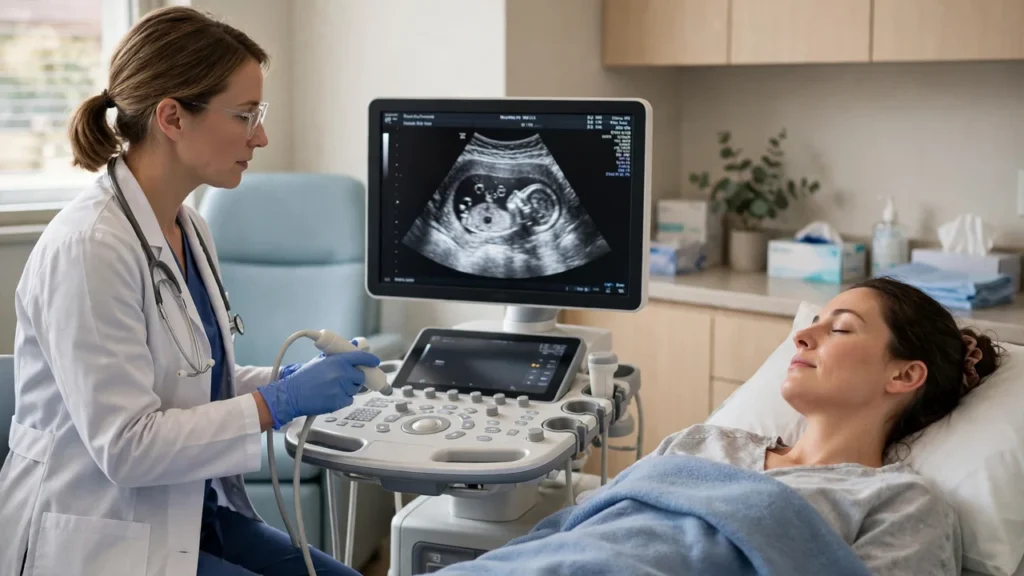
Stimulation begins on day 2 or 3 of your cycle (day 1 is the first day of full menstrual flow). You give yourself daily gonadotropin injections — follicle-stimulating hormone (FSH) medications — designed to grow multiple follicles at once instead of the single dominant follicle of a natural cycle.
Monitoring appointments run every few days and tighten as follicles mature: a typical pattern is a baseline scan and blood draw on day 1, a blood draw on day 3, a scan and blood draw on day 5, another on day 7, then daily checks in the final days until your lead follicles reach about 18–20 mm. Each visit measures follicle size and counts, checks estradiol and sometimes LH and progesterone, and lets your doctor adjust your dose in real time. A slow response may extend stimulation by a few days; a brisk response may shorten it — or, if over-response threatens ovarian hyperstimulation syndrome (OHSS), your doctor may coast you (pause medication briefly) or convert the cycle to a freeze-all. This phase is the least predictable part of the calendar, which is why clinics rarely promise an exact retrieval date more than a few days ahead.
Phase 4: The Trigger Shot and Egg Retrieval (About 36 Hours + 1 Day)
When several follicles reach target size, you take the trigger shot — usually human chorionic gonadotropin (hCG), sometimes a GnRH agonist, sometimes both. The trigger finishes egg maturation and sets the clock: retrieval is scheduled almost exactly 36 hours later, and the timing matters — too early and eggs are immature, too late and ovulation may already have happened.
Egg retrieval is a brief outpatient procedure, typically 20–30 minutes under IV sedation. A transvaginal ultrasound probe guides a thin needle through the vaginal wall into each follicle, and the fluid containing the eggs is gently suctioned out. You spend another hour or two in recovery, need someone to drive you home, and usually feel well enough for light activity the next day. Your embryology team tells you the egg count the same day. Mild cramping and spotting afterward are normal and usually settle within a day or two.
Phase 5: Fertilization and Embryo Development (3–6 Days)
On retrieval day (day 0), mature eggs are fertilized either by conventional IVF — sperm placed with eggs in a dish — or by ICSI, where a single sperm is injected directly into each mature egg. ICSI is used when sperm parameters are abnormal, when fertilization rates have been a concern, or when eggs or sperm were frozen. The morning after retrieval, the lab checks fertilization: a normally fertilized egg shows two pronuclei.
Embryos are then cultured for 3 to 6 days. Most clinics now prefer culturing to the blastocyst stage (day 5 or 6), because blastocyst transfer is associated with higher implantation rates than day-3 transfer, and because extended culture helps identify the strongest embryos. Not every fertilized egg reaches blastocyst — attrition at each step is normal, and your clinic updates you daily. If you are doing PGT, embryos are biopsied around day 5 or 6 and frozen while results return, which adds 2–4 weeks before any transfer can happen.
Phase 6: Embryo Transfer (1 Day)
Embryo transfer is a brief, usually painless procedure, similar to a Pap smear, done without sedation. A soft catheter passes through the cervix into the uterus under ultrasound guidance, and the embryo is placed precisely. You rest briefly afterward and go home the same day.
The fresh-versus-frozen decision shapes everything after this point. In a fresh transfer, the embryo goes in 3–5 days after retrieval, in the same cycle. In a freeze-all cycle, all suitable embryos are vitrified (rapid-frozen) and transferred in a later cycle — recommended when progesterone was elevated near the end of stimulation, when OHSS risk is high, when PGT is being done, or when the uterine lining was not optimal. A frozen transfer cycle takes about 4–6 weeks of its own: estrogen builds the lining over 2–3 weeks, progesterone is added for about 5 days for a day-5 blastocyst, and then transfer happens. Our fresh vs frozen guide explains how the two paths differ, and our frozen embryo transfer due date calculator helps with dates once you know your transfer day.

Phase 7: The Two-Week Wait and the Pregnancy Test (10–14 Days)
After transfer comes the two-week wait: 10–14 days until the beta hCG blood test, which measures the pregnancy hormone in your blood. Clinics use one of two common patterns — a single test 13–14 days after retrieval, or tests on day 9 and day 12 after transfer. A home urine test can detect hCG earlier, but it is unreliable in this window: the trigger shot itself contains hCG and can cause a false positive for up to 10–14 days, while testing too early can give a false negative before implantation has produced enough hormone. Our pregnancy test timing guide and beta hCG levels guide explain both tests in detail.
If the beta is positive, a second test a few days later checks that levels are roughly doubling, and the first ultrasound is usually scheduled at 5–7 weeks of pregnancy — about 3–5 weeks after transfer — to confirm the gestational sac and heartbeat. That scan is when most patients graduate from their fertility clinic to their regular obstetrician. Our first ultrasound guide covers what that appointment looks like. If the beta is negative, your clinic reviews the cycle, and a next cycle — if you have frozen embryos — can often start within a month or two, without repeating stimulation and retrieval.
Fresh vs Frozen: How the Total Timeline Compares
| Path | First consult to pregnancy test | Notes |
|---|---|---|
| Fresh transfer, no delays | ~2–3 months | Transfer 5 days after retrieval; test ~2 weeks later |
| Freeze-all + FET cycle | ~3–5 months | Add 4–6 weeks for the separate transfer cycle |
| With PGT | ~3–4 months (fresh path) | Add 2–4 weeks for biopsy results before transfer |
| Donor eggs | Varies widely | Donor matching and screening often add weeks to months |
The frozen path looks longer on paper, but for many patients it is the faster route to a baby: a second FET after a failed transfer reuses frozen embryos and skips stimulation, retrieval, and fertilization entirely. Time to pregnancy is measured in cycles, not just weeks — and that is the number worth asking your clinic about.
What Can Make IVF Take Longer Than Expected
Most delays are medical, not administrative, and most are protective:
- Slow or uneven follicle response: stimulation extended by days, or a cycle cancelled and restarted with a different protocol.
- OHSS risk: high response may convert a fresh cycle to freeze-all, adding a full FET cycle but protecting your health.
- Elevated progesterone before retrieval: can shift the implantation window, another reason for freeze-all.
- PGT results and re-biopsy: waiting for results, or an inconclusive result needing a second biopsy.
- Uterine findings: a polyp or fibroid found during testing may need a procedure and a recovery cycle first.
- Thin lining in a FET cycle: extra estrogen days, or a cancelled FET cycle restarted the next month.
- Life itself: illness, travel, work, insurance authorization, or simply needing a month off between cycles — all normal, all common.
None of these mean the treatment is failing. A cancelled or converted cycle is your clinic protecting your safety and your odds, not a setback in the sense patients fear. Ask at your consultation which of these risks apply to your diagnosis, so a delay never arrives as a surprise.
How Long Does It Take to Get Pregnant With IVF? (The Honest Version)
One cycle takes 2–3 months from consult to test. But pregnancy is not guaranteed in one cycle: success rates per cycle depend heavily on age and diagnosis, and many patients need more than one transfer. If you are planning around work leave, travel, or a due-date window, plan in cycles, not weeks — and ask your clinic two questions: “How many cycles do patients like me typically need?” and “How long between cycles if the first one doesn’t work?” The answers vary, but they turn an anxious unknown into a plan. Our IVF success rates by age guide (based on CDC data) helps set those expectations honestly, and our IVF pregnancy calculator can work out your weeks and due date once you know your transfer date.
Planning Tips: Making the Timeline Work for You
- Time off: most patients need only retrieval day and transfer day off work, plus monitoring mornings — ask your clinic for its appointment hours before you commit to a start month.
- Book testing early: cycle-day-dependent tests (day-3 labs, AFC ultrasound) are the most common scheduling bottleneck; book them the moment your consultation is scheduled.
- Sort medications before day one: specialty pharmacy shipping and insurance authorization can take a week or more — start that process during testing, not after.
- Keep a simple calendar: one page with your injection start, monitoring days, trigger, retrieval, transfer, and test dates. Clinics adjust dates constantly; a single living calendar beats scattered messages.
- Plan the wait, not just the cycle: the two-week wait is emotionally the hardest stretch. Line up support, distraction, and a firm rule about early home testing before transfer day, not during it. Our two-week wait day-by-day guide helps.
Frequently Asked Questions (FAQs)
How long does IVF take from first consult to pregnancy test?
Most patients take 2–3 months from the first consultation to the pregnancy test. Active treatment — stimulation through testing — is 4–6 weeks; testing and preparation before stimulation add the rest.
How long does one IVF cycle take from stimulation to pregnancy test?
About 4–6 weeks: 8–14 days of stimulation, retrieval about 36 hours after the trigger shot, 3–6 days of embryo culture, transfer, then a pregnancy test 10–14 days after transfer.
Does a frozen embryo transfer take longer than a fresh transfer?
Yes — a separate FET cycle adds roughly 4–6 weeks after retrieval and freezing, because the lining must be prepared in a new cycle. But later FETs are much faster, since they skip stimulation and retrieval entirely.
How much longer does IVF take with PGT genetic testing?
Add about 2–4 weeks for embryo biopsy results. Because embryos are frozen while results return, PGT cycles are almost always followed by a frozen transfer rather than a fresh one.
Can IVF be done faster than 2–3 months?
Sometimes — if testing is already complete and no priming is needed, a clinic can occasionally move from consultation to stimulation within a few weeks. But rushing testing or preparation to save time can hurt your odds, and most clinics will not skip steps that protect the cycle.
How long do I have to wait between IVF cycles?
After a failed fresh cycle, most clinics advise waiting one full menstrual cycle before starting again. After a failed FET using frozen embryos, the next transfer can often happen within a month or two, since no new retrieval is needed.
How long does the IVF pregnancy test take to confirm a pregnancy?
The beta hCG blood test 10–14 days after transfer confirms pregnancy, but a second test a few days later (to confirm doubling) and an ultrasound at 5–7 weeks of pregnancy are needed before the pregnancy is considered clinically confirmed.
Why do clinics give different timelines for the same treatment?
Because protocols differ (antagonist vs long Lupron, fresh vs freeze-all, PGT or not), and because your response — follicle growth, lining thickness, lab results — reshapes the calendar in real time. Two patients starting the same week can easily finish weeks apart.
About the Author
Emily Johnson is a Content Writer & Fertility Advocate who covers IVF and fertility treatment topics. Meet the team.
Medical Review
This article was medically reviewed by Dr. Sarah Ahmed, Medical Content Advisor, for clinical accuracy. Meet the team.
Medical Disclaimer
This article is for informational purposes only and is not medical advice, diagnosis, or treatment. Due dates are estimates, and every pregnancy is different. Always confirm your due date and any testing or treatment decisions with your clinic or healthcare provider.
