
Ovarian Hyperstimulation Syndrome (OHSS): Symptoms, Risk Factors & When to Call Your Clinic

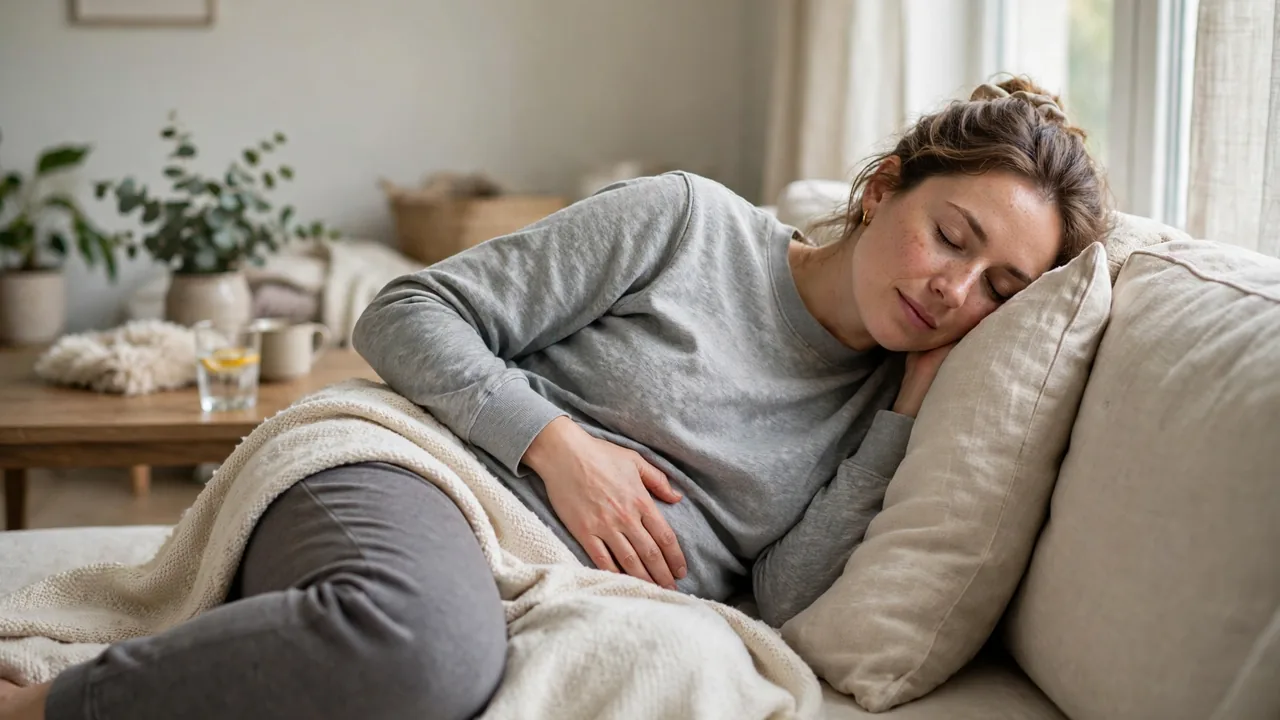
Ovarian hyperstimulation syndrome (OHSS) is an over-response to the hormone injections used to grow eggs during IVF. Your ovaries swell, and fluid leaks from blood vessels into your abdomen — and, in severe cases, around your lungs. Mild OHSS is common and usually settles in about a week. Severe OHSS is uncommon — around 1 in 100 IVF patients develop moderate or severe disease — but it can become dangerous quickly, which is why every IVF clinic watches for it. This guide explains what ovarian hyperstimulation syndrome is, how symptoms differ by severity, who is most at risk, how clinics prevent it (including why a fresh transfer is sometimes cancelled), and exactly which signs mean you should call your clinic the same day.
Table of Contents
What Is Ovarian Hyperstimulation Syndrome?
Ovarian hyperstimulation syndrome happens when stimulated ovaries respond too strongly to fertility medication. Instead of maturing one egg, the ovaries grow many follicles at once. The trigger hormone hCG — given as the “trigger shot” to mature the eggs, and later produced by an early pregnancy — makes the blood vessels around the ovaries leak. Fluid shifts out of the bloodstream into the abdomen, the ovaries enlarge and become painful, and the blood left behind becomes more concentrated. The Mayo Clinic describes OHSS as “an exaggerated response to excess hormones” that causes the ovaries to swell and become painful. A substance called VEGF, released by the stimulated follicles, is thought to drive much of this leakiness. OHSS is not an allergy and not something you caused by anything you ate, drank or did — it is a medication response, and it can happen even when doses were chosen carefully.
How Common Is OHSS?
Mild symptoms — bloating, mild discomfort, nausea — are very common after stimulation. The Royal College of Obstetricians and Gynaecologists (RCOG) notes that mild OHSS affects as many as 33 in 100 women having IVF, while just over 1 in 100 develop moderate or severe OHSS. The American Society for Reproductive Medicine (ASRM) gives a similar picture: about one in three people have mild symptoms during stimulation, and severe disease is uncommon. Modern protocols — especially the GnRH antagonist protocol with a GnRH agonist trigger and freeze-all strategy — have made severe OHSS much rarer than it was in earlier decades, but the risk has not disappeared, particularly in high responders. Our IVF treatment calendar guide shows where stimulation, trigger and retrieval sit in the cycle.
OHSS Symptoms by Severity
OHSS symptoms usually begin within a week of the trigger injection, though Cleveland Clinic notes it can take up to two weeks for symptoms to develop. Symptoms are graded mild, moderate, severe and critical. The table below summarises the pattern clinicians use; your clinic grades your case from your symptoms, examination, ultrasound and blood tests together — not from any single symptom.
| Severity | Typical features |
|---|---|
| Mild | Mild abdominal swelling and discomfort, nausea, ovaries enlarged (usually under 8 cm) |
| Moderate | Worse swelling from fluid in the abdomen (ascites), abdominal pain, nausea with or without vomiting, ovaries usually 8–12 cm |
| Severe | Marked swelling, extreme thirst and dehydration, passing only small amounts of dark urine, difficulty breathing from fluid in the chest, ovaries usually over 12 cm, blood more concentrated (haematocrit over 45%) |
| Critical | Tense ascites or large fluid collection around the lungs, haematocrit over 55%, very low or no urine, blood clots, breathing failure (ARDS) — an emergency |
Mild to Moderate OHSS
With mild to moderate ovarian hyperstimulation syndrome you may notice mild to moderate abdominal pain, bloating or an increased waist size, nausea, vomiting, diarrhoea and tenderness around the ovaries. A slight weight gain — more than about 2 pounds (1 kg) per day — is a useful early clue that fluid is accumulating. Most mild cases improve on their own within about a week, but your clinic will still want to know, because symptoms can worsen before they improve. Our egg retrieval recovery guide explains what normal recovery feels like in the same days, which helps you tell the two apart.
Severe OHSS
Severe OHSS adds rapid weight gain of more than 2.2 pounds (1 kilogram) in 24 hours, severe abdominal pain, severe and persistent nausea and vomiting, a tight or enlarged abdomen, decreased urination and shortness of breath. Blood clots in the legs or lungs are the most feared complication: a swollen, tender calf, chest pain or breathlessness during or after fertility treatment needs urgent assessment the same day. Severe OHSS is uncommon, but it can be life-threatening without treatment — this is the reason clinics give every patient a 24-hour contact number.
Normal Bloating After Egg Retrieval vs OHSS
Some bloating, cramping and tiredness after egg collection are normal and do not mean you have OHSS. The differences that matter are speed, direction and company: normal recovery improves a little each day, while OHSS swelling builds, and it travels with rapid weight gain, falling urine output or breathing symptoms.
| Sign | Normal post-retrieval recovery | More suggestive of OHSS |
|---|---|---|
| Bloating | Mild, peaks in 1–2 days, then eases | Increasing day by day, waist size growing |
| Weight | Stable or up slightly, then settles | Up more than 2 lb (1 kg) in 24 hours, still rising |
| Pain | Mild cramps, easing with paracetamol | Moderate to severe pain, not easing |
| Nausea | Mild, short-lived after sedation | Persistent nausea or vomiting, cannot keep fluids down |
| Urine | Normal amounts, normal colour | Small amounts, dark colour, extreme thirst |
| Breathing | Normal | Breathless, cannot lie flat comfortably |
If your pattern matches the right-hand column, call your clinic rather than waiting to see. Our egg retrieval day guide walks through the procedure day itself.
Early vs Late OHSS: Why Timing Matters
Clinicians split OHSS by timing because the driver differs — and so does what happens next.
| Type | When it appears | Main driver | Typical course |
|---|---|---|---|
| Early OHSS | Within about 9 days of the trigger | The trigger injection (hCG) | Usually settles as the trigger clears, often by your next period if you are not pregnant |
| Late OHSS | About 10 or more days after the trigger | hCG from an early pregnancy | Can worsen and last weeks; more often moderate or severe |
This is why pregnancy changes the picture: if you conceive in the same cycle, your own pregnancy hCG keeps stimulating the ovaries, so OHSS can get worse and last much longer — RCOG advises that symptoms usually resolve in 7–10 days without pregnancy, but can last a few weeks or longer if you become pregnant. It is also the core logic behind the freeze-all strategy described below. Our trigger shot in IVF guide explains what the trigger does and why its type matters.
Who Is at Risk of OHSS?
OHSS can occasionally occur with no risk factors at all, but risk is higher if you:
- Have polycystic ovary syndrome (PCOS) or polycystic ovaries on ultrasound — our getting pregnant with PCOS guide covers PCOS fertility care in detail
- Are under 30–35 years old, or have a low body weight
- Have a high antral follicle count or high AMH level before treatment — see our AMH levels by age guide for what the numbers mean
- Develop a large number of follicles, or high and steeply rising estradiol (estrogen) levels, during stimulation
- Receive high doses of hCG, including hCG used for luteal support
- Have had OHSS in a previous cycle
- Become pregnant in the same cycle, particularly with a multiple pregnancy
ASRM’s 2024 prevention guideline specifically recommends counselling patients with elevated AMH, PCOS and anticipated high egg yields that they are at increased risk, and focusing prevention on this group. If that is you, it does not mean IVF is off the table — it means your protocol should be designed around the risk from the first injection.
How Clinics Prevent OHSS
Prevention happens at three points in the cycle, and the strategies stack rather than compete.
Before Stimulation: Protocol and Dose
ASRM strongly recommends a GnRH antagonist protocol rather than a long agonist protocol when OHSS is a concern, with gonadotropin doses individualised to your ovarian reserve testing. In plain terms: your clinic uses your AMH and follicle count to choose a starting dose that aims for a good number of eggs without tipping into over-response, then adjusts with frequent ultrasound scans and blood tests. Lower starting doses, sometimes combined with oral medications such as letrozole, are another option for high-risk patients.
At the Trigger: Agonist Trigger Instead of hCG
Because hCG drives OHSS, ASRM recommends a GnRH agonist trigger (such as leuprolide) as the first-line strategy to reduce moderate-to-severe OHSS in at-risk patients. An agonist trigger produces a much shorter hormone surge than an hCG injection, so the ovaries are stimulated for less time. The trade-off is that a fresh transfer after an agonist trigger needs extra luteal support, and many clinics pair the agonist trigger with freezing all embryos instead — which is why the two decisions often arrive together.
After the Trigger: Freeze-All and Cabergoline
Freezing every embryo and transferring in a later, unstimulated cycle removes the pregnancy hCG that drives late OHSS. A dopamine agonist medicine called cabergoline, started on the trigger day or soon after, also reduces fluid accumulation and is recommended by ASRM for patients at risk. An older strategy called “coasting” — pausing stimulation and delaying the trigger — is generally not recommended as the main approach when better options exist.
Why Your Fresh Transfer Might Be Cancelled (Freeze-All)
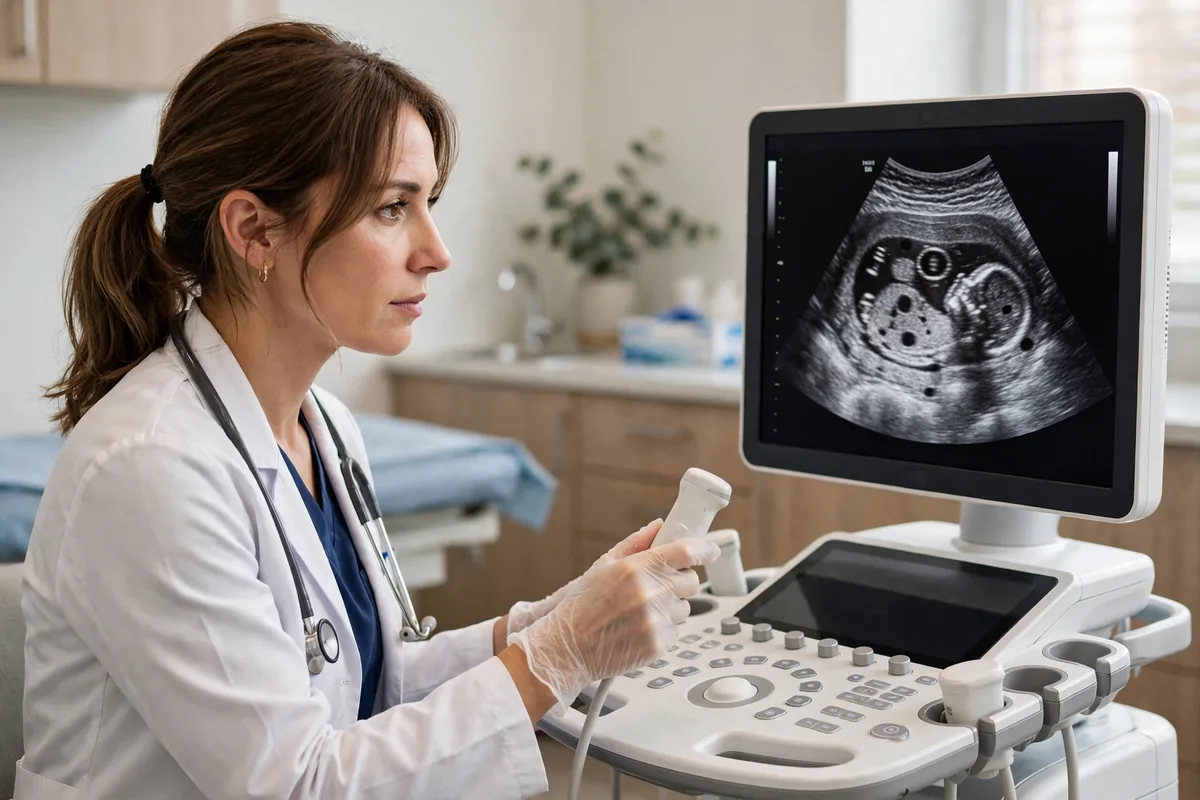
Hearing “we are freezing everything” can feel like a setback, especially after weeks of injections. In OHSS prevention it is a safety decision, not a failure: if your follicle count or estrogen level shows high risk, transferring fresh and becoming pregnant in the same cycle is exactly what can turn moderate OHSS severe and prolonged. Freezing all embryos lets your ovaries settle, and the transfer happens in a later frozen cycle when the risk has passed. Our fresh vs frozen embryo transfer guide and frozen embryo transfer timeline explain how the frozen cycle then works. Ask your clinic to explain which signal triggered the decision in your case — follicle number, estradiol level, symptoms, or a combination — so the plan for next time is clear.
How OHSS Is Assessed
There is no single blood test that diagnoses OHSS. Your clinic combines your symptoms with an examination, an ultrasound to measure ovary size and check for fluid in the abdomen, and blood tests for how concentrated your blood is and how your kidneys are working. You may be asked how much urine you are passing and whether it is darker than normal, and your weight and waist measurement may be tracked to see whether fluid is building up or clearing. Many patients with mild or moderate OHSS are managed as outpatients with regular check-ups; admission is more likely if pain is not controlled, vomiting prevents drinking, symptoms are worsening, or you cannot attend easily for monitoring.
Treating OHSS: Self-Care and Hospital Care
There is no treatment that reverses OHSS instantly — it resolves with time, and treatment supports you and prevents complications while it does.
Mild OHSS at Home
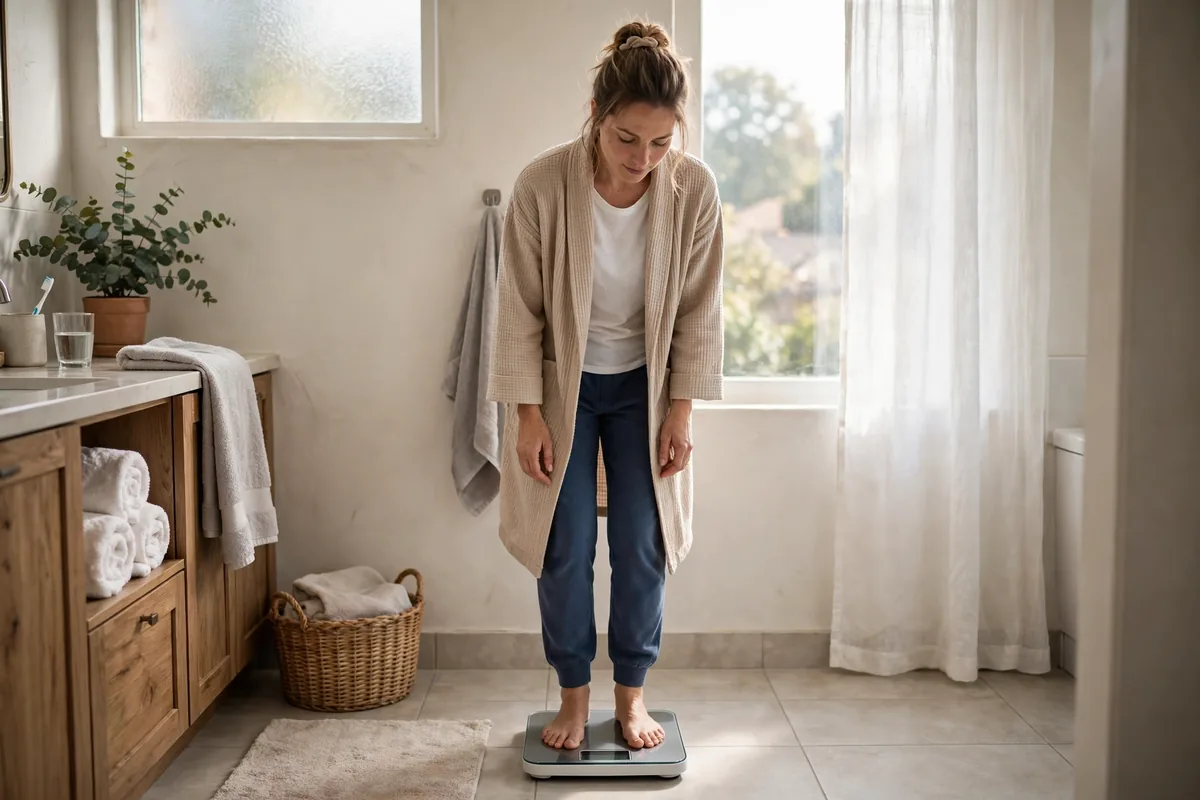
If your clinic confirms mild OHSS and you are being monitored, RCOG advises drinking fluids regularly guided by thirst, using paracetamol (acetaminophen) for pain within the maximum dose, and avoiding anti-inflammatory drugs such as ibuprofen or aspirin, which can affect the kidneys. Staying gently active — rather than strict bed rest — helps reduce clot risk, while avoiding strenuous exercise and intercourse protects enlarged, tender ovaries. Weigh yourself daily at the same time, on the same scale, and report rapid gains. Our egg retrieval recovery guide has a day-by-day recovery pattern to compare against.
Moderate to Severe OHSS
Hospital treatment may include intravenous fluids to correct dehydration, medicines for nausea, support stockings and heparin injections to prevent blood clots, and — if the abdomen is tense with fluid — paracentesis, where a thin needle or tube under ultrasound guidance drains fluid to relieve discomfort and improve breathing and kidney function. Cabergoline may also be used to reduce further fluid accumulation. Severe cases are managed with specialist input, and rarely intensive care. If you are admitted to a hospital other than your fertility clinic, your care should be coordinated with a specialist in OHSS.
Your Daily Self-Monitoring Checklist
Clinics often ask at-risk patients to keep a simple daily record from the trigger day for about two weeks. It takes two minutes and gives your team objective numbers instead of impressions:
- Weight — same time, same scale, no shoes. Call if it rises more than 2 lb (1 kg) in 24 hours.
- Waist or tummy swelling — is it bigger than yesterday? Are clothes suddenly tight?
- Urine — how much, and how dark? Small amounts of dark urine plus extreme thirst is a warning pattern.
- Fluids in — can you drink and keep fluids down? Persistent vomiting means call.
- Pain and nausea — easing, stable, or worse than yesterday?
- Breathing and legs — any breathlessness, chest pain, or a swollen tender calf? These need urgent care, not a diary entry.
Keep your clinic’s 24-hour number with this list. If you cannot reach your clinic and symptoms are severe, seek emergency care and tell them you are in fertility treatment and may have OHSS.
When to Call Your Clinic — and When to Seek Emergency Care
Call your fertility clinic the same day if you develop increasing abdominal swelling or pain, nausea or vomiting that is not settling, rapid weight gain, reduced or dark urine, or extreme thirst after stimulation or egg collection. Seek emergency care immediately for difficulty breathing, chest pain, a swollen or painful leg, severe abdominal pain, fainting, or being unable to keep any fluids down. Do not wait for a routine appointment with these signs, and do not worry about “bothering” the team — early contact is exactly what OHSS monitoring is for. The same caution applies to travel and activity decisions in this window; our flying after embryo transfer guide explains why OHSS symptoms are a reason to delay a flight.
OHSS and Pregnancy: What It Means for You and Your Baby
If OHSS develops and you are pregnant — or become pregnant in that cycle — symptoms can worsen and last weeks, because pregnancy hCG continues to stimulate the ovaries. RCOG advises that there are no known risks to your baby’s development as a result of OHSS itself, but you may be at increased risk of pre-eclampsia or premature birth, and blood-thinning injections and support stockings may be continued until 12 weeks of pregnancy to lower clot risk. This is another reason freeze-all is offered to high-risk patients: it separates the pregnancy from the stimulation entirely. If you had OHSS in a cycle and then had a transfer, our two-week wait after embryo transfer guide covers what the wait involves.
Can OHSS Happen Again? Planning Your Next Cycle
Having had OHSS once increases the risk in future cycles, but it does not mean it will happen again. The information from the affected cycle — your dose, follicle count, estradiol pattern, egg number and which trigger was used — lets your clinic redesign the next protocol: a lower starting dose, an antagonist protocol, an agonist trigger, cabergoline, and a planned freeze-all can be combined from the start rather than added in a hurry. Ask for a review appointment after you have recovered, and ask specifically what will be different next time. It is also reasonable to ask how many eggs were collected, since very high yields (often quoted as more than 15–20 eggs) are one of the signals clinics use to judge risk in future cycles.
Questions to Ask Your Clinic
- Am I in a higher-risk group for OHSS based on my AMH, follicle count or PCOS?
- Which protocol and starting dose are you planning for me, and why?
- What follicle number or estrogen level would make you change the trigger or freeze all embryos?
- Will I have an hCG trigger or a GnRH agonist trigger — and what would change that plan?
- What should I monitor at home, and what exact numbers mean I should call?
- What is the 24-hour number, and where should I go if I cannot reach you?
- If I had OHSS before: what will be different in my next cycle?
Ovarian Hyperstimulation Syndrome Myths
OHSS is not caused by drinking too much or too little water — fluids support you during OHSS, but the driver is the ovarian response to stimulation and hCG. It is not a sign that treatment “worked better”: a high egg number does not guarantee a better outcome, and over-response is a risk to manage, not a bonus. Bed rest does not prevent OHSS, and strict immobility can raise clot risk — gentle activity is usually advised once your clinic confirms your grade. And OHSS does not only happen with IVF injections: it is most often linked to injectable gonadotropins, but it has rarely been reported with oral medications such as clomiphene and very rarely in spontaneous conception. MedlinePlus summarises OHSS as a condition in which the ovaries become swollen and painful after fertility treatment, with severity ranging from mild to life-threatening.
Frequently Asked Questions (FAQs)
What is ovarian hyperstimulation syndrome (OHSS)?
Ovarian hyperstimulation syndrome is an over-response to fertility drugs, usually injectable gonadotropins during IVF. The ovaries enlarge and fluid leaks from blood vessels into the abdomen, causing bloating, pain and nausea. Most cases are mild; severe cases need hospital care.
What are the symptoms of OHSS?
Mild OHSS causes abdominal swelling, discomfort and nausea. Moderate OHSS adds worse swelling from fluid in the abdomen, pain and vomiting. Severe OHSS adds extreme thirst, dehydration, small amounts of dark urine, rapid weight gain and difficulty breathing. Symptoms usually start within a week of the trigger injection.
How long does OHSS last?
Most symptoms resolve in 7–10 days. If you do not become pregnant, OHSS usually improves by your next period. If you become pregnant in the same cycle, symptoms can worsen and last several weeks, because pregnancy hCG keeps stimulating the ovaries.
Who is most at risk of OHSS?
Risk is higher with PCOS or polycystic ovaries, age under 30–35, low body weight, high AMH or antral follicle count, a large number of follicles or high estrogen during stimulation, high-dose hCG, previous OHSS, and pregnancy in the same cycle — especially a multiple pregnancy.
How do clinics prevent OHSS?
With an antagonist protocol and individualised doses, frequent ultrasound and blood monitoring, a GnRH agonist trigger instead of hCG for at-risk patients, cabergoline from the trigger day, and freezing all embryos for a later transfer so pregnancy hCG cannot worsen OHSS.
Why was my fresh embryo transfer cancelled for freeze-all?
Because a fresh pregnancy in a high-risk cycle is what can turn moderate OHSS severe and prolonged. Freezing all embryos lets your ovaries settle and moves the transfer to an unstimulated cycle. It is a safety decision based on your follicle count, estrogen level or symptoms.
When should I call my clinic about OHSS?
Call the same day for increasing swelling or pain, persistent vomiting, weight gain over 2 lb (1 kg) in 24 hours, reduced or dark urine, or extreme thirst. Seek emergency care for difficulty breathing, chest pain, a swollen tender leg, severe pain or fainting.
Can OHSS harm my baby if I am pregnant?
There are no known risks to your baby’s development from OHSS itself, according to RCOG. You may have a higher risk of pre-eclampsia or premature birth, and blood-thinning treatment may continue to 12 weeks. Your clinic and obstetric team should coordinate your care.
The Bottom Line
Ovarian hyperstimulation syndrome is a known, usually mild, occasionally serious response to IVF stimulation drugs. Mild OHSS affects up to about a third of IVF patients and settles in a week or so; moderate or severe disease affects around 1 in 100 and needs prompt specialist care. Know your risk group before stimulation, understand why your clinic may choose an agonist trigger or freeze-all, monitor your weight, urine and swelling daily after the trigger, and call early — especially for rapid weight gain, falling urine output, vomiting, breathlessness or leg pain. Early contact turns a frightening complication into a managed one. For the recovery pattern after collection, see our egg retrieval recovery guide.
By Emily Johnson, Content Writer & Fertility Advocate · Medically reviewed by Dr. Sarah Ahmed, Medical Content Advisor
About the author
About the author: Emily Johnson is a Content Writer & Fertility Advocate who covers IVF and fertility treatment topics. Meet the team
Medical review
Medical review: This article was medically reviewed by Dr. Sarah Ahmed, Medical Content Advisor, for clinical accuracy. Meet the team
Medical disclaimer
Medical disclaimer: This article is for informational purposes only and is not medical advice, diagnosis, or treatment. Due dates are estimates, and every pregnancy is different. Always confirm your due date and any testing or treatment decisions with your clinic or healthcare provider.
