

Fertility Testing: What Tests Are Done, What Results Mean & What Happens Next

By Emily Johnson, Content Writer & Fertility Advocate · Medically reviewed by Dr. Sarah Ahmed, Medical Content Advisor
Fertility testing is not a single test. It is a series of blood tests, scans, and — for the male partner — a semen analysis that together answer one question: why hasn’t pregnancy happened yet? There is no one blood draw or scan that gives you the full picture. Instead, each test checks one piece of the puzzle — whether you are ovulating, how many eggs remain, whether the fallopian tubes are open, whether the womb looks normal, and whether the sperm are healthy. This guide explains what fertility testing involves for women and men, when to get tested, what the results mean, what it costs in the US, and what happens next.
Table of Contents
The Short Answer
Fertility testing is a structured evaluation of both partners, usually recommended after 12 months of trying to conceive without success if you are under 35, after 6 months if you are 35 or older, and straight away if you are 40 or older. For women it typically means hormone blood tests (AMH, FSH, LH, estradiol, progesterone, thyroid, prolactin), a transvaginal ultrasound to count resting follicles (antral follicle count), and an X-ray test called an HSG to check whether the fallopian tubes are open. For men it starts with a semen analysis, plus hormone blood tests if the results are abnormal. Most couples get their full picture within 2 to 6 weeks. Testing does not commit you to treatment — it gives you information, and information is almost always better than guessing.
What Is Fertility Testing?
Fertility testing is any diagnostic investigation designed to find out why pregnancy is not happening — or to check your reproductive health before you start trying. The World Health Organization defines infertility as the failure to achieve a clinical pregnancy after 12 months of regular, unprotected sexual intercourse. Testing is how doctors work out which specific factor is making conception harder, so that treatment can be targeted rather than guesswork.
Think of it less like a pass/fail exam and more like a diagnostic map. Each test fills in one piece of the puzzle, and together they show your doctor where to look next. Sometimes the answer is simple — a thyroid issue, a timing problem, an easily treated hormone imbalance. Sometimes it takes more investigation. But you will not know unless you test.
One point matters above all: both partners need testing. Male factors contribute to roughly a third of infertility cases, female factors to roughly a third, and the remainder involve both partners or remain unexplained, according to the National Institute of Child Health and Human Development (NICHD). Yet many couples still spend months investigating the woman’s side before anyone suggests a semen analysis. That delay costs time you might not have. The American College of Obstetricians and Gynecologists (ACOG) explains the full evaluation in its guide to evaluating infertility, and the American Society for Reproductive Medicine (ASRM) gives a plain-language overview in Infertility: An Overview.
When Should You Get Tested?
The general guideline — from both ACOG and ASRM — is straightforward:
| Your situation | When to get tested |
|---|---|
| Under 35, no known problems | After 12 months of regular, unprotected intercourse without conceiving. |
| 35 or older | After 6 months of trying. |
| 40 or older | Straight away — do not wait. |
| Any age, with a known risk factor | Earlier — see your doctor now. |
Known risk factors that justify earlier testing include irregular or absent periods, a history of endometriosis, previous pelvic surgery or infection, PCOS, a partner with known sperm problems, or a history of miscarriage. If any of these apply, your doctor should refer you sooner — guidelines specifically say earlier referral is appropriate when there is a known clinical cause of infertility or a history of predisposing factors.
There is also a growing case for proactive fertility testing even before you start trying — particularly if you want to understand your ovarian reserve or check that the basics look healthy. A fertility check does not commit you to treatment. It gives you a baseline, and if something is off, it gives you time to act while you still have it.
Fertility Tests for Women
A fertility test for women typically starts with blood work and an ultrasound, then may progress to more specialised imaging depending on the results. Here is what each test measures and why it matters.
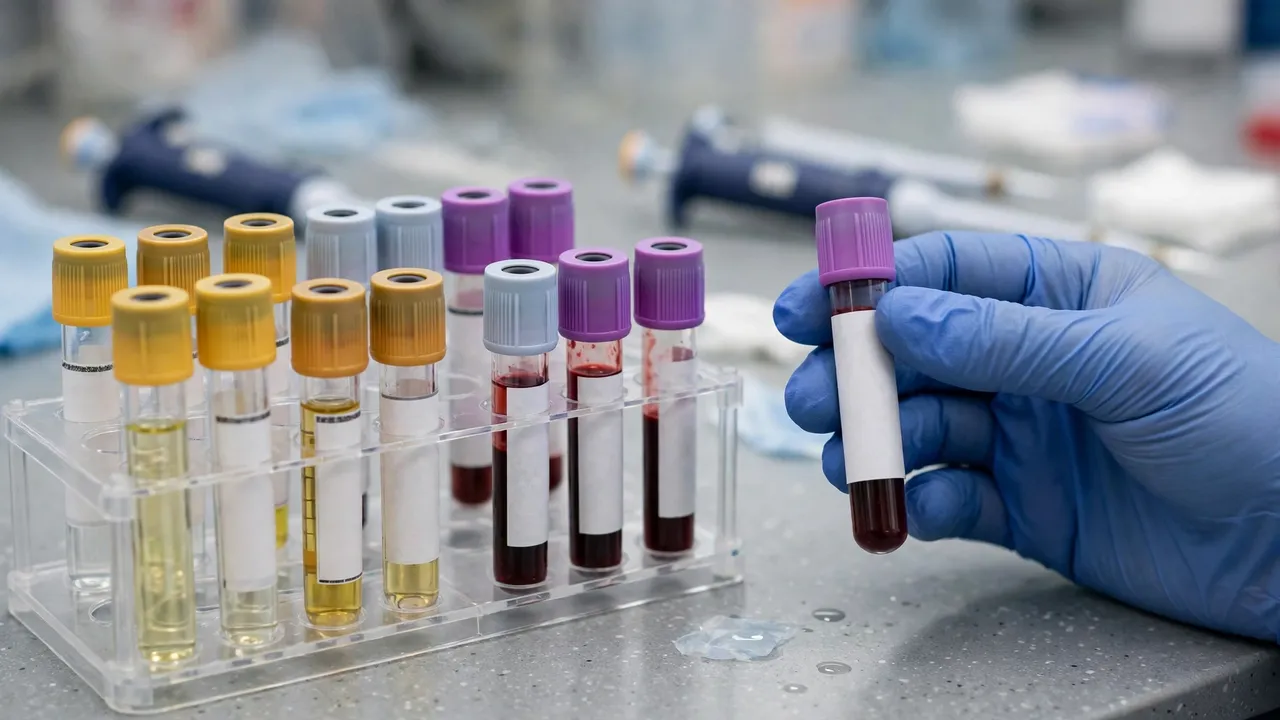
Hormone Blood Tests
Your doctor will usually order a panel of hormone tests timed to specific days of your menstrual cycle. The timing matters — hormone levels fluctuate throughout the month, and testing on the wrong day can give misleading results.
Day 2–5 tests (early follicular phase):
- FSH (follicle-stimulating hormone) — stimulates your ovaries to develop follicles. A high FSH level (above 10 IU/L) can suggest diminished ovarian reserve.
- LH (luteinising hormone) — triggers ovulation. An elevated LH-to-FSH ratio (above 2:1) is a common finding in PCOS.
- Estradiol (E2) — checked alongside FSH because elevated estradiol can artificially suppress FSH, masking a problem.
- AMH (anti-Müllerian hormone) — the one most people have heard of. AMH estimates your ovarian reserve — the number of eggs remaining. Unlike FSH, it can be tested on any day of your cycle. Our guide to AMH levels by age explains what the numbers mean at each age, and how to increase AMH levels covers what the evidence actually supports.
Mid-luteal test (about 7 days before your expected period):
- Progesterone — confirms whether ovulation occurred. A level above 10 ng/mL (about 30 nmol/L) generally indicates ovulation happened. If your cycles are not 28 days, the timing adjusts — the test should happen 7 days before your expected period, not rigidly on “day 21.”
Additional tests your doctor may order:
- Thyroid function (TSH) — both hypothyroidism and hyperthyroidism can disrupt ovulation. Subclinical thyroid issues are more common than you would think in women of reproductive age.
- Prolactin — elevated prolactin can suppress ovulation. It is usually checked if you have irregular or absent periods.
- Androgens (testosterone, DHEA-S) — if cycles are irregular or PCOS is suspected.
Antral Follicle Count (AFC) Scan
A transvaginal ultrasound, typically done on days 2–5 of your cycle, counts the small resting follicles visible on each ovary. Combined with AMH, this gives clinicians the best available estimate of your ovarian reserve. A count of 6–10 follicles per ovary is considered normal for most women under 35. The scan also checks for ovarian cysts, fibroids, polyps, or structural abnormalities in the womb that might affect implantation. It is non-invasive, takes about 10 minutes, and needs no special preparation beyond scheduling it in the first few days of your cycle.

HSG (Hysterosalpingography)
This is the test most women dread — and the one that often provides the most critical information. An HSG involves injecting contrast dye through the cervix while taking X-ray images. It shows whether your fallopian tubes are open (patent) and whether the inside of the womb looks normal. Tubal factor accounts for roughly 25–35% of female infertility. If both tubes are blocked, natural conception is not possible — though IVF bypasses the tubes entirely. If one tube is open, natural conception is still very much on the table.
The procedure takes about 5 minutes, is done as an outpatient, and most women describe it as uncomfortable rather than painful — like a strong period cramp. Taking ibuprofen 30–60 minutes beforehand helps. Interestingly, a large Dutch trial found that HSG using oil-based contrast actually increased pregnancy rates in the following months, possibly by flushing minor blockages.
Other Specialist Tests
Depending on your initial results, your fertility specialist may recommend:
- Sonohysterography (saline ultrasound) — salt water is passed into the womb during an ultrasound to show polyps, fibroids, or the shape of the cavity more clearly than a standard scan.
- Hysteroscopy — a thin camera inserted through the cervix to directly visualise the inside of the womb. Used if fibroids, polyps, or adhesions (scar tissue) are suspected.
- Laparoscopy — keyhole surgery to check for endometriosis, pelvic adhesions, or tubal damage. Usually only done when there is a strong clinical suspicion — it is not a routine first-line test. Our guide to getting pregnant with endometriosis explains when this kind of investigation becomes relevant.
- Genetic testing — may be offered if there is a family history of genetic conditions or recurrent miscarriage.
Fertility Tests for Men
A fertility test for men is just as important as testing for women — and often simpler, faster, and cheaper. The fact that it frequently gets deprioritised is one of the biggest blind spots in fertility care.
Semen Analysis
This is the cornerstone of male fertility testing. A semen sample is analysed for volume, sperm count and concentration, motility (how well sperm move), morphology (how many are normally shaped), vitality, pH, and white blood cells. The World Health Organization’s 2021 laboratory manual sets the reference values, based on the 5th centile of fertile men. One abnormal result does not mean infertility — sperm quality varies significantly between samples, and if the first analysis is abnormal, a repeat test after 2–3 months is standard practice, since a full sperm production cycle takes about 72 days. Our full guide to semen analysis — what it measures, the normal ranges, and how to read your report — covers this test in detail, and MedlinePlus also explains the semen analysis test in plain language.
Male Hormone Tests
If the semen analysis shows concerning results, your doctor or urologist may check:
- Testosterone — low levels can reduce sperm production.
- FSH — elevated levels may indicate the testes are not producing sperm efficiently.
- LH and prolactin — to check for pituitary issues.
- Thyroid function — thyroid problems affect male fertility too.
Further Male Investigations
A testicular (scrotal) ultrasound may be ordered if there is suspicion of a varicocele — enlarged veins in the scrotum, found in 35–44% of men presenting with primary infertility. DNA fragmentation testing, which measures damage to the genetic material inside sperm, is increasingly available, though not yet part of routine standard workups. If there is a history of infection, our guide to epididymitis and male fertility explains one common infection-related cause, and our guides to increasing sperm count and raising sperm motility cover what the evidence supports once a problem is found.
What Happens at Your First Fertility Appointment?
Most couples do not know what to expect from the first visit, and that uncertainty keeps some people from booking at all. Here is how it usually goes, in order:
- History taking (both partners). How long you have been trying, cycle length and regularity, past pregnancies and miscarriages, periods, pain, past infections or surgery, medicines, lifestyle (smoking, alcohol, weight), and family history. Bring a record of your last few cycles if you track them — our guide to when is a woman most fertile explains the fertile window your doctor will ask about.
- Physical examination. A general exam and, for the female partner, a pelvic exam. For the male partner, a testicular exam.
- Blood tests ordered. The hormone panel for the woman (timed to her cycle) and, if indicated, hormone bloods for the man.
- Semen analysis booked. Usually the first test for the male partner — simple, quick, and cheap relative to everything else.
- Ultrasound booked. The antral follicle count scan, scheduled for days 2–5 of the next cycle.
- HSG booked. Usually after the bloods and scan come back, if the tubes still need checking.
- Results appointment. Typically 2–6 weeks after the first visit, once all the results are in. This is when your doctor puts the map together and talks about next steps.
You do not need to have all your questions ready at the first visit. The first appointment is mostly information-gathering — the decisions come at the results appointment, when your doctor actually has something to work with.
At-Home Fertility Tests: What They Can (and Can’t) Tell You
The at-home fertility test market has expanded dramatically. You can now order finger-prick hormone tests (AMH, FSH, thyroid, prolactin) and at-home sperm analysis kits without seeing a doctor, typically for $100–$250 in the US.
They are genuinely useful for:
- Getting a baseline before you are ready to try
- Checking AMH if you are thinking about egg freezing
- A first look at sperm count and motility
- Anyone who struggles to access a fertility clinic quickly
But they have real limitations. An at-home fertility test cannot check whether your fallopian tubes are open, cannot do an AFC scan, and the finger-prick blood sample may be less reliable than a venous draw for some markers. Perhaps most importantly, results without expert interpretation can be confusing or alarming — a single AMH number without clinical context can send someone spiralling unnecessarily. Think of at-home tests as a useful starting point, not a replacement for clinical fertility testing. If anything comes back flagged, take the results to your doctor or a fertility specialist for proper follow-up.
How Much Does Fertility Testing Cost in the US?
Costs vary enormously by provider, facility, and insurance coverage — and coverage itself is inconsistent. Some states mandate fertility treatment coverage, but diagnostic testing coverage varies by plan, so check yours before paying out of pocket.
| Test | Typical US cost (without insurance) |
|---|---|
| Basic fertility bloodwork (hormone panel) | $200–$500 |
| AMH blood test alone | $80–$150 |
| Semen analysis | $100–$300 |
| HSG (tubal X-ray test) | $500–$3,000 |
| Pelvic ultrasound / AFC scan | $200–$500 |
| At-home hormone panel | $100–$250 |
| At-home sperm test kit | $50–$150 |
| Full investigation package (both partners) | $600–$1,500+ |
Many insurance plans cover diagnostic testing when a doctor orders it as part of an infertility workup, so it is worth checking your coverage before paying out of pocket. If cost is a barrier, ask your clinic about cash-pay or package pricing — it is often substantially lower than the billed rate.
Understanding Your Results: What Happens Next
Testing is only useful if the results lead somewhere. Here is what each broad outcome usually means:
| Result pattern | What usually happens next |
|---|---|
| Everything normal (“unexplained infertility”) | Timed intercourse with monitoring, then IUI; IVF if that does not work. Normal results do not mean nothing is wrong — they mean the tests could not find it. |
| Ovulation problem (irregular cycles, low progesterone, thyroid/prolactin issue) | Treat the cause — thyroid correction, prolactin treatment, or ovulation induction medicines. Often the most fixable category. |
| Low ovarian reserve (low AMH, high FSH, low AFC) | Time matters more than anything. Your doctor will talk about not delaying treatment, and possibly about IVF or donor eggs depending on the numbers. See our IVF success rates by age for what the data shows. |
| Blocked tubes (HSG) | IVF, which bypasses the tubes entirely. Surgery is sometimes an option for one blocked tube. |
| Uterine problem (fibroid, polyp, adhesions) | Hysteroscopy to remove or correct it, then re-testing. |
| Abnormal semen analysis | Repeat test first, then look for the cause — hormones, varicocele, infection — and treat what is treatable. IUI for mild problems, IVF or ICSI for more severe ones. Our IUI treatment guide explains how that choice is made. |
| Both partners have findings | A combined plan — treating both sides at once, rather than one after the other. |
A normal panel does not guarantee easy conception — and an abnormal result does not make conception impossible. The results are a map, not a verdict, and your doctor’s job is to read the map with you.
What Fertility Testing Cannot Tell You
This is the part most guides skip, and it matters. Fertility testing measures specific, limited things: whether ovulation is happening, whether tubes are open, how the uterus looks, how ovaries respond to stimulation hormones, and — in a male partner — sperm parameters. What it cannot do is predict whether or when you will conceive naturally.
The clearest evidence is about AMH. A 2017 study in JAMA following more than 750 women aged 30 to 44 without a history of infertility found that AMH levels were not significantly associated with the ability to conceive during a year of trying. AMH is excellent at predicting how ovaries will respond to fertility medication — how many eggs a stimulated IVF cycle might yield — and that predictive role is well documented. But as a crystal ball for natural conception, it does not work. The same applies to most individual test results: they estimate probabilities and guide treatment, they do not give certainties. MedlinePlus gives a clear overview of infertility and its causes, and the NICHD explains infertility from the research side.
Myths About Fertility Testing
- “Fertility testing is only for women.” No. Male factors are involved in roughly a third of cases, and a semen analysis is the simplest, cheapest test in the whole workup. Testing one partner and not the other is half a diagnosis.
- “A low AMH means I can’t get pregnant naturally.” No. AMH estimates ovarian reserve and predicts response to stimulation — it does not predict natural conception. Many women with low AMH conceive without treatment.
- “One bad result means we’re infertile.” No. Hormone levels fluctuate, sperm numbers vary from sample to sample, and single results are almost always repeated before conclusions are drawn.
- “Testing means we’re committing to IVF.” No. Testing is information. Many couples who test never need IVF — they need a thyroid tablet, ovulation medicine, or simply better timing. Our guide to how long IVF takes explains the process for those who do go down that road.
- “At-home tests replace clinic testing.” No. At-home kits cannot check tubes, cannot count follicles, and cannot interpret themselves. They are a starting point, not a workup.
- “If everything is normal, there’s nothing wrong.” Not necessarily. “Unexplained infertility” — normal results on both sides — is a real diagnosis, and it still has treatment options. Normal tests rule out specific causes; they do not prove everything is fine.
When to See a Doctor Sooner
Book a fertility evaluation — for both partners — if you have been trying to conceive for 12 months without success (6 months if the female partner is 35 or older, and straight away if she is 40 or older). See a doctor sooner if you have irregular or absent periods, a history of endometriosis or pelvic infection, previous pelvic surgery, a known sperm problem, two or more miscarriages, or a family history of early menopause or genetic conditions. Finding a cause early matters — especially after 35, when time is the one thing you cannot get back. Our guide to how to get pregnant explains the full workup from both sides, and our getting pregnant with PCOS guide covers one of the most common treatable causes.
Frequently Asked Questions (FAQs)
What is fertility testing?
Fertility testing is a series of tests — hormone blood tests, ultrasound scans, a tubal X-ray test called an HSG, and a semen analysis for the male partner — that together find out why pregnancy has not happened. There is no single test that gives the full picture; each test checks one piece of the puzzle, and your doctor puts the results together to work out what to do next.
When should I get fertility testing?
After 12 months of trying to conceive without success if you are under 35, after 6 months if you are 35 or older, and straight away if you are 40 or older. Get tested sooner at any age if you have irregular periods, a history of endometriosis or pelvic infection, previous pelvic surgery, PCOS, or a partner with known sperm problems.
What tests are included in fertility testing for women?
Hormone blood tests (AMH, day 2–5 FSH, LH and estradiol, mid-luteal progesterone, TSH and prolactin), a transvaginal ultrasound to count resting follicles (antral follicle count), and an HSG X-ray test to check whether the fallopian tubes are open. Depending on results, a sonohysterography, hysteroscopy, laparoscopy, or genetic testing may follow.
What tests are included in fertility testing for men?
It starts with a semen analysis, which measures volume, sperm count and concentration, motility, morphology, vitality, pH, and white blood cells. If the results are abnormal, hormone blood tests (testosterone, FSH, LH, prolactin), a scrotal ultrasound to check for varicocele, and sometimes sperm DNA fragmentation testing follow.
How long do fertility test results take?
Blood test results usually arrive within a few days, the semen analysis within a few days, and the full picture — all tests done and interpreted together — typically within 2 to 6 weeks of the first appointment. Your doctor will usually book a results appointment to go through everything at once.
How much does fertility testing cost in the US?
Basic hormone bloodwork typically costs $200–$500 without insurance, a semen analysis $100–$300, and an HSG $500–$3,000. A full investigation package for both partners usually runs $600–$1,500 or more. Many insurance plans cover diagnostic testing when a doctor orders it, so check your coverage first.
Can fertility testing tell me if I will get pregnant?
No — and this is important to understand. Fertility testing measures specific things (ovulation, tubes, uterus, sperm parameters) and guides treatment, but it cannot predict whether or when you will conceive naturally. AMH, for example, predicts how ovaries respond to fertility medication, but a 2017 JAMA study found it was not associated with the ability to conceive naturally over a year of trying.
Are at-home fertility tests reliable?
Partly. At-home hormone panels and sperm kits can give a useful first look — a baseline AMH, a rough sperm count — but they cannot check whether your fallopian tubes are open, cannot count follicles on a scan, and cannot interpret themselves. Treat them as a starting point, and take any flagged result to your doctor or a fertility specialist for a proper clinical workup.
About the author: Emily Johnson is a Content Writer & Fertility Advocate who covers IVF and fertility treatment topics. Meet the team.
Medical review: This article was medically reviewed by Dr. Sarah Ahmed, Medical Content Advisor, for clinical accuracy. Meet the team.
Medical disclaimer: This article is for informational purposes only and is not medical advice, diagnosis, or treatment. Due dates are estimates, and every pregnancy is different. Always confirm your due date and any testing or treatment decisions with your clinic or healthcare provider.
