
When Is a Woman Most Fertile? Your Fertile Window, Peak Days & How to Find Them

By Emily Johnson, Content Writer & Fertility Advocate · Medically reviewed by Dr. Sarah Ahmed, Medical Content Advisor
When is a woman most fertile? The short answer is: in the six days ending on ovulation day — the five days before ovulation plus ovulation day itself — and within that window, the two days before ovulation and ovulation day carry the highest chance of conception. In a typical 28-day cycle that means roughly days 10–15, with days 12–14 the peak. But “typical” hides a lot: your cycle length, your age, and whether your cycles are regular all shift the answer, and the calendar alone can mislead you by several days. This guide explains when a woman is most fertile, how the fertile window actually works, how to find your own peak days by cycle length, the signs your body gives you, what age does to your chances, and when it is time to talk to a doctor.
Table of Contents
The Short Answer
A woman is most fertile during her fertile window — the six days that end on ovulation day. Sperm can survive in fertile cervical mucus for up to five days, while the egg lives only 12–24 hours after it is released, so the best chance of conception comes from having sperm already waiting when the egg arrives. That is why the two days before ovulation and ovulation day itself are the peak days, with a per-cycle conception chance of roughly 30% for a healthy couple, compared with about 10% five days before ovulation. In a regular 28-day cycle, ovulation usually falls around day 14, so the most fertile days are roughly days 10–15. If your cycle is longer or shorter, the window moves with it — it is always counted back from your next period, not forward from your last one.
What “Most Fertile” Actually Means
“Most fertile” does not mean the only days you can get pregnant — it means the days when pregnancy is most likely. Conception needs two things to meet: a live egg and live sperm in the fallopian tube at the same time. The biology sets a hard limit on that meeting:
- The egg lives 12–24 hours after ovulation. Once that window closes, the egg can no longer be fertilised.
- Sperm can live up to 5 days in fertile cervical mucus — the clear, stretchy mucus your body produces around ovulation. Without that mucus, sperm survive only hours.
- Ovulation happens once per cycle. There is no second chance in the same cycle.
Put together, that gives a fertile window of about six days: the five days before ovulation, when sperm can wait, plus ovulation day itself. Outside that window, pregnancy is very unlikely even for a healthy couple — which is why timing matters so much, and also why the fertile window is only six days out of a whole month. MedlinePlus explains the ovulation process (https://medlineplus.gov/ency/anatomyvideos/000094.htm) and the short lifespan of the egg in plain language.
The Fertile Window: Your 6 Most Fertile Days
Not all six days of the fertile window are equal. The chance of conception rises steeply as ovulation approaches, because sperm deposited closer to ovulation are fresher and more numerous when the egg is released. The classic study on this — Wilcox and colleagues, published in the New England Journal of Medicine in 1995 — measured the probability of conception from a single act of intercourse on each day relative to ovulation:
| Day relative to ovulation | Chance of conception |
|---|---|
| 5 days before | ~10% |
| 4 days before | ~16% |
| 3 days before | ~14% |
| 2 days before | ~27% |
| 1 day before | ~31% |
| Ovulation day | ~33% |
| 1 day after | ~8% |
| 2+ days after | ~0% |
Three things stand out from this table. First, the peak is the two days before ovulation and ovulation day — roughly 30% per act of intercourse. Second, sex five days before ovulation can still lead to pregnancy, just at much lower odds. Third, the day after ovulation the chance collapses — the egg is already gone. The practical lesson is simple: do not wait for ovulation day. Having intercourse in the days leading up to it gives sperm time to be in place when the egg is released. The American College of Obstetricians and Gynecologists (ACOG) recommends having sex every one to two days during the fertile window for the best chance of conception — daily is not required, and more often does not raise the odds further.
When Does Ovulation Happen?
Ovulation is the release of a mature egg from the ovary, and it marks the end of the fertile window, not the beginning. The timing works like this:
- In a 28-day cycle, ovulation usually falls around day 14 — counted from the first day of your period (day 1).
- The luteal phase — the time from ovulation to your next period — is relatively stable at about 12–16 days for most women.
- Normal cycles range from about 21 to 35 days. A longer cycle usually means a later ovulation, not a longer luteal phase.
That last point is the key to finding your own window: ovulation happens about 14 days before your next period, not 14 days after your last one. So if your cycle is 35 days, you probably ovulate around day 21, not day 14 — and a woman who assumes day 14 is her peak would be a full week early. ACOG’s fertility awareness FAQ (https://www.acog.org/womens-health/faqs/fertility-awareness-based-methods-of-family-planning) explains how the fertile window is calculated from the cycle and why counting back from the next period is more reliable than counting forward.
Your Most Fertile Days by Cycle Length
If your cycles are regular, you can estimate your fertile window from your cycle length alone. Find your usual cycle length (first day of one period to the first day of the next) and read across:
| Your cycle length | Ovulation usually around | Your most fertile days | Fertile window |
|---|---|---|---|
| 21 days | Day 7 | Days 5–7 | Days 2–7 |
| 24 days | Day 10 | Days 8–10 | Days 5–10 |
| 28 days | Day 14 | Days 12–14 | Days 9–14 |
| 32 days | Day 18 | Days 16–18 | Days 13–18 |
| 35 days | Day 21 | Days 19–21 | Days 16–21 |
These are estimates, not guarantees — even women with regular cycles can ovulate a day or two earlier or later in a given month, and stress, illness, or travel can shift it. Use the table to plan, then confirm with one of the tracking methods below. Our ovulation calculator (https://ivfduedatecalculator.us/ovulation-calculator-fertile-tracker/) does this maths for you: enter your last period and cycle length and it estimates your fertile window and ovulation day.
How to Find Your Fertile Window: 4 Methods Compared
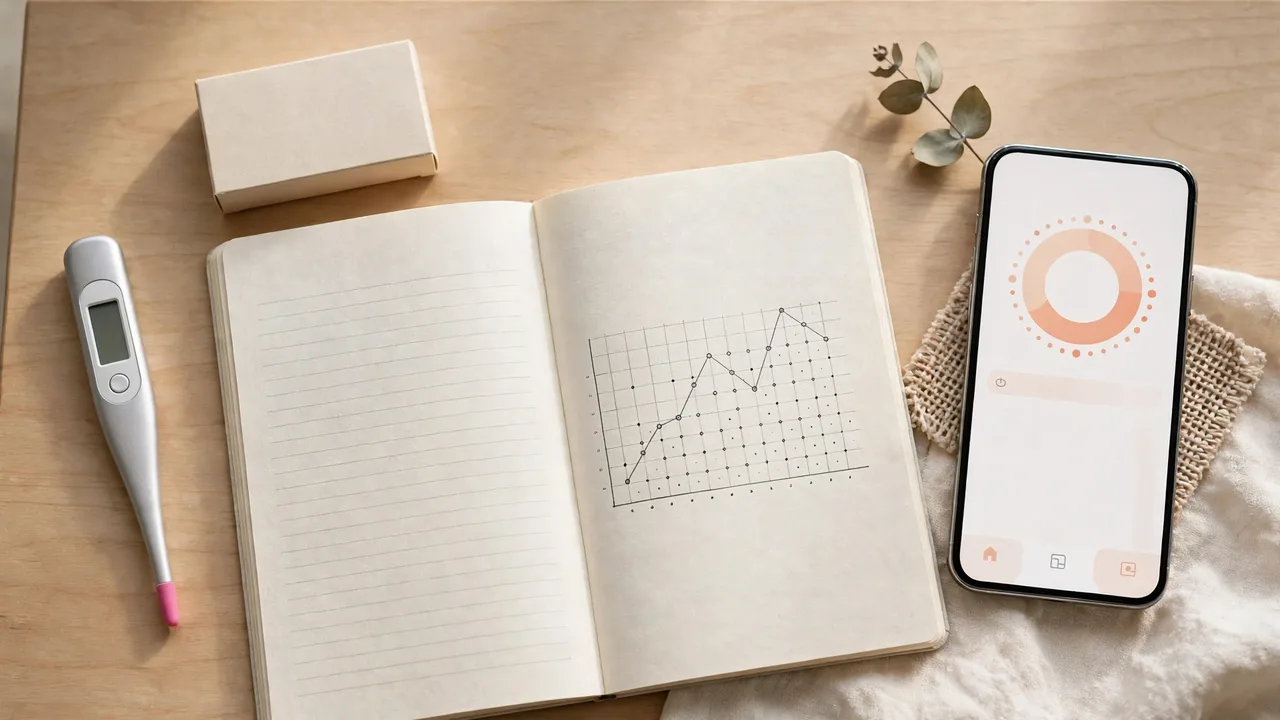
The calendar gives you an estimate. These four methods confirm it — or correct it. Most women trying to conceive use two of them together: the calendar plus one body-based sign.
| Method | What it tells you | When it warns you | Cost | Best for |
|---|---|---|---|---|
| Calendar / cycle tracking | Estimated ovulation day from past cycles | Before the window opens | Free (app or paper) | Regular cycles; planning ahead |
| Cervical mucus | Fertile mucus (clear, stretchy, like egg white) means ovulation is near | 1–2 days before ovulation | Free | Daily, hands-on tracking |
| Basal body temperature (BBT) | A temperature rise of ~0.3–0.5 °C confirms ovulation happened | After ovulation (retrospective) | Thermometer (~$10) | Confirming ovulation over time |
| Ovulation predictor kits (OPKs) | LH surge means ovulation in ~24–36 hours | 1–2 days before ovulation | ~$0.50–$1 per test | Pinpointing the peak days |
Cervical mucus is the earliest free signal. As ovulation approaches, mucus changes from thick and cloudy to clear, slippery, and stretchy — it can stretch an inch or more between your fingers. This “egg-white” mucus is the most fertile kind: it feeds sperm and helps them swim. When you see it, your peak days are starting.
Basal body temperature works differently: your temperature rises slightly after ovulation, because progesterone warms the body. A rise confirms you did ovulate — but it comes too late to time sex for that cycle. Its value is in the pattern: after two or three months of charting, you can see when you usually ovulate and plan the next cycle better. Our luteal phase guide (https://ivfduedatecalculator.us/luteal-phase/) explains the second half of the cycle, when progesterone is at work.
Ovulation predictor kits detect the LH surge in urine, which happens about 24–36 hours before ovulation. A positive test means your most fertile days are right now. They are the most precise of the four methods for timing, but they can give false positives in PCOS (where LH runs high) and they cost money every cycle. Used together with mucus tracking, they are hard to beat. Our guide to how to get pregnant (https://ivfduedatecalculator.us/how-to-get-pregnant/) compares these four tracking methods in more detail.
Signs You Are Most Fertile
Your body gives several clues in the days around ovulation. None of them is proof on its own, but two or three together are a strong signal:
- Clear, stretchy cervical mucus — the egg-white mucus described above; the single most useful sign
- A positive ovulation predictor kit — LH surge, ovulation in 24–36 hours
- Mild cramping or pain on one side (mittelschmerz) — a twinge in the lower abdomen as the egg is released; our guide to ovulation pain (https://ivfduedatecalculator.us/ovulation-pain-mittelschmerz/) explains what is normal and when to worry
- Breast tenderness or a heightened sense of smell — common around ovulation, though they vary a lot between women
- A small rise in sex drive — libido often peaks around ovulation
- Light spotting — a small amount of bleeding around ovulation happens in some women and is usually harmless
- A basal body temperature rise — confirms ovulation has just happened, useful for the record rather than for timing
If you notice fertile mucus and a positive OPK on the same day, that is your peak: have intercourse that day and the next. If your cycles are irregular and none of these signs appear reliably, that is worth mentioning to a doctor — it can mean ovulation is not happening every cycle.
Can You Get Pregnant Outside the Fertile Window?
Almost never — but “almost” is doing real work in that sentence. Pregnancy requires a live egg, and the egg lives only 12–24 hours, so sex more than a day after ovulation essentially cannot lead to pregnancy. Sex before the window is different: sperm deposited up to five days before ovulation can still be alive when the egg arrives, which is exactly why the window starts five days early.
The days when pregnancy is least likely are the days right after your period ends (in a regular cycle) and the days after ovulation. But two cautions apply:
- If your cycles are irregular, the “safe” days are not safe. Ovulation can arrive early in an unpredictable cycle, and sperm from sex a week earlier can still be waiting. Women with irregular cycles should not rely on calendar-based “safe days” for contraception.
- The fertile window is a probability, not a switch. Even on the peak day, a healthy couple in their 20s has roughly a 1-in-3 chance per cycle, not a guarantee. And even on a low-odds day, the chance is small, not zero.
When Is a Woman Most Fertile by Age?

Timing within the cycle is only half the story. The other half is age — and age changes the odds far more than it changes the timing. A woman’s peak fertility is in her late teens to late 20s. Fertility begins to decline from around age 30, declines more quickly after 35, and falls sharply after 40, mainly because the number and quality of eggs fall. The ASRM’s Age and Fertility fact sheet (https://www.reproductivefacts.org/news-and-publications/patient-fact-sheets-and-booklets/documents/fact-sheets-and-info-booklets/age-and-fertility/) explains this decline and what it means for planning.
Approximate chance of conception per cycle for a healthy couple:
| Age | Chance per cycle | Notes |
|---|---|---|
| 20–24 | ~25–30% | Peak fertility; most cycles ovulatory |
| 25–29 | ~25% | Still near peak |
| 30–34 | ~20% | Decline begins, still good odds |
| 35–39 | ~15% | Decline speeds up; miscarriage risk rises |
| 40–44 | ~5% | Less than 5% per cycle by 40 (ACOG) |
| 45+ | <1% | Natural conception rare |
The fertile window itself does not move much with age — a 38-year-old ovulates on the same schedule as a 28-year-old, roughly speaking. What changes is how likely any given cycle is to produce a healthy pregnancy. That is why the advice on when to seek help is age-based (see below), and why our IVF success rates by age guide (https://ivfduedatecalculator.us/ivf-success-rates-by-age/) looks at the same decline through treatment data. Our guide to improving egg quality (https://ivfduedatecalculator.us/how-to-improve-egg-quality/) covers what can — and cannot — be done about egg quality.
Irregular Cycles: Finding Your Window When Periods Are Unpredictable
If your cycles vary by more than a few days, the calendar method is unreliable — ovulation could be anywhere. The body-based methods become essential:
- Track cervical mucus daily. Fertile mucus is the most reliable free signal when the calendar fails.
- Use ovulation predictor kits every cycle — start testing a few days after your period ends and keep going until you get a positive, even if that takes two weeks.
- Chart basal body temperature for two or three months to learn whether you ovulate at all, and roughly when.
- Look for the cause. Common reasons for irregular or absent ovulation include PCOS, thyroid problems, high prolactin, very low body weight, intense exercise, and perimenopause. Our guide to getting pregnant with PCOS (https://ivfduedatecalculator.us/getting-pregnant-with-pcos/) explains how ovulation can be restored when PCOS is the cause.
- Do not guess for months. If your cycles are consistently shorter than 21 days or longer than 35 days, or you go three months without a period, see a doctor rather than tracking alone — tracking tells you when you ovulate, but it cannot fix ovulation that is not happening.
Timing Sex for the Best Chance
Once you know your window, the advice is refreshingly simple:
- Have sex every one to two days during the fertile window, starting when fertile mucus appears or a few days before expected ovulation. ACOG recommends this frequency — daily is fine too, but it does not raise the odds beyond every-other-day, and it adds pressure that helps nobody.
- Do not wait for ovulation day. The highest-chance days are the two days before it. Sperm in place beats sperm in a hurry.
- After sex, you do not need to lie still. There is no good evidence that lying with your legs up helps conception; getting up and going about your day is fine.
- Lubricants matter. Some ordinary lubricants can slow sperm down. If you use one, choose a fertility-friendly, sperm-safe product — or skip it during the fertile window.
- Keep it sustainable. Trying for months with a rigid schedule burns couples out. The couples who conceive fastest are usually the ones who time sex loosely around the window and keep the rest of their life normal.
Myths About When a Woman Is Most Fertile
- “Day 14 is the most fertile day.” Only in a 28-day cycle. In a 35-day cycle, day 14 is a week too early; in a 21-day cycle, it is a week too late. Count back 14 days from your next period, not forward from your last.
- “You can get pregnant any day of the month.” Biologically, no — only the six-day fertile window can lead to pregnancy. The confusion comes from irregular cycles, where the window can fall on an unexpected day.
- “Ovulation pain means you are at your peak.” Mittelschmerz happens around ovulation, but it can come before, during, or after the egg is released — and many women never feel it at all. It is a clue, not a timer.
- “A regular period means you ovulate every month.” Usually true, but not always. Some cycles are anovulatory — a period arrives without an egg being released — especially in the teens, in perimenopause, and with thyroid or PCOS issues.
- “You are most fertile in your 30s because you are more settled.” Settled, yes; most fertile, no. Peak fertility is in the 20s. The 30s are still good years for conception, but the odds are already drifting down.
- “Fertility ends at menopause, so there is no rush before 40.” Fertility declines well before menopause. By 40, the per-cycle chance is under 5% (ACOG), and the risk of miscarriage and chromosomal differences rises.
When to See a Doctor
Good timing solves a timing problem. If the timing is right and pregnancy still does not happen, that is information — not failure — and it is time for a fertility evaluation for both partners. ACOG’s Evaluating Infertility FAQ (https://www.acog.org/womens-health/faqs/evaluating-infertility) explains which tests are ordered and when:
- Under 35: after 12 months of well-timed intercourse without pregnancy
- 35–39: after 6 months
- 40 or older: do not wait — book an evaluation straight away
- Immediately, at any age: if you have irregular or absent periods, a history of pelvic infection, endometriosis, prior pelvic surgery, two or more miscarriages, or a known male-factor issue
A fertility evaluation is straightforward: cycle history and ovulation testing, hormone blood tests, a semen analysis for the male partner, and checks that the fallopian tubes are open. Most causes it finds are treatable, and finding them early matters — especially after 35, when time is the one thing you cannot get back. Our guide to how long IVF takes (https://ivfduedatecalculator.us/how-long-does-ivf-take/) explains what happens if treatment becomes the path.
Frequently Asked Questions (FAQs)
When is a woman most fertile?
A woman is most fertile during her fertile window — the six days ending on ovulation day: the five days before ovulation plus ovulation day itself. Within that window, the two days before ovulation and ovulation day carry the highest chance of conception, roughly 30% per act of intercourse for a healthy couple. In a regular 28-day cycle, that is roughly days 10–15, with days 12–14 the peak.
How many days after your period are you most fertile?
It depends on your cycle length. In a regular 28-day cycle, ovulation usually happens around day 14, so the most fertile days are about 12–14 days after your period starts. In a 35-day cycle, ovulation is around day 21, so the peak days are about 19–21 days after your period starts. Count back 14 days from your next expected period — that is the reliable way to find it.
What are the signs that a woman is most fertile?
The clearest signs are clear, stretchy, egg-white cervical mucus; a positive ovulation predictor kit (LH surge, ovulation in 24–36 hours); mild one-sided cramping (mittelschmerz); breast tenderness; and a small rise in sex drive. A basal body temperature rise confirms ovulation has happened, but it comes too late to time sex for that cycle.
Can you get pregnant 5 days before ovulation?
Yes — the chance is about 10% from a single act of intercourse five days before ovulation, according to the Wilcox study (NEJM 1995). Sperm can survive up to five days in fertile cervical mucus, so sperm deposited five days early can still be alive when the egg is released. The odds rise steeply closer to ovulation, reaching roughly 30% on the two days before ovulation and on ovulation day.
At what age is a woman most fertile?
A woman’s peak fertility is in her late teens to late 20s. Fertility begins to decline from around age 30, declines more quickly after 35, and falls sharply after 40 — by 40, the chance of conception per cycle is under 5% (ACOG). The timing of the fertile window within the cycle does not change much with age; what changes is how likely any given cycle is to lead to a healthy pregnancy.
Can you get pregnant outside your fertile window?
Almost never. The egg lives only 12–24 hours after ovulation, so sex more than a day after ovulation essentially cannot lead to pregnancy. The exception is irregular cycles: if ovulation arrives earlier than expected, sperm from sex days earlier can still be waiting. Women with irregular cycles should not rely on calendar “safe days” for contraception.
How can I calculate my most fertile days?
If your cycles are regular, subtract 14 days from the expected date of your next period — that is your likely ovulation day, and the six days ending on it are your fertile window. Confirm it with cervical mucus tracking or an ovulation predictor kit. Our free ovulation calculator does the maths for you from your last period and cycle length.
When should I see a doctor about fertility?
After 12 months of well-timed trying if you are under 35, after 6 months if you are 35–39, and straight away if you are 40 or older. See a doctor sooner at any age if your periods are irregular or absent, you have had two or more miscarriages, or you have a history of endometriosis, pelvic infection, or pelvic surgery. A fertility evaluation covers both partners — male factors account for about a third of cases.
About the author: Emily Johnson is a Content Writer & Fertility Advocate who covers IVF and fertility treatment topics. Meet the team (https://ivfduedatecalculator.us/our-team-ivf-due-date-calculator/).
Medical review: This article was medically reviewed by Dr. Sarah Ahmed, Medical Content Advisor, for clinical accuracy. Meet the team (https://ivfduedatecalculator.us/our-team-ivf-due-date-calculator/).
Medical disclaimer: This article is for informational purposes only and is not medical advice, diagnosis, or treatment. Due dates are estimates, and every pregnancy is different. Always confirm your due date and any testing or treatment decisions with your clinic or healthcare provider.
