

Getting Pregnant With Endometriosis: Fertility, Treatment & What Helps

By Emily Johnson, Content Writer & Fertility Advocate · Medically reviewed by Dr. Sarah Ahmed, Medical Content Advisor
If you have endometriosis and you want a baby, you have probably heard two opposite stories: that pregnancy will be very difficult, and that plenty of women with endometriosis conceive without any trouble. Both contain some truth — and the real answer depends mostly on how advanced your disease is, your age, and how quickly you get the right help.
Here is the short answer first: most women with endometriosis can get pregnant, naturally or with treatment. Around 60–70% eventually conceive. Mild endometriosis often barely affects fertility at all, and many women conceive naturally. Moderate to severe endometriosis lowers your monthly chances, but surgery, IUI, and especially IVF can close much of that gap. The key is not to wait too long: if you have endometriosis and have been trying for six months without success — at any age — it is time to see a fertility specialist.
Table of Contents
What Is Endometriosis?
Endometriosis happens when tissue similar to the lining of the uterus grows outside the uterus — on the ovaries, fallopian tubes, the lining of the pelvis, and sometimes on the bowel or bladder. Like the lining inside the uterus, this tissue responds to your monthly hormones: it thickens, breaks down, and bleeds. But unlike a period, that blood has nowhere to go, which causes inflammation, pain, and over time, scar tissue.
It is common — about 1 in 10 women of reproductive age has endometriosis, according to MedlinePlus — and it often runs in families. It usually starts when periods begin but is typically not diagnosed until ages 25 to 40, partly because painful periods are so often dismissed as normal. The main symptom is pain: painful periods, pain during or after sex, pain with bowel movements or urination, and long-term pelvic or lower back pain. Other symptoms include heavy menstrual bleeding and difficulty getting pregnant. Some women have no symptoms at all, and the severity of pain does not always match how advanced the disease is.
Doctors stage endometriosis from 1 (minimal) to 4 (severe), based on where the tissue is, how much there is, and how deep it goes. Staging matters for fertility, because it predicts roughly how much the disease is interfering with conception — though it is not a perfect measure, and women with severe disease sometimes conceive easily while others with mild disease struggle.
How Endometriosis Affects Fertility
Endometriosis can interfere with getting pregnant in several ways, and usually more than one is at work at the same time:
Inflammation. The misplaced tissue creates chronic inflammation in the pelvis. The fluid around your reproductive organs becomes hostile to sperm and eggs — it can damage sperm, impair fertilization, and make it harder for an embryo to implant.
Scar tissue and adhesions. Over time, inflammation creates bands of scar tissue that can distort the anatomy of your pelvis. Adhesions can pull the fallopian tubes out of position, so the tube cannot pick up the egg after ovulation, or block the tube entirely.
Endometriomas. When endometriosis grows on an ovary it can form a cyst filled with old blood, called an endometrioma or “chocolate cyst.” Large endometriomas take up space in the ovary and can reduce the number of healthy eggs available.
Egg quality and ovarian reserve. Endometriosis — and surgery for it — can reduce both the number of eggs remaining and, to some extent, their quality. This is one reason age matters so much: the disease and the clock work in the same direction.
Implantation. Even when fertilization happens, the inflamed uterine environment may make it harder for an embryo to implant and stay implanted, which is one reason miscarriage rates are somewhat higher in women with endometriosis.
The American Society for Reproductive Medicine reports that 20% to 50% of women with infertility have endometriosis. Turned around, roughly 30% to 50% of women with endometriosis experience some degree of infertility. Those numbers sound discouraging, but remember what they also mean: the majority of women with endometriosis do conceive, and for those who do not conceive naturally, treatment works well.
Can You Get Pregnant Naturally With Endometriosis?
Yes — and the honest answer is that it depends on the stage. A healthy woman without endometriosis has roughly a 15% to 20% chance of conceiving in any given month. With endometriosis, that monthly chance falls, and how far it falls tracks the stage of the disease. These are estimates, and individual chances vary, but they are the figures specialists use when planning your path:

| Endometriosis stage | Monthly chance of conceiving | What specialists usually recommend |
|---|---|---|
| Stage 1–2 (minimal to mild) | About 2% to 10% | Try naturally for 6–12 months; surgery can help if lesions are visible |
| Stage 3 (moderate) | About 1% to 2% | Consider surgery, IUI, or moving to IVF sooner |
| Stage 4 (severe) | Less than 1% | IVF is often the recommended path |
With mild endometriosis, about half of women conceive naturally without any intervention. With moderate disease, roughly a quarter do. With severe disease, natural conception is uncommon — but IVF remains a strong option, as the section below explains.
Age changes the maths. A 28-year-old with stage 2 endometriosis has time to try naturally for a year; a 38-year-old with the same stage does not, because her egg quality is already declining. That is why fertility specialists often recommend evaluation after six months of trying regardless of age when endometriosis is known or suspected — the usual 12-month wait for women under 35 does not apply here.
How Endometriosis Is Diagnosed
Diagnosis is one of the hardest parts of this condition, because there is no simple blood test for it. Your doctor will start with your history — painful periods, pain during sex, difficulty conceiving — and a pelvic exam. An ultrasound can spot endometriomas on the ovaries and sometimes deep disease, and an MRI can map more extensive disease. But the only way to confirm endometriosis definitively is laparoscopy: a small camera inserted through a tiny incision, which lets the surgeon see the lesions directly.
That diagnostic delay is real and frustrating. Many women wait years between their first symptoms and a diagnosis. If you already know you have endometriosis and you want to conceive, you have one advantage: you can skip the diagnostic wait and go straight to planning fertility treatment.
Before treatment, your specialist will usually check a few other things: your ovarian reserve (AMH and antral follicle count — our guide to AMH levels by age explains what those numbers mean), whether your fallopian tubes are open, and your partner’s sperm. Endometriosis is not always the only factor, and finding the full picture early saves months of trying the wrong approach.
Your Path to Pregnancy: What Usually Happens
There is no single right path — it depends on your stage, your age, how long you have been trying, and whether your tubes are open. But most fertility specialists follow a pattern like this:
| Your situation | Usual first step | If that doesn’t work |
|---|---|---|
| Mild endometriosis, under 35, tubes open | Try naturally 6–12 months, with timed intercourse | Laparoscopic surgery to remove lesions, or IUI |
| Mild endometriosis, 35 or older | Try naturally up to 6 months, or go straight to IUI | IVF |
| Moderate endometriosis, any age | Surgery to restore anatomy, then try naturally or IUI | IVF |
| Severe endometriosis, blocked tubes, or failed lower-level treatments | IVF | IVF with adjusted protocol; donor eggs if reserve is very low |
| Endometrioma larger than 4 cm, or causing pain | Discuss surgery vs going straight to IVF | IVF |
Notice what is missing from this table: hormonal treatments. Birth control pills, progestins, and GnRH medications are excellent for managing endometriosis pain — but they work by switching off ovulation, so they cannot help you get pregnant. Treating endometriosis for pain and treating it for fertility are two different jobs, and a treatment that is right for one can be wrong for the other. If a baby is your goal right now, any hormonal treatment should be a pause, not a plan.
Surgery for Fertility: Laparoscopy
Laparoscopic surgery is both the gold-standard diagnostic tool and a fertility treatment. Through small incisions, the surgeon removes or vaporizes endometrial lesions, drains endometriomas, and frees adhesions, restoring normal pelvic anatomy. For women with mild to moderate endometriosis, surgery can improve natural conception rates — and the benefit often lasts for a period of months after the operation, which is why doctors usually advise trying to conceive soon after surgery.
But surgery is not always the right first move, and this is where honest advice matters. Operating on an endometrioma can damage the healthy ovarian tissue around it, potentially reducing your egg reserve. For women planning IVF, many specialists now recommend going straight to IVF rather than removing the cyst first — unless it is very large (over 4 cm), causing severe pain, or making egg retrieval unsafe. Surgery also carries the usual surgical risks and recovery time, and endometriosis can grow back. The decision should be made with a reproductive surgeon who knows your fertility goals, not just your pain.
Ovulation Induction and IUI
For mild endometriosis with open fallopian tubes, ovulation induction combined with intrauterine insemination (IUI) is often the first treatment. Medications such as letrozole or Clomid stimulate the ovaries to release one or more eggs, and washed, concentrated sperm is placed directly into the uterus around ovulation — helping sperm bypass any mild tubal or cervical obstacles. Success rates run roughly 10% to 20% per cycle, and most specialists recommend trying about three cycles before moving on. Our complete guide to IUI treatment explains the process, costs, and who it suits, and our IVF vs IUI comparison can help you weigh the two options.
IUI works less well as endometriosis advances, because it cannot bypass blocked tubes or severe pelvic distortion. If your disease is moderate to severe, or if IUI has not worked after a few cycles, IVF is the stronger option.
IVF With Endometriosis
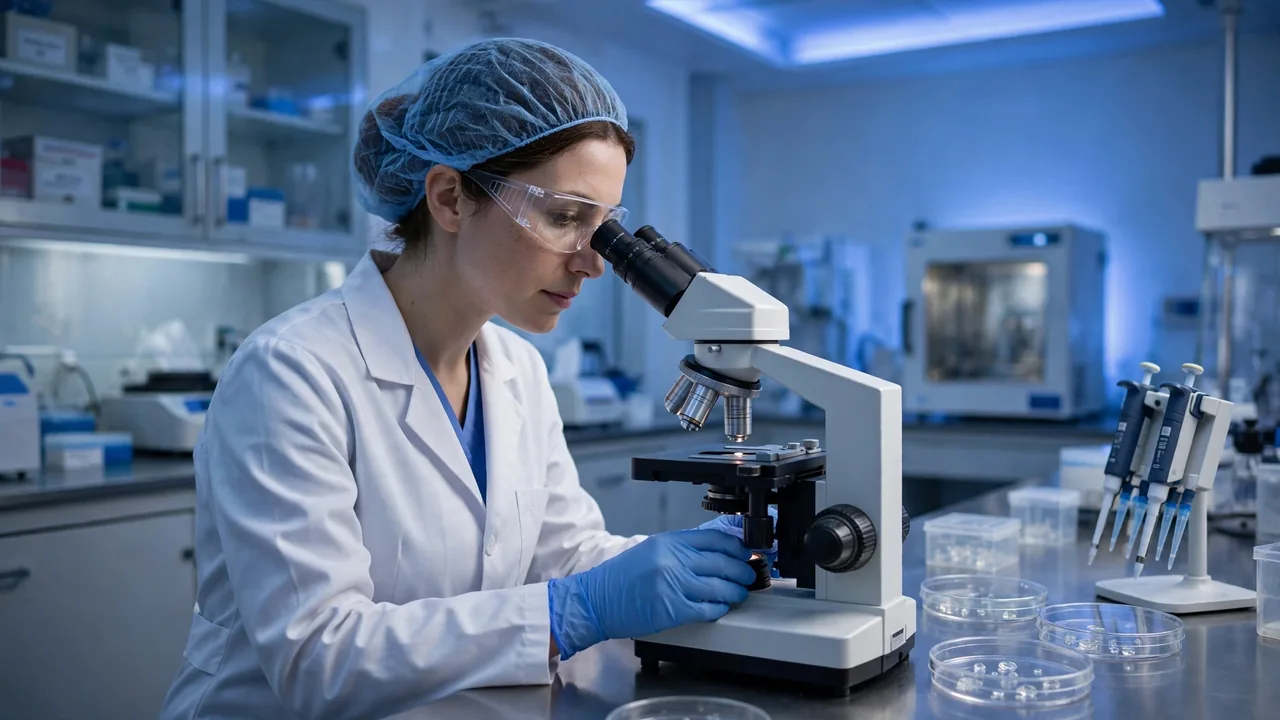
IVF is often the most effective treatment for endometriosis-related infertility, and it is the usual first-line choice for moderate to severe disease, blocked or damaged tubes, failed lower-level treatments, and women over 35 who need to move quickly. It works because it bypasses so many of the barriers endometriosis creates: eggs are retrieved directly from the ovaries, fertilization happens in the lab away from the inflammatory pelvic fluid, and the embryo is placed directly into the uterus.
Success rates with endometriosis are good, though slightly lower than for other causes of infertility. In a 2025 study published in Human Reproduction, women with endometriosis or adenomyosis reached a cumulative live birth rate of 70% by their third IVF or ICSI cycle, compared with 85.7% for women without either condition. When donor eggs are used, the gap essentially disappears — one study found live birth rates of 28% for women with stage III–IV endometriosis and 27.2% for women without it. The message is clear: endometriosis affects your eggs more than it affects your uterus’s ability to carry a pregnancy. Our guide to IVF success rates by age, based on CDC data, shows how age shapes outcomes across all causes of infertility.
Specialists often use specific IVF protocols for endometriosis. A common approach is a long down-regulation protocol using a GnRH agonist, which suppresses the hormonal cycle for several weeks before stimulation — quieting the inflammatory activity of the disease and potentially creating a more receptive environment for implantation. Your clinic will choose the protocol based on your age, your ovarian reserve, and how your ovaries respond. If you are new to the process, our guide to how long IVF takes walks through the whole timeline, and our egg retrieval day guide explains what the retrieval itself is like.
Egg Quality, AMH and Endometriosis
Because endometriosis can affect both egg quantity and quality, two tests matter more than any other in planning your treatment: AMH (anti-Müllerian hormone) and antral follicle count. These estimate how many eggs remain — your ovarian reserve. They do not measure quality directly, but they tell your specialist how aggressively to stimulate your ovaries and whether donor eggs should be part of the conversation.
If your AMH is low, read our guide to AMH levels by age and our guide on how to increase AMH levels — and be honest with yourself about what they say: AMH reflects quantity, and while lifestyle can support egg health, no supplement can create new eggs. Our guide on how to improve egg quality covers the 90-day maturation window, the Mediterranean-style diet, CoQ10, sleep, and what does not work — all of which apply just as much with endometriosis as without it. And if your clinic suggests PGT-A testing to check embryos’ chromosomes before transfer, our guide explains what it can and cannot tell you.
What You Can Do While Trying
No diet or supplement cures endometriosis, and anyone who says otherwise is selling something. But the same steps that support fertility generally are worth doing here:
Stop smoking. Smoking accelerates egg loss and worsens IVF outcomes. Stopping at least three months before trying is one of the most effective things you can do.
Eat well. A Mediterranean-style diet — vegetables, fruit, whole grains, legumes, oily fish, olive oil, nuts and seeds — is linked with better fertility outcomes, including in IVF patients. Some research suggests anti-inflammatory eating patterns may ease endometriosis symptoms too, though the evidence is still developing.
Keep a healthy weight. Being significantly over- or underweight disrupts ovulation. Slow, sustainable movement toward a healthy BMI helps; crash diets do not.
Track your cycle. Knowing when you ovulate matters more when your monthly chances are lower. Our guide to how to get pregnant covers timing, ovulation signs, and the fertile window in detail.
Manage pain without delaying treatment. If painful periods are your main problem, our endo belly guide explains why endometriosis causes bloating and what eases it. But do not let pain management become a reason to postpone fertility care — the two can run in parallel, with your doctors coordinating.
Get support. Infertility with a chronic condition is emotionally heavy. Counselling, a support group, or simply talking with people who understand can make the process sustainable. That is practical care, not a luxury.
When to See a Specialist
See a fertility specialist sooner rather than later if you have endometriosis and have been trying for six months without success — at any age. Also seek help sooner if your periods are very painful, your cycles are irregular, you have a known endometrioma, you have had previous pelvic surgery, or you are 35 or older and want to conceive. Bring your records: any laparoscopy reports, ultrasounds, AMH results, and a list of medications and supplements. And bring your questions — a good specialist will walk you through the stage table above and explain which row you are on.
The American College of Obstetricians and Gynecologists has a clear, plain-language FAQ on endometriosis, and MedlinePlus has a thorough overview of endometriosis, including symptoms, diagnosis, and treatment options. Both are worth reading before your appointment.
Pregnancy With Endometriosis
Once you are pregnant, the news is mostly reassuring: most pregnancies in women with endometriosis proceed normally, and endometriosis does not usually affect the pregnancy itself. Your obstetrician will monitor you, as with any pregnancy, and may watch a little more closely for complications that occur slightly more often with endometriosis, such as miscarriage or preterm birth. The risk increase is modest, and the large majority of women with endometriosis have healthy pregnancies and healthy babies. If you conceived through IVF, your clinic will hand you over to your obstetrician at the usual point — our guide to graduating from your fertility clinic explains that transition.
The hopeful truth is this: endometriosis makes the path to pregnancy harder, but for most women it does not close it. Mild disease often needs nothing more than time and good timing. Moderate disease responds well to surgery and IUI. Severe disease responds well to IVF. And at every stage, the single most powerful thing you can do is to get specialist advice early, before age and time narrow your options.
Frequently Asked Questions (FAQs)
Can you get pregnant naturally with endometriosis?
Yes. About 60–70% of women with endometriosis eventually conceive, naturally or with treatment. With mild endometriosis, roughly half conceive naturally without intervention. With moderate disease, about a quarter do. With severe disease, natural conception is uncommon and IVF is usually recommended.
How long should I try before seeing a fertility specialist?
If you have endometriosis, see a specialist after six months of trying without success, at any age. The usual 12-month wait for women under 35 does not apply when endometriosis is known or suspected, because the disease and age work in the same direction.
Does endometriosis affect IVF success rates?
IVF works well with endometriosis, though success rates run slightly lower than for other causes of infertility. A 2025 study found a cumulative live birth rate of 70% by the third IVF or ICSI cycle for women with endometriosis or adenomyosis, compared with 85.7% without. With donor eggs, the gap essentially disappears.
Should I have surgery for endometriosis before trying to conceive?
It depends. Laparoscopic surgery can improve natural conception for mild to moderate endometriosis by removing lesions and restoring anatomy. But operating on an ovarian endometrioma can reduce your egg reserve, so many specialists recommend going straight to IVF instead — unless the cyst is very large, causing severe pain, or making egg retrieval unsafe. Decide with a reproductive surgeon who knows your fertility goals.
Do hormonal treatments for endometriosis help fertility?
No. Birth control pills, progestins, and GnRH medications manage pain by switching off ovulation — which means they prevent pregnancy while you take them. They are a treatment for pain, not for fertility. If a baby is your goal, hormonal treatment is a pause, not a plan.
Can endometriosis cause miscarriage?
Miscarriage rates are somewhat higher in women with endometriosis, possibly because of the inflammatory pelvic environment and its effect on implantation. The increase is modest, and most pregnancies in women with endometriosis proceed normally. Your doctor can discuss whether any monitoring or treatment is appropriate for you.
Does pregnancy cure endometriosis?
No, though symptoms often improve during pregnancy because ovulation and periods stop. Symptoms commonly return after pregnancy, especially once periods resume. Pregnancy is not a treatment for endometriosis.
What is the best treatment for getting pregnant with endometriosis?
There is no single best treatment — it depends on your stage, age, and how long you have been trying. Mild disease: try naturally, then surgery or IUI. Moderate disease: surgery, then IUI or IVF. Severe disease or blocked tubes: IVF is usually the strongest option. A fertility specialist can place you on the right path after checking your ovarian reserve, your tubes, and your partner’s sperm.
By Emily Johnson, Content Writer & Fertility Advocate · Medically reviewed by Dr. Sarah Ahmed, Medical Content Advisor
About the author: Emily Johnson is a Content Writer & Fertility Advocate who covers IVF and fertility treatment topics. Meet the team
Medical review: This article was medically reviewed by Dr. Sarah Ahmed, Medical Content Advisor, for clinical accuracy. Meet the team
Medical disclaimer: This article is for informational purposes only and is not medical advice, diagnosis, or treatment. Every person’s fertility is different, and treatment decisions should always be made with your doctor or fertility clinic. Due dates and pregnancy outcomes are estimates, and every pregnancy is different.
