Preeclampsia in Pregnancy: Symptoms, Warning Signs and What to Do

Preeclampsia is one of the pregnancy complications where hours genuinely matter. It usually develops after 20 weeks of pregnancy, combining high blood pressure with stress on organs such as the liver, kidneys and brain — and it can worsen quickly, sometimes within days. The good news: when preeclampsia symptoms are recognised early and acted on the same day, serious outcomes become much less likely. This guide lists the warning signs you must never wait out, who is most at risk, how preeclampsia is diagnosed and treated, and the one situation that should send you straight to hospital. If you are pregnant and recognise several of the severe symptoms below right now, stop reading and contact your maternity unit or emergency services first.
Table of Contents
What Is Preeclampsia?
Preeclampsia is a pregnancy disorder defined by new high blood pressure after 20 weeks (140/90 mmHg or higher on two readings) together with signs that organs are under strain — protein in the urine, abnormal liver or kidney blood tests, low platelets, fluid in the lungs, or new brain/visual symptoms. It affects roughly 2–8% of pregnancies worldwide and is more common in first pregnancies. The root problem lies in how the placenta’s blood vessels developed early in pregnancy, which is why the condition can also slow the baby’s growth. The only cure is delivery of the baby and placenta; everything else is about timing and control. It is different from chronic hypertension (high blood pressure that existed before pregnancy) and from gestational hypertension (high readings without the organ features) — though both need monitoring because they can progress to preeclampsia. Other warning signs in pregnancy deserve the same respect — see our guide to bleeding during pregnancy for another symptom that always needs prompt assessment.
Preeclampsia Symptoms: The Warning Signs
Some preeclampsia symptoms overlap with ordinary late-pregnancy discomfort, which is exactly why they get dismissed. Use this table to judge what you are feeling.
| Symptom | What it feels like | How urgent |
|---|---|---|
| Severe headache | A headache that does not ease with rest or paracetamol, unlike your usual headaches | Same day — call your maternity unit now |
| Vision changes | Blurred or double vision, flashing lights, spots, light sensitivity, brief vision loss | Same day — urgent assessment |
| Upper abdominal pain | Pain under the ribs, especially on the right side, or severe heartburn-like pain that antacids do not fix | Same day — urgent assessment |
| Sudden swelling | Rapid swelling of the face and hands, or legs that swell suddenly over a day or two | Mention the same day |
| Breathlessness | Shortness of breath, especially lying flat, or chest pain | Emergency — call emergency services |
| Reduced baby movements | Your baby moving less than their usual pattern | Same day — always get checked |
| Nausea/vomiting late in pregnancy | New sickness appearing in the second half of pregnancy | Mention the same day |
| High home reading | Blood pressure 140/90 or higher at home | Same day; 160/110 or higher = emergency |
Ordinary ankle swelling by evening, mild headaches that pass with rest, and heartburn that responds to antacids are common in normal pregnancy — but if you are ever unsure, maternity units would always rather check you than not.
Who Is at Higher Risk of Preeclampsia?

Risk is higher if: this is your first pregnancy; you had preeclampsia before (recurrence risk is significant); you are carrying twins or more; you have chronic high blood pressure, diabetes, kidney disease or an autoimmune condition such as lupus; you are over 35–40; you have a family history (your mother or sister had it); your BMI is high; or the pregnancy was conceived with IVF or donor eggs. Having a risk factor does not mean you will get preeclampsia — it means your team should watch you more closely and may offer preventive aspirin (next sections).
How Preeclampsia Is Diagnosed
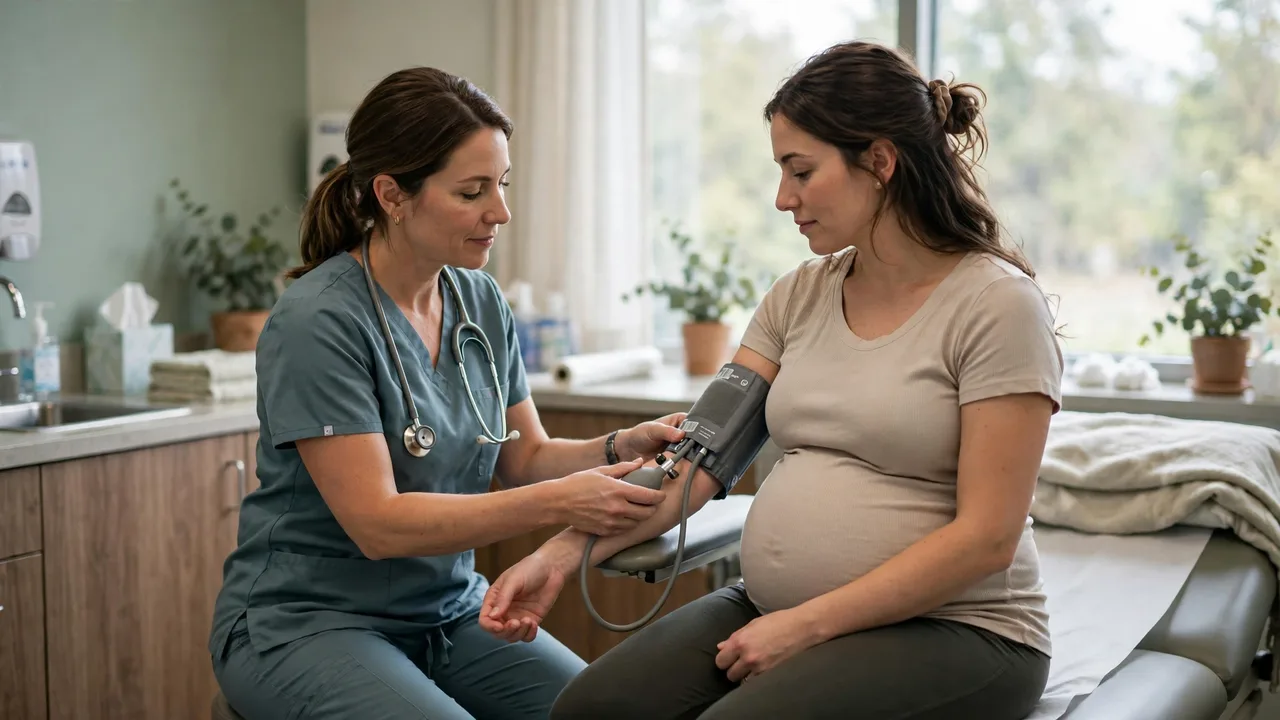
Diagnosis happens at your appointment or maternity unit, not at home. It combines: repeated blood-pressure readings (140/90 or above; 160/110 or above counts as severe), a urine test for protein, and blood tests checking liver enzymes, kidney function and platelet count. Your baby is checked too — growth ultrasound and monitoring, because placental problems can restrict growth. A newer blood test measuring placental markers (such as the sFlt-1/PlGF ratio) is used in some hospitals to help rule preeclampsia in or out over the following weeks. If you monitor your blood pressure at home, use a validated upper-arm cuff, sit quietly for five minutes first, and keep a written log to show your team.
Treatment: What Happens After Diagnosis
There is no medicine that cures preeclampsia — delivery does. Treatment is about keeping you and your baby safe until delivery is the right call:
- Close monitoring: frequent blood-pressure checks, blood tests and baby monitoring; many women are admitted to hospital.
- Blood-pressure medicines: pregnancy-safe options such as labetalol, nifedipine or methyldopa, with tighter control if readings reach severe range.
- Magnesium sulfate: given around delivery when there are severe features, to prevent seizures (eclampsia).
- Corticosteroids: if early delivery is likely, steroids help mature the baby’s lungs.
- Timing delivery: with severe features, delivery is usually recommended from about 34 weeks; without severe features, typically by 37 weeks. Earlier delivery happens whenever mother or baby is deteriorating — your team’s judgement here is lifesaving, not conservative.
Do not try to manage suspected preeclampsia at home with rest, salt restriction or extra fluids instead of assessment. Those measures do not treat the condition.
Complications: Why Speed Matters
Untreated or rapidly progressing preeclampsia can lead to eclampsia (seizures), HELLP syndrome (liver and clotting breakdown), placental abruption (the placenta separating early — a cause of dangerous bleeding), stroke, and organ failure in the mother, and growth restriction, prematurity or stillbirth for the baby. These outcomes are uncommon where warning signs are acted on quickly — which is the entire point of this article. Knowing how normal labour symptoms differ also helps; compare our guide to the signs of labor, but remember: severe headache, vision changes or upper-abdominal pain are never normal labour signs.
Postpartum Preeclampsia: It Can Start After Birth
Preeclampsia can also appear — or persist — after delivery, most often in the first few days but occasionally up to six weeks postpartum. New mothers are sometimes discharged before it develops, so the same warning signs (severe headache, vision changes, breathlessness, a high reading) in the weeks after birth deserve exactly the same urgent response. It is not “just recovery” until a clinician has checked your blood pressure.
Can Preeclampsia Be Prevented?

Not entirely — but risk can be reduced. The best-supported measure is low-dose aspirin (typically 75–150 mg at night, started before 16 weeks) for women at high risk, as recommended by ACOG and NICE guidance — only start it on your clinician’s advice. Adequate calcium intake helps where dietary calcium is low. Beyond that: attend every antenatal appointment (blood pressure and urine are checked precisely to catch this), report new symptoms between visits rather than waiting for the next one, and keep any pre-existing blood pressure well controlled with your team. For the full clinical picture, ACOG’s patient FAQ on preeclampsia and high blood pressure in pregnancy is an excellent reference: ACOG’s patient FAQ on preeclampsia and high blood pressure in pregnancy.
What are the first signs of preeclampsia?
Often there are none at first — which is why blood pressure and urine are checked at every antenatal visit. The earliest noticeable symptoms are usually a persistent headache, swelling of the face and hands that comes on quickly, or a high home blood-pressure reading.
What blood pressure counts as preeclampsia?
Readings of 140/90 mmHg or higher on two occasions after 20 weeks, together with protein in the urine or other organ signs, define preeclampsia. A reading of 160/110 or higher is severe-range and needs emergency assessment.
Can you have preeclampsia without high blood pressure?
Rarely, features such as HELLP syndrome can develop with near-normal readings, which is why symptoms like severe upper-abdominal pain or vision changes should always be assessed even if your last blood pressure was fine.
How quickly can preeclampsia become dangerous?
It can progress over days — and occasionally within 24–48 hours — from mild to severe. That unpredictability is why new warning symptoms in the second half of pregnancy always deserve same-day assessment rather than watchful waiting at home.
Does preeclampsia go away after delivery?
Usually, yes — delivery is the cure, and blood pressure typically settles over days to weeks. But preeclampsia can also start after birth (postpartum preeclampsia), so warning signs in the first six weeks still need urgent checks.
Can aspirin prevent preeclampsia?
Low-dose aspirin taken from early pregnancy reduces the risk in women identified as high-risk, per ACOG and NICE guidance. It does not eliminate the risk, and it should only be started on your own clinician’s advice, at the dose and timing they set.
Is swelling in pregnancy always preeclampsia?
No. Mild ankle and foot swelling by the end of the day is very common in normal pregnancy. Swelling that is sudden, severe, or affects the face and hands — especially with headache or visual symptoms — is the pattern that needs same-day assessment.
When should I go to hospital for preeclampsia symptoms?
Immediately if you have a severe or persistent headache, vision changes, pain under the right ribs, breathlessness or chest pain, a home reading of 160/110 or higher, or your baby is moving much less than usual. Do not wait until morning — maternity units assess these symptoms around the clock.
By Emily Johnson, Content Writer & Fertility Advocate • Reviewed by Dr. Sarah Ahmed, Medical Content Advisor
Medical disclaimer: This article is general information only and cannot diagnose you. If you have any symptom described here, contact your maternity unit, doctor or emergency services immediately.
