

Artificial Insemination Questions: Best Answers to IUI, ICI, Donor Sperm & Success Rates

By Emily Johnson, Content Writer & Fertility Advocate · Medically reviewed by Dr. Sarah Ahmed, Medical Content Advisor
Artificial insemination questions come up for almost everyone who hears the term for the first time: what exactly is it, how is it different from IVF, does it hurt, how well does it work, and how much does it cost? The short answer is that artificial insemination is one of the simplest fertility treatments there is — sperm is placed directly into the reproductive tract, close to the egg, at exactly the right time in the cycle. No eggs are removed, no embryos are made in a lab, and the procedure itself takes minutes. This guide answers the questions people actually ask, explains the two main types (IUI and ICI), covers donor sperm and at-home insemination honestly, and tells you when artificial insemination is the right first step — and when it is time to move on to IVF.
Table of Contents
What Is Artificial Insemination?
Artificial insemination (AI) is a fertility treatment in which sperm is placed into a woman’s reproductive tract — the cervix or the uterus — by a method other than sexual intercourse, so that fertilisation can happen inside the body. The word “artificial” only describes how the sperm gets there; conception itself happens naturally, inside the body, exactly as it would after intercourse. Nothing about the baby is artificial.
Two terms you will see used for the sperm source:
- Artificial insemination by husband/partner (AIH) — the sperm comes from the woman’s partner.
- Artificial insemination by donor (AID) — the sperm comes from a donor, usually through a licensed sperm bank.
Artificial insemination is not the same as IVF. With IVF, eggs are removed from the ovaries, fertilised with sperm in a laboratory, and an embryo is transferred back into the uterus. With artificial insemination, there is no egg retrieval and no laboratory fertilisation — the sperm is simply given a head start. That is also why it costs far less than IVF, and why doctors usually suggest trying it first when the situation fits. Our IVF vs IUI guide compares the two treatments on cost, success rates, and who each one suits.
The Two Main Types: IUI vs ICI
There are two common types of artificial insemination. They differ in where the sperm is placed, how the sperm is prepared, and where the procedure happens:
| Intracervical insemination (ICI) | Intrauterine insemination (IUI) | |
|---|---|---|
| Where the sperm goes | Into the cervix, at the entrance to the uterus | Directly into the uterus, past the cervix |
| Sperm preparation | Raw or minimally processed semen | “Washed” in the lab — concentrated, seminal fluid removed |
| Where it is done | Clinic or at home (with donor sperm) | Clinic only |
| Typical cost per cycle | Lower (often a few hundred dollars) | Higher — typically $300–$1,000 unmedicated |
| Per-cycle pregnancy rate | Roughly 10–15% | Roughly 15–20% |
IUI generally produces better results than ICI, because it bypasses the cervix entirely and deposits a concentrated, washed sample right where it needs to be. One study published in the journal Human Reproduction found cumulative pregnancy rates after six cycles of 37.9% for ICI and 40.5% for IUI. ICI is simpler and can sometimes be done at home with donor sperm, which is part of its appeal — but the trade-off in success rate is real. A third, rarely used approach — intratubal insemination (ITI), where sperm is placed into the fallopian tubes — is almost never offered today.
Why does IUI need “washed” sperm? Raw semen contains prostaglandins, substances that can cause strong uterine cramping if they are introduced directly into the uterus. Washing removes the seminal fluid, dead cells, and prostaglandins, and concentrates the healthiest, most active sperm into a small volume. That is also why unwashed semen should never be placed inside the uterus — a point that matters for anyone considering at-home insemination, covered below.
How Artificial Insemination Works, Step by Step
Whether the type is ICI or IUI, the rhythm of a cycle is the same. Here is the short version — our complete IUI treatment guide walks through the IUI procedure in full detail:
- Fertility workup first. Before any insemination, both partners are tested: ovulation and hormone checks, a check that the fallopian tubes are open, and a semen analysis for the male partner. Artificial insemination only makes sense if the tubes are open and the sperm is good enough to reach the egg.
- Track ovulation. The cycle is monitored with ovulation predictor kits, ultrasounds, or blood tests. Timing is critical — the fertilisation window is little more than 12 hours after the egg is released.
- Medication, sometimes. Some cycles are natural, with no drugs. Others use oral medication such as clomiphene (Clomid) or injectable hormones to stimulate ovulation and improve the odds. Stimulated cycles have higher success rates in younger women, but they also raise the chance of twins.
- The trigger shot. Ovulation is often triggered with an injection of human chorionic gonadotropin (hCG). Insemination is then timed for roughly 24 to 42 hours after the trigger.
- The sperm sample. On the day, the partner provides a fresh sample, or a frozen donor sample is thawed. For IUI, the sample is washed and prepared in the lab.
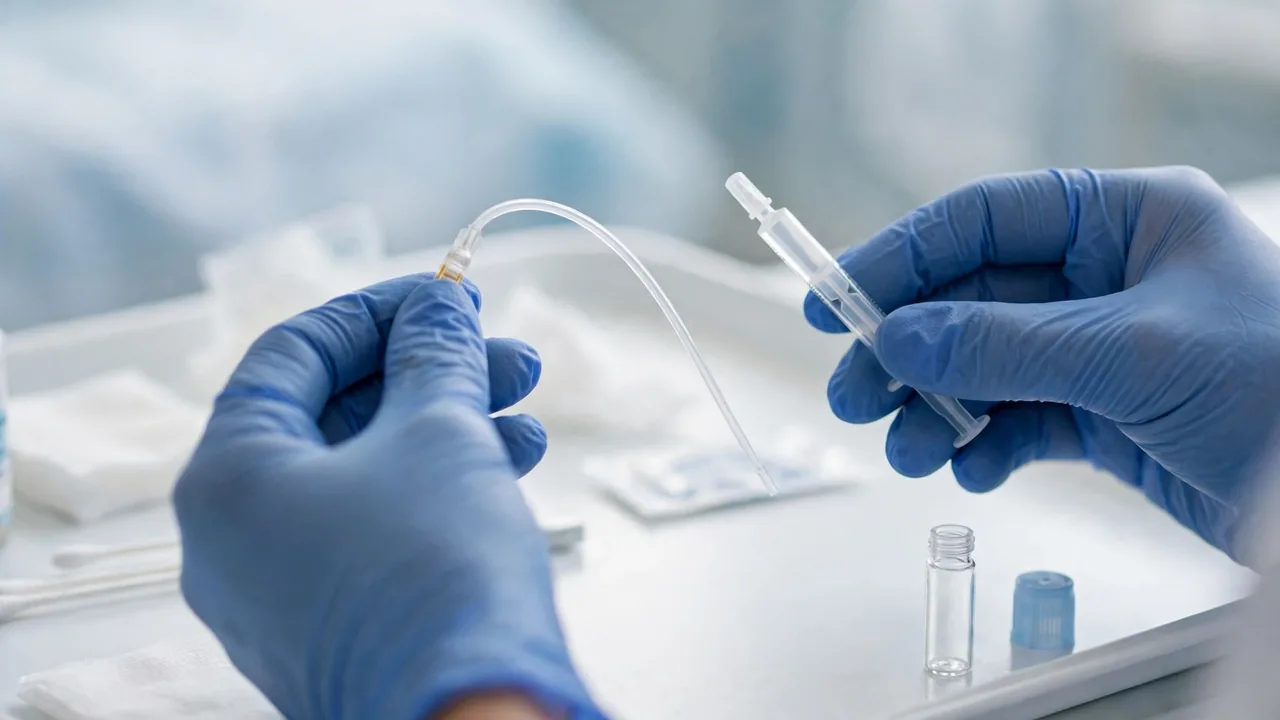
- The insemination. A thin, flexible catheter places the sperm into the cervix (ICI) or the uterus (IUI). The procedure takes a few minutes and is usually painless, though some women feel mild cramping.
- Rest, then wait. Many clinics ask you to lie down for about 15 minutes afterwards. Then comes the two-week wait until a pregnancy test.
The ASRM’s intrauterine insemination fact sheet explains the IUI procedure in plain language, including who it helps and what to expect.
Who Is Artificial Insemination For?
Artificial insemination is a good first step when the main problem is getting sperm to the egg, rather than a problem with the egg, the tubes, or fertilisation itself. It is commonly recommended for:
- Unexplained infertility — all the tests look normal, but pregnancy has not happened after a year of trying. This is one of the largest groups of IUI patients.
- Mild male-factor infertility — sperm count or motility is below average, but not severely impaired. Our guides to increasing sperm count and raising sperm motility cover the male side in detail.
- Cervical factor infertility — the cervix makes it hard for sperm to pass through, for example because of thick mucus or scarring. IUI bypasses the cervix entirely.
- Ejaculation or erection problems — when intercourse is difficult or impossible, insemination delivers the sperm where it needs to go.
- Single women and lesbian couples using donor sperm — artificial insemination with donor sperm is the most common route to pregnancy for people without a male partner. Our sperm donor guide explains how donor sperm works, what it costs, and how donors are chosen.
- Couples who need donor sperm — for example when the male partner has no sperm, or carries a serious genetic condition.
Who Should Skip It and Go Straight to IVF?
Artificial insemination cannot fix every cause of infertility. If any of these apply, your doctor will usually recommend going directly to IVF instead of spending months on insemination cycles:
| Situation | Why AI will not work well |
|---|---|
| Blocked or damaged fallopian tubes | The sperm still has to travel through the tube to meet the egg |
| Severe male-factor infertility (very low count or motility) | Too few moving sperm to reach the egg, even with a head start |
| Low ovarian reserve or advanced maternal age | Time matters more than saving money — IVF gives more information per cycle |
| Severe endometriosis | The pelvic environment itself interferes with fertilisation and implantation |
| Several failed insemination cycles (usually 3–6) | The odds fall with each failed cycle; IVF is the next step |
This is why the workup before the first cycle matters so much. A semen analysis and a tubal patency test are simple, and they stop you wasting time — and money — on a treatment that cannot work for your situation. The ACOG Evaluating Infertility FAQ explains which tests doctors order and when.
Partner Sperm vs Donor Sperm
The sperm used for artificial insemination comes from one of two sources, and the practical differences matter:
- Partner sperm — a fresh sample is provided on the day of the procedure. For IUI it is washed in the lab; for ICI it can be used with minimal processing.
- Donor sperm — bought from a licensed sperm bank. In the US, donor sperm is frozen and quarantined for months while the donor is re-tested for infectious diseases, so only screened, cleared samples are ever released. Donors are also screened for a range of genetic conditions, and you can usually choose a donor based on physical characteristics, education, and other profile details.
There are two kinds of donor arrangements: anonymous donors (the most common route through a bank, where the donor’s identity is not shared with you) and known donors (someone you know personally). Known-donor arrangements need proper legal agreements about parental rights before any insemination happens — the rules vary by state, so get legal advice first, not after. Our sperm donor guide covers donor selection, costs, and the full process.
At-Home Insemination: What You Need to Know
At-home insemination is real, legal in most places, and increasingly common — but only one type of it is safe to do yourself:
- ICI at home is possible. With donor sperm from a licensed bank, intracervical insemination can be done at home using a needleless syringe or a cervical cap. The sperm is placed at the cervix, mimicking natural intercourse. Many single women and lesbian couples choose this route for privacy and lower cost.
- IUI at home is not safe. Intrauterine insemination must be done in a clinic. Placing unwashed semen directly into the uterus can cause severe cramping and infection, because raw semen contains prostaglandins and bacteria that the uterus is not meant to receive directly. Only washed, lab-prepared sperm belongs inside the uterus.
- Fresh donor sperm is risky. Using fresh sperm from a private, unscreened donor skips the quarantine, infectious-disease screening, and genetic testing that licensed banks are required to do. It also creates legal uncertainty about parental rights. If you use a known donor, use a clinic and a lawyer.
- Timing still matters. At-home insemination only works if you track ovulation accurately — ovulation predictor kits, basal body temperature, and cervical mucus changes all help. Our ovulation calculator can estimate your fertile window, and our how to get pregnant guide explains timing in detail.
At-home insemination is cheaper and more private than clinic treatment, but its success rate is lower than clinic IUI, and there is no medical monitoring. If you have been trying at home for six months without success, talk to a fertility clinic rather than continuing on your own.
Artificial Insemination Success Rates: What the Numbers Really Mean
Success rates for artificial insemination are quoted in several different ways, which is why the numbers you see online seem to disagree. Here is how to read them:
- Per cycle: roughly 10–15% per cycle for ICI and 15–20% per cycle for IUI, in couples without severe fertility problems. Age is the biggest factor — success falls steadily after 35.
- After several cycles: the odds add up. The Human Reproduction study mentioned above found cumulative pregnancy rates of about 38% for ICI and 40% for IUI after six cycles.
- With medication: stimulated cycles do better than natural cycles in younger women. In one study, stimulated IUI roughly doubled the live-birth rate compared with natural-cycle IUI in women aged 37 and younger (about 11% versus 5% per cycle). In women over 37, that advantage disappeared.
- Live birth vs pregnancy: pregnancy rates are always higher than live-birth rates, because not every pregnancy continues. When a clinic quotes a success rate, check which one it means.
The honest summary: artificial insemination works for a meaningful share of people, but it is not a quick fix. Most doctors suggest trying three to six cycles, then reassessing. If it has not worked by then, the chance that the next cycle will work is low, and IVF becomes the better use of your time and money. Our IVF success rates by age article explains what the CDC data shows once you move to IVF.
How Much Does Artificial Insemination Cost?
Costs vary a lot by clinic and by whether medication and monitoring are included, so treat these as typical US ranges:
- ICI: usually the cheapest option — often a few hundred dollars per cycle, less if done at home with banked donor sperm (you still pay for the sperm itself, typically $500–$1,000 per vial).
- IUI, unmedicated: typically $300–$1,000 per cycle.
- IUI, medicated: typically $1,500–$4,000 per cycle once ultrasounds, blood tests, and fertility drugs are added.
- Donor sperm: an additional cost per vial, and most cycles need one vial (sometimes two).
Insurance coverage varies widely by state and plan — some states mandate fertility coverage, others do not, and many plans cover the diagnostic workup but not the treatment itself. Ask your clinic for an itemised quote before the first cycle, and check your plan’s fertility benefits in writing. Our IUI cost guide breaks down the full per-cycle cost in detail.
Does Artificial Insemination Hurt? What the Appointment Feels Like
For most women, artificial insemination is uncomfortable rather than painful — similar to a Pap smear, with a brief cramp as the catheter passes through the cervix. The whole procedure takes a few minutes. There is no anaesthesia and no recovery time; you can go back to work the same day.
Afterwards, some light cramping or spotting for a day is normal. What is not normal: heavy bleeding, severe pain, fever, or foul-smelling discharge — those need a call to your clinic the same day, because infection after insemination, while rare, needs prompt treatment.
Risks and Side Effects
Artificial insemination is one of the lowest-risk fertility treatments, but it is not risk-free:
- Mild cramping and spotting — common, and usually gone within a day.
- Infection — rare, but possible whenever a catheter enters the uterus. Clinics use sterile technique to keep the risk very low.
- Multiple pregnancy — the main risk, and it comes from the fertility drugs, not the insemination itself. Stimulated cycles can release more than one egg, which raises the chance of twins. Natural-cycle insemination carries almost no extra multiple risk.
- Ovarian hyperstimulation (OHSS) — rare with the low drug doses used for insemination, but possible when injectable hormones are used.
- Emotional strain — the monthly cycle of hope and disappointment is real, and it is the side effect people talk about least. If you are struggling, tell your clinic — most have counsellors who specialise in exactly this.
After Insemination: The Two-Week Wait
The days between insemination and the pregnancy test are the hardest part for most people. A few practical points:
- Rest briefly, then live normally. Lying down for about 15 minutes after the procedure is commonly recommended. After that, normal activity — including walking, work, and light exercise — is fine. Bed rest does not improve the odds.
- Intercourse is usually fine. Unless your clinic says otherwise, having intercourse after insemination does not hurt your chances.
- Do not test too early. A home pregnancy test is reliable from the day your period is due, about 14 days after insemination. Testing earlier often gives a false negative — or, if you had an hCG trigger shot, a false positive from the trigger medication itself. Our best time to take a pregnancy test guide explains the timing in detail.
- Symptoms mean little either way. Cramping, spotting, sore breasts, or no symptoms at all — none of these reliably predict the result. The only thing that counts is the test.

Artificial Insemination vs IVF: Which One First?
| Artificial insemination | IVF | |
|---|---|---|
| What happens | Sperm placed in the cervix or uterus; fertilisation inside the body | Eggs retrieved, fertilised in the lab, embryo transferred |
| Cost per cycle | Hundreds to a few thousand dollars | Typically $12,000–$15,000+ per cycle in the US |
| Per-cycle success | Roughly 10–20% | Roughly 30–50% for women under 35 |
| Best for | Unexplained infertility, mild male factor, donor sperm | Blocked tubes, severe male factor, low ovarian reserve, failed insemination |
| Time to pregnancy | Often 3–6 cycles | Often 1–3 cycles |
The usual path is to start with artificial insemination when it fits your diagnosis, try three to six cycles, and move to IVF if it has not worked. Starting with IVF makes sense when insemination cannot work for your situation — blocked tubes, severe male factor, or age and ovarian reserve that make time the limiting factor. Our how long does IVF take guide explains the IVF timeline from first consultation to pregnancy test.
Myths About Artificial Insemination
- “It guarantees a pregnancy.” It does not. Even in the best cases, each cycle has roughly a 10–20% chance of pregnancy. Anyone promising a guarantee is selling something.
- “Lying still for hours afterwards helps.” A short rest of about 15 minutes is standard. Lying still for hours has never been shown to improve the odds.
- “The baby will be ‘artificial’.” No. Fertilisation and pregnancy happen inside the body, exactly as with natural conception. Only the placement of the sperm is assisted.
- “At-home insemination is just as good as clinic IUI.” It is not. At-home insemination is ICI, not IUI — the sperm is placed at the cervix, not in the uterus, and there is no sperm washing or medical monitoring.
- “It works for everyone.” It works when the tubes are open, the sperm is good enough, and ovulation is happening. When those are not true, it cannot help, and IVF is the right next step.
- “You need to be married to use donor sperm.” No. Single women and lesbian couples are among the most common users of donor sperm insemination, though the legal details vary by state.
When to See a Doctor
Book a fertility evaluation — for both partners — if any of these apply:
- You have been trying to conceive for 12 months without success (6 months if the female partner is over 35).
- You have had three to six artificial insemination cycles without a pregnancy.
- You know you have blocked tubes, severe male-factor infertility, or low ovarian reserve.
- You are considering donor sperm and want to understand the screening, legal, and cost side before you start.
- You have a history of pelvic infection, endometriosis, or surgery that could affect your tubes or ovaries.
A fertility clinic will start with the basic workup — ovulation and hormone checks, a tubal patency test, and a semen analysis — and then tell you honestly whether artificial insemination is worth trying, or whether IVF is the better first step.
Frequently Asked Questions (FAQs)
What is artificial insemination in simple terms?
Artificial insemination is a fertility treatment where sperm is placed directly into the cervix or uterus at the right time in the cycle, so fertilisation can happen inside the body. No eggs are removed and no embryos are made in a lab — the sperm is simply given a head start toward the egg.
What is the difference between IUI and ICI?
ICI (intracervical insemination) places sperm into the cervix and can sometimes be done at home with donor sperm. IUI (intrauterine insemination) places washed, concentrated sperm directly into the uterus in a clinic. IUI has higher per-cycle success rates — roughly 15–20% versus 10–15% for ICI — but it costs more and must be done by a clinician.
How successful is artificial insemination?
Per cycle, roughly 10–15% for ICI and 15–20% for IUI, depending mainly on the woman’s age and the cause of infertility. Over six cycles, cumulative pregnancy rates reach about 38% for ICI and 40% for IUI, according to a study published in Human Reproduction. Success falls with age, and most doctors suggest reassessing after three to six cycles.
How much does artificial insemination cost?
In the US, an unmedicated IUI cycle typically costs $300–$1,000, and a medicated cycle with monitoring and drugs typically costs $1,500–$4,000. ICI is usually cheaper. Donor sperm is an extra cost, typically $500–$1,000 per vial. Insurance coverage varies widely, so get an itemised quote and check your plan before starting.
Can I do artificial insemination at home?
ICI can be done at home with donor sperm from a licensed bank, using a needleless syringe or cervical cap. IUI cannot be done at home — placing unwashed semen directly into the uterus can cause severe cramping and infection, so it must be done in a clinic with washed sperm. Never use fresh, unscreened donor sperm at home: it skips the infectious-disease screening and quarantine that licensed banks are required to do.
Does artificial insemination hurt?
For most women it is uncomfortable rather than painful — similar to a Pap smear, with brief cramping as the catheter passes the cervix. The procedure takes a few minutes, there is no anaesthesia, and you can return to normal activity the same day. Mild cramping or light spotting for a day afterwards is normal.
How many times should you try artificial insemination before IVF?
Most doctors suggest three to six cycles. If pregnancy has not happened by then, the chance that the next cycle will work is low, and IVF becomes the better use of time and money. If you have blocked tubes, severe male-factor infertility, or low ovarian reserve, your doctor may recommend going straight to IVF without trying insemination at all.
Can artificial insemination cause twins?
Insemination itself does not cause twins. The risk comes from the fertility drugs sometimes used with it: stimulated cycles can release more than one egg, which raises the chance of twins. Natural-cycle insemination carries almost no extra multiple-pregnancy risk. Your clinic monitors follicle growth with ultrasound to keep this risk low.
About the author: Emily Johnson is a Content Writer & Fertility Advocate who covers IVF and fertility treatment topics. Meet the team.
Medical review: This article was medically reviewed by Dr. Sarah Ahmed, Medical Content Advisor, for clinical accuracy. Meet the team.
Medical disclaimer: This article is for informational purposes only and is not medical advice, diagnosis, or treatment. Due dates are estimates, and every pregnancy is different. Always confirm your due date and any testing or treatment decisions with your clinic or healthcare provider.
