
Sperm Freezing Cost: How Much Does It Cost in the US?

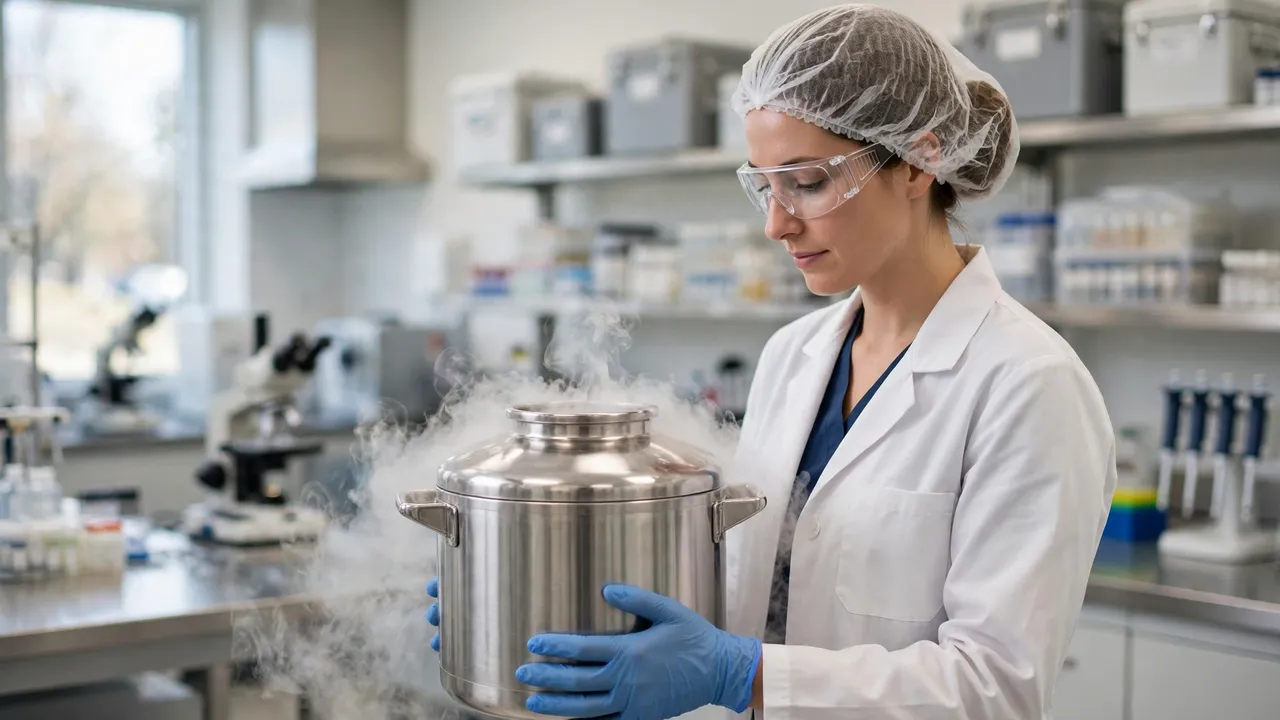
Sperm freezing cost in the US is typically $450 to $1,500 for the first year, and then $240 to $750 a year for storage after that. The first year is the expensive part: it bundles the consultation, the semen analysis, the infectious-disease bloodwork, the processing and freezing of your samples, and the first year of storage. After that, you are mostly paying rent on a very cold shelf.
The range is wide because the price depends on where you freeze, how many samples you store, and how long you keep them. A mail-in kit can cost under $500 for the first year; a sperm bank in a big city can charge more than $1,400 for the same first year. And the long-term math matters more than the first-year price: ten years of storage typically costs $3,000 to $8,240 in total, with a median of about $5,650.
This guide breaks down every part of sperm freezing cost — what each step costs, what the price includes and what it does not, how mail-in kits compare with sperm banks and fertility clinics, when insurance helps, and how to keep the total down without cutting corners on safety.
Table of Contents
Sperm Freezing Cost at a Glance
If you want the short version, here are the numbers. They come from published fee sheets of nine US sperm banks, verified in October 2026, plus published prices from the main mail-in kit companies.
| Time in storage | Lowest | Median | Highest |
|---|---|---|---|
| 1 year (one freeze visit + 12 months storage) | $250 | $580 | $1,490 |
| 5 years | $1,652 | $2,650 | $4,490 |
| 10 years | $2,992 | $5,650 | $8,240 |
Two things stand out. First, the first year is where the spread is widest — the cheapest and most expensive options differ by more than $1,200. Second, storage is the cost that decides the long-term total. The freeze itself is a one-time charge; storage is charged every year your samples stay frozen, and it is the part of the bill that never stops on its own.
The figures above cover one freeze visit and one sample’s storage. If you freeze more than one sample, the freeze fee is charged per sample, and storage may be charged per sample or per account, depending on the provider — that difference is explained below.
What You Pay For: The Two Costs of Sperm Freezing
Every sperm freezing bill has two parts: the freeze visit and the storage. Understanding the split is the fastest way to compare providers, because some quote only the freeze fee and leave storage for the fine print.
The Freeze Visit
The freeze visit is a one-time charge for everything that happens on the day you produce and freeze your samples. Across nine US sperm banks, it costs $100 to $740, with a median of about $250. What it usually includes:
- A consultation or first visit. Sperm banks typically charge $150 for the initial visit; a fertility clinic consultation can be higher — one university clinic lists a new-patient consult at $245.
- A semen analysis. The laboratory checks your sperm count, motility, and shape before freezing, so it knows what it is storing and whether the sample is worth banking. This usually costs $150 to $400 as a standalone test. Our semen analysis guide explains what each result means.
- Infectious-disease bloodwork. The FDA requires screening for infections such as HIV and hepatitis B and C before sperm can be banked. This is usually a separate charge of around $140 at a sperm bank.
- Processing and freezing, charged per sample. This is the laboratory work of preparing the sperm, adding a cryoprotectant that stops ice crystals from damaging the cells, and freezing the sample in liquid nitrogen. Prices range from about $110 per sample at some university clinics to $375 per sample at a large sperm bank, with some clinics listing $287 to $390.
Annual Storage
Storage is the recurring charge, and it is the cost that decides most of what you pay over time. After any storage included with the freeze, ongoing storage at nine US sperm banks runs $240 to $750 a year. The most common price is $600 a year, and three of the nine charge $300 or less.
Storage is billed in one of two ways, and the difference matters if you freeze more than one sample:
- Per account: one flat yearly fee covers all your samples. This is usually the better deal when you bank two or three samples.
- Per sample: the yearly fee is charged for each sample separately. Three samples at $245 per sample per year is $735 a year — very different from $245 flat.
Always ask which model a provider uses before you compare prices. A provider that looks cheap on the freeze fee can be the expensive one over five years if it charges storage per sample.

Sperm Freezing Cost Breakdown: Every Step, Priced
This table pulls the step-by-step costs together, using published prices from sperm banks, clinics, and mail-in kit companies. Use it to check a quote line by line — if a step is missing from a provider’s price list, ask whether it is included or charged separately.
| Step | Typical price range | Notes |
|---|---|---|
| Consultation or first visit | $150–$400 | Some mail-in kits do not require one |
| Semen analysis | $150–$400 | Often included in mail-in kit prices |
| Infectious-disease bloodwork | $140–$300 | FDA-required before banking |
| Processing and freezing, per sample | $110–$500 | Prewashed samples cost more (about $485) |
| First year of storage | Included or $240–$750 | Often bundled with the freeze |
| Annual storage after year one | $240–$750 per year | $600 a year is the most common price |
| Thawing a sample later | $100–$400 | Charged when you use the sperm, not when you freeze it |
| Shipping a sample to another clinic | $200–$500+ | Depends on distance and courier |
The most common surprise on a first bill is the bloodwork. It is easy to assume the quoted freeze price covers everything, then find a separate $140 blood panel on the invoice. Ask for the all-in first-year total in writing before you book.
Sperm Freezing Cost by Provider: Mail-In Kit vs Sperm Bank vs Clinic
There are three ways to freeze sperm, and they are priced very differently.
Mail-In Kits
A mail-in kit company sends you a collection kit, you produce a sample at home, and you send it back to the company’s laboratory, which tests it, freezes it, and stores it. This is usually the cheapest route, and the price is the most transparent — one number covers almost everything.
- Fellow: $439 for the first year — a $199 kit plus $240 for the first year of storage. Includes one sample, a semen analysis, and shipping both ways. Storage after that is $240 a year.
- Legacy, For Today plan: $540 for one kit, one sample, and one year of storage. Storage after that is $245 per sample per year.
- Legacy, For Tomorrow plan: $1,495 for two kits, two samples, a pre-freeze STI test, and three years of storage.
- Legacy, For The Future plan: $2,095 for two kits, two samples, a pre-freeze STI test, and ten years of storage.
- CryoChoice, Single Kit package: $595 list price for one kit, a sperm analysis, and one year of storage.
Mail-in kits suit men who want a simple, private option and do not need a clinic visit. They do not suit everyone: if your semen analysis comes back with a very low count or motility, a clinic may be better placed to advise you on next steps. And a kit cannot help if you cannot produce a sample at home — for example, if you need surgical sperm retrieval, which is a clinic procedure.
Sperm Banks
A sperm bank is a dedicated storage facility. You visit in person, produce a sample there, and the bank handles the testing, freezing, and storage. The published first-year totals are higher than mail-in kits, but the service is more hands-on.
- Fairfax Cryobank: $1,195 for one sample — a $150 visit, a $140 blood panel, $375 freezing, and a $530 prepaid year of storage. Storage after that is $55 a month, or $530 for a prepaid year, per account.
- Across nine US sperm banks, the first year (one freeze visit plus twelve months of storage) runs $250 to $1,490, with a median of about $580.
Fertility Clinics
A fertility clinic freezes sperm as part of a wider treatment plan — for example, before IVF, before cancer treatment, or as a backup on egg retrieval day. The freeze itself is usually priced similarly to a sperm bank, but it is often billed alongside other treatment, which makes the standalone cost harder to see.
- Duke Fertility Center lists sperm cryopreservation at $287 to $390.
- A university fertility center lists $110 per sample for freezing, with transport and storage at an outside storage company billed separately.
A clinic is the right choice when freezing is part of medical treatment, when you need advice about your fertility as well as storage, or when your partner is already a patient there. For standalone banking with no treatment planned, a sperm bank or a mail-in kit is usually cheaper and simpler.
| Provider type | First year, typical | Storage after year one | Best for |
|---|---|---|---|
| Mail-in kit | $439–$595 | $240–$245 per sample per year | Simple, private, lowest first-year cost |
| Sperm bank | $250–$1,490 (median $580) | $240–$750 per year | Hands-on service, in-person collection |
| Fertility clinic | $287–$1,000+ | Varies, sometimes billed separately | Freezing as part of medical treatment |
What Affects Sperm Freezing Cost?
Six factors move the price more than anything else.
- How many samples you freeze. Most men freeze two or three samples, because a single sample may not contain enough motile sperm for more than one attempt — and because a sample can be lost or damaged. Each extra sample adds a processing and freezing fee, and possibly extra storage if the provider charges per sample. Budget for two samples, not one.
- How long you store them. Storage is the only cost that grows with time, and it dominates the long-term total. Five years of storage roughly triples the first-year cost; ten years roughly multiplies it by ten. Prepaying for several years at once is usually cheaper than paying year by year — Legacy’s ten-year plan works out to about $67 per sample per year for storage, against $245 a year on its one-year plan.
- Where you freeze. Prices vary by city and by provider. A sperm bank in a high-cost city charges more than one in a smaller market, and a well-known bank can charge a premium over a university clinic. The published range across nine banks — $250 to $1,490 for the first year — is mostly a location and reputation spread.
- Whether bloodwork and semen analysis are included. Some providers bundle them into the freeze fee; others charge separately. A quote that looks $150 cheaper may simply be missing the blood panel.
- Whether you need a consultation. Some providers require a doctor’s visit or a physician order before they will freeze your sperm; others, including the mail-in kit companies, do not. A consultation adds $150 to $400.
- Your medical situation. Freezing before cancer treatment, or after a vasectomy reversal fails, or with surgically retrieved sperm, involves extra steps and extra cost. Surgical retrieval alone can cost several thousand dollars on top of the freezing and storage fees.
Is Sperm Freezing Covered by Insurance?
Usually not — but there are important exceptions.
Elective sperm freezing, done because you want to delay fatherhood or keep your options open, is almost never covered by insurance. You pay out of pocket, and the provider will usually ask for payment up front.
Medical sperm freezing is different. If you are freezing sperm because a medical treatment — most commonly chemotherapy or radiotherapy for cancer — may damage your fertility, several states require insurers to cover fertility preservation. The states with such mandates include Connecticut, Delaware, New Hampshire, Maryland, Illinois, Rhode Island, and New York. Coverage rules vary by state and by plan, so check your own policy and ask your clinic’s financial counsellor to confirm what is covered before you freeze.
Members of the US military have a separate route. The Department of Defense Fertility Preservation Pilot Program reimburses up to $500 a year for sperm preservation and storage — enough to cover the first year at many providers and the annual storage fee at most of them. It does not cover IVF, embryo creation, or other elective procedures, and it is a pilot program rather than a standard TRICARE benefit, so confirm your eligibility before relying on it.
If you are freezing for a medical reason, tell the provider before you book. Some clinics and banks offer discounted rates for oncology patients, and some will help with the insurance paperwork. Do not assume the standard elective price is the price you will pay.
Sperm Freezing Cost for Cancer Patients
Freezing sperm before cancer treatment is the most common medical reason to bank sperm, and it is also the situation where the cost matters least — and where help is most available.
Treatment often cannot wait, so clinics prioritise these cases and can usually freeze samples within a day or two of referral. The medical urgency also means the usual rules bend: some providers waive the consultation fee, some offer a reduced rate, and in mandate states the insurer may cover the whole cost.
What to ask for if you are freezing before treatment:
- Ask whether the provider has an oncology rate or a fertility-preservation discount.
- Ask your oncologist for a referral letter — insurers and clinics both move faster with one.
- Ask how many samples you can freeze before treatment starts. The American Society for Reproductive Medicine recommends banking more than one sample when time allows, because a single sample may not be enough for a successful pregnancy attempt later.
- Ask what happens to your samples if you move, change clinic, or stop paying storage. The answer should be in writing.
If cost is a barrier, fertility-preservation charities and some clinics run hardship funds for cancer patients. Your oncology team or your clinic’s financial counsellor will know what is available in your state. The cost of freezing is small compared with the cost of treatment — do not let the bill be the reason you skip it.
How Long Can Sperm Stay Frozen — and What Does That Cost?
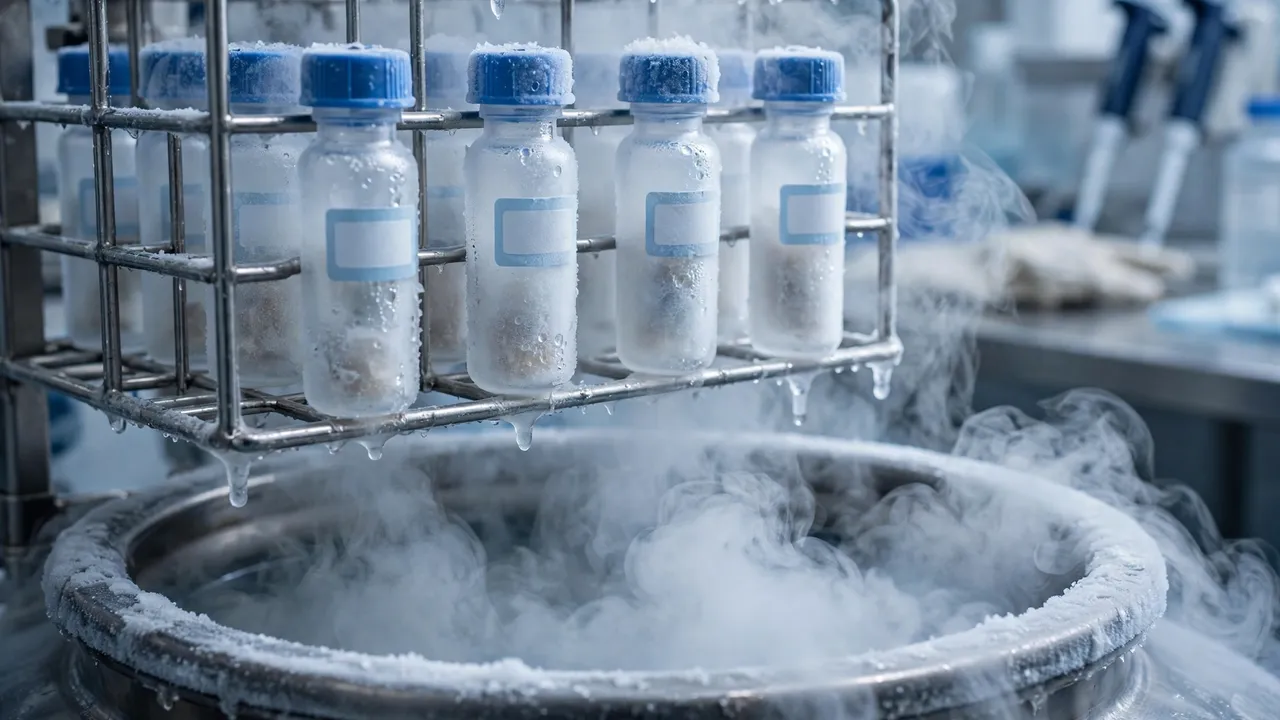
Sperm can be stored in liquid nitrogen for decades. There is no established time limit: healthy babies have been born from sperm frozen for more than 20 years, and samples frozen in the 1970s and 1980s have still produced pregnancies. The sperm itself does not age in storage — it is held at −196°C, where all biological activity stops.
What does age is the bill. Storage is charged every year, and it does not stop on its own. If you freeze at 30 and do not use the sperm until 45, you will have paid 15 years of storage — roughly $3,600 to $11,250 at current rates, on top of the first-year cost. That is why the multi-year prepay plans exist: paying for five or ten years up front is usually much cheaper per year than renewing annually.
Two practical points:
- Keep your contact details up to date with the storage provider. If they cannot reach you, they cannot confirm you want to keep paying — and abandoned samples are eventually discarded under the terms of your storage agreement.
- Read the storage agreement before you sign it. It should say what happens if you miss a payment, how long the provider waits before discarding a sample, what happens if you die, and whether your partner can use the sperm. These are not details to discover later.
What Sperm Freezing Cost Does NOT Include
The headline price covers freezing and storage. It does not cover what happens when you want to use the sperm — and that is where the real money is.
- Thawing. Preparing a frozen sample for use costs roughly $100 to $400, charged when you use it.
- Shipping. Moving a sample to another clinic costs roughly $200 to $500 or more, depending on distance and courier. Liquid nitrogen dry shippers are specialist freight.
- The fertility treatment itself. Using frozen sperm means IUI or IVF, and that is a separate bill entirely. IUI typically costs $300 to $1,000 per cycle plus medication; a single IVF cycle typically costs $12,000 to $14,000 or more. Our IVF cost guide has the full breakdown.
- Further testing. If the frozen sample’s post-thaw motility is low, your clinic may recommend ICSI — injecting a single sperm directly into the egg — which adds to the IVF cost. Our ICSI guide explains when it is needed.
None of this makes freezing a bad deal. It makes it a first step, not a complete solution. When you compare the cost of freezing with the cost of the treatment that follows it, freezing is the cheap part — which is exactly why it is worth doing well, with enough samples stored, rather than doing it as cheaply as possible and regretting it later.
How to Save on Sperm Freezing Cost
- Prepay for storage. Multi-year plans are the single biggest saving. A ten-year prepay can cut the yearly storage cost by more than half compared with paying annually.
- Compare the all-in first-year total, not the headline freeze fee. Ask each provider for the total including consultation, semen analysis, bloodwork, freezing, and the first year of storage — then compare those totals.
- Consider a mail-in kit if you only need simple banking. For a healthy man with no fertility concerns, a kit at $439 to $595 for the first year is hard to beat on price.
- Check your insurance before you assume you are paying out of pocket. If the freezing is for a medical reason, a state mandate may cover it — and your clinic’s financial counsellor can check for free.
- Ask about military and oncology discounts. The DoD program reimburses up to $500 a year for service members, and many providers discount oncology cases.
- Freeze enough samples the first time. Going back for a second freeze visit later costs almost as much as the first one. Two or three samples banked in one visit is cheaper than two separate visits.
- Do not skip the semen analysis to save money. Freezing a sample without knowing its count and motility is like storing food without checking whether it is fresh — you may be paying years of storage for a sample that was never going to work.
Is Sperm Freezing Worth the Cost?
For most men who freeze, the answer is yes — because the alternative is worse. Without frozen sperm, a man who loses his fertility to cancer treatment, surgery, or age has no way back. The cost of freezing — a few hundred dollars a year — is small against the cost of IVF, donor sperm, or the regret of not having the option at all.
It is worth it when:
- You are about to have treatment that may damage your fertility, such as chemotherapy or radiotherapy.
- You are delaying fatherhood into your late 30s or 40s and want a younger sample stored.
- You work in a job with a risk of injury to the testes, or you are deploying with the military.
- You are having a vasectomy and want to keep the option of biological children.
- Your partner is about to start IVF and you want a backup sample stored in case you cannot produce one on the day.
It is less obviously worth it when you are young, healthy, and planning children soon — in that case the storage fees buy you little. But even then, a single year of storage is a few hundred dollars, and it buys time to decide. The men who regret freezing are rare; the men who regret not freezing are not.
If your partner is considering the equivalent option, our egg freezing guide explains the costs and process.
Myths About Sperm Freezing Cost
- “Freezing sperm costs thousands of dollars a year.” No — the first year is typically $450 to $1,500, and storage after that is $240 to $750 a year. The thousands only appear when you add up many years of storage, or when you count the IVF that follows.
- “The cheapest freeze is the best deal.” Not necessarily. A cheap freeze fee with per-sample storage can cost more over five years than a pricier freeze with flat per-account storage. Compare the five-year total, not the first-year price.
- “Mail-in kits are not as safe as clinics.” The freezing and storage process is the same — laboratory-tested, frozen in liquid nitrogen, and stored at −196°C. What differs is the service around it, not the science. The American Society for Reproductive Medicine explains the process in its sperm freezing fact sheet.
- “Insurance never covers sperm freezing.” Wrong for medical freezing in mandate states — Connecticut, Delaware, New Hampshire, Maryland, Illinois, Rhode Island, and New York require coverage for fertility preservation when treatment may cause infertility. Elective freezing is a different story.
- “Frozen sperm goes bad after a few years.” No — there is no established time limit. Healthy babies have been born from sperm stored for more than 20 years.
- “One sample is enough.” Often it is not. A single sample may contain enough motile sperm for only one attempt, and samples can be lost or damaged. Most clinics recommend banking two or three samples.
Frequently Asked Questions (FAQs)
How much does it cost to freeze sperm in the US?
Sperm freezing cost in the US is typically $450 to $1,500 for the first year, which includes the consultation, semen analysis, bloodwork, processing and freezing, and the first year of storage. After that, storage costs $240 to $750 a year. Across nine US sperm banks, the first year runs $250 to $1,490, with a median of about $580.
How much is sperm storage per year?
Annual sperm storage costs $240 to $750 a year, with $600 a year the most common price. Some providers charge per sample and some per account — with per-sample pricing, three samples at $245 each costs $735 a year. Multi-year prepay plans can cut the yearly cost substantially.
How long can sperm be frozen for?
There is no established time limit. Sperm is stored in liquid nitrogen at −196°C, where all biological activity stops, and healthy babies have been born from sperm frozen for more than 20 years. Storage fees continue for as long as you keep the samples stored.
Does insurance cover sperm freezing?
Elective sperm freezing is almost never covered. Medical sperm freezing — for example, before chemotherapy — is covered by law in several states, including Connecticut, Delaware, New Hampshire, Maryland, Illinois, Rhode Island, and New York. Members of the US military can be reimbursed up to $500 a year under the DoD Fertility Preservation Pilot Program.
How many sperm samples should I freeze?
Most clinics recommend two or three samples. A single sample may not contain enough motile sperm for more than one pregnancy attempt, and samples can occasionally be lost or damaged. Banking two or three samples in one visit is cheaper than coming back for a second freeze later.
Can I freeze sperm at home with a mail-in kit?
Yes. Companies such as Fellow and Legacy send a collection kit to your home, and you return the sample to their laboratory for testing, freezing, and storage. First-year prices run $439 to $595. A kit is a good option for simple banking, but a clinic is better if you have fertility concerns or need surgical sperm retrieval.
What is not included in the sperm freezing cost?
The headline price covers freezing and storage only. It does not include thawing ($100–$400), shipping a sample to another clinic ($200–$500 or more), or the fertility treatment that uses the sperm — IUI typically costs $300 to $1,000 per cycle, and IVF typically costs $12,000 to $14,000 or more per cycle.
Is sperm freezing worth the cost?
For most men who freeze, yes. A few hundred dollars a year preserves the option of biological children if treatment, injury, or age later affects fertility. It is most clearly worth it before cancer treatment, when delaying fatherhood, or before a vasectomy. The cost of freezing is small compared with the cost of IVF or donor sperm later.
By Emily Johnson, Content Writer & Fertility Advocate · Medically reviewed by Dr. Sarah Ahmed, Medical Content Advisor
About the author: Emily Johnson is a Content Writer & Fertility Advocate who covers IVF and fertility treatment topics. Meet the team.
Medical review: This article was medically reviewed by Dr. Sarah Ahmed, Medical Content Advisor, for clinical accuracy. Meet the team.
Medical disclaimer: This article is for informational purposes only and is not medical advice, diagnosis, or treatment. Due dates are estimates, and every pregnancy is different. Always confirm your due date and any testing or treatment decisions with your clinic or healthcare provider.
