

Embryo Transfer Day: What to Expect, Step by Step

Embryo transfer day is the day a laboratory-grown embryo is placed in your uterus with a thin, soft catheter, usually guided by ultrasound. The procedure itself is short — often 10 to 20 minutes — you are awake for it, and most people go home the same day. This step-by-step guide to embryo transfer day explains how to prepare, what happens in the procedure room, what it feels like, and what to do in the hours and days that follow.
Table of Contents
What Is Embryo Transfer?
Embryo transfer is the final step of IVF. After eggs are collected and fertilized in the laboratory, the embryos are cultured for several days. On transfer day, the embryology team selects the embryo or embryos to transfer, and a clinician passes a fine, flexible catheter through the cervix into the uterine cavity and releases the embryo in a tiny drop of culture fluid. The goal is for the embryo to attach to the uterine lining — implantation — and develop into a pregnancy. MedlinePlus describes the same sequence: embryos are placed in the womb a few days after egg retrieval and fertilization, through a thin tube passed through the cervix while you are awake.
Embryo Transfer Day at a Glance
Every clinic runs the day slightly differently, but the order is remarkably consistent. Use this table to picture the visit before you arrive.
| Stage | What usually happens |
|---|---|
| Before you arrive | Take medicines exactly as scheduled. Arrive with a comfortably full bladder if your clinic asks for one. |
| Check-in | Staff confirm your identity and consent, and check the embryo dish labels match you. The team confirms how many embryos will be transferred. |
| Positioning | You lie back as for a pelvic exam. A speculum is placed so the cervix can be seen. |
| Guidance | An ultrasound probe on your abdomen shows the uterus and catheter position. |
| Transfer | The embryo is loaded into a soft catheter, passed through the cervix, and gently released. |
| Check | The embryologist checks the catheter under a microscope to confirm it is empty. |
| Afterwards | You can usually empty your bladder straight away, rest briefly if you wish, and go home the same day. |
The hands-on transfer takes only a few minutes. Identity checks, waiting, and talking through your medicines and pregnancy-test date make the whole visit longer — plan for the appointment, not just the procedure. Our IVF treatment calendar guide shows where transfer day sits in the full cycle.
How to Prepare for Embryo Transfer Day
Preparation is mostly about following your clinic’s written schedule exactly. Your clinic’s instructions come first — the points below explain the common requests so they make sense on the day.
Medicines and Timing
Take hormone medicines exactly as prescribed, at the same times each day. In a frozen cycle, progesterone timing is especially important because it helps the uterine lining become receptive to the embryo. Do not stop or change any medicine on your own, even if you have bleeding before test day — contact your clinic for advice instead. Our progesterone after embryo transfer guide explains levels, support, and when clinics usually stop.
Why Clinics Ask for a Full Bladder
Many clinics ask you to arrive with a moderately full bladder. A full bladder straightens the angle between the cervix and uterus and creates a clear acoustic window, so the uterus and catheter tip show up well on the abdominal ultrasound. The American Society for Reproductive Medicine (ASRM) guideline recommends transabdominal ultrasound guidance because it improves clinical pregnancy and live-birth rates and helps place the catheter tip in the upper or middle part of the cavity, more than 1 cm from the fundus. Comfortably full is the aim — if holding on becomes painful, tell the staff.
What to Bring and Wear
Wear comfortable clothes that are easy to remove, and shower as usual in the morning. Most clinics ask you to avoid perfume, hairspray, and scented lotions on transfer day because embryos are sensitive to air quality in the laboratory environment. Bring your appointment paperwork and consent forms if they were sent in advance, your medicine list, and your clinic’s after-hours number. You are usually welcome to bring a partner or support person, and in many clinics they can stay in the room — ask in advance so there is no surprise on the day.

What Happens During Embryo Transfer, Step by Step
The transfer is done in a clinic procedure room, not an operating theater. No incisions are made, and anesthesia is not normally needed. Here is the sequence most patients experience.
Step 1: Identity and Consent Checks
Before anything else, the physician and embryologist verify your identity and check that the embryo labels match. You will confirm the number of embryos to be transferred and sign consent if you have not already. In some clinics you can see the embryo on a screen before transfer if you wish. These checks feel formal for a reason: they are the safeguard that the right embryo goes to the right person.
Step 2: Positioning and the Speculum
You lie on an examination couch in a position similar to a routine pelvic exam or smear test. The clinician gently inserts a speculum to see the cervix, and the cervix may be cleaned with a small amount of fluid to remove mucus. This is the part most people compare to a Pap test — pressure rather than pain.
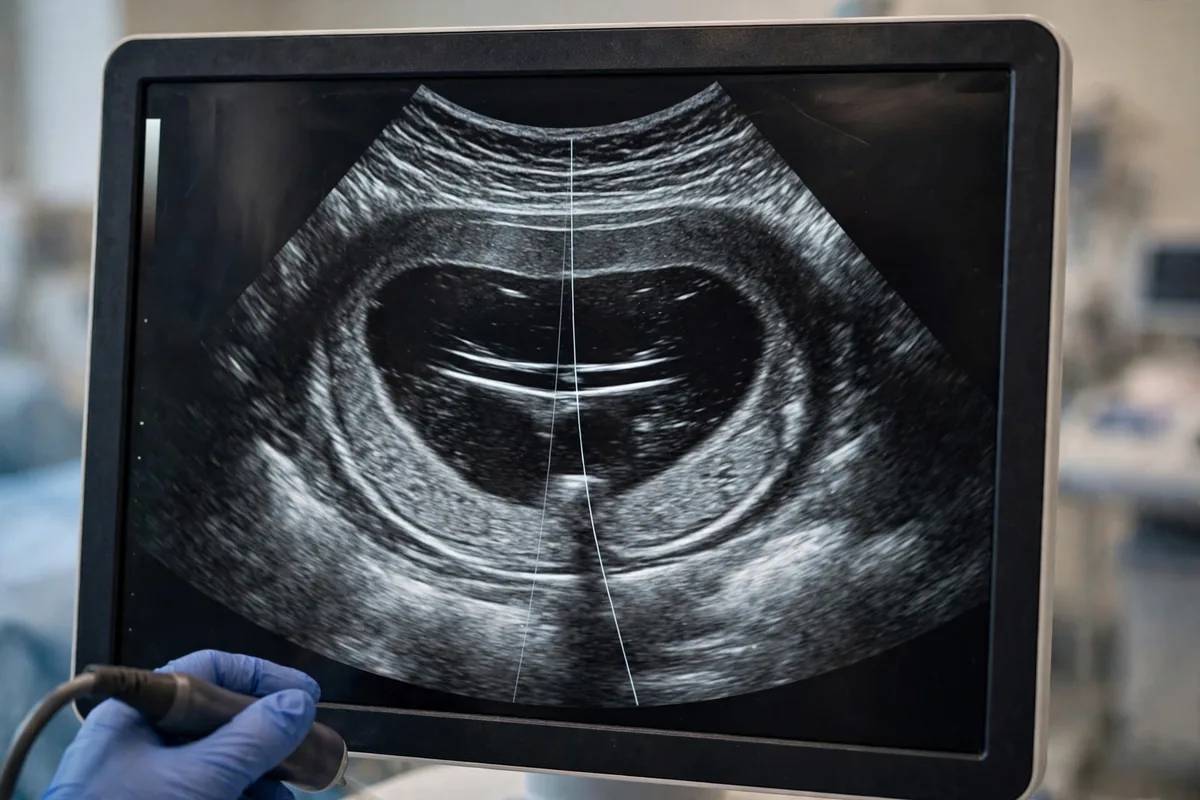
Step 3: Ultrasound Guidance and the Catheter
With the ultrasound probe on your abdomen, the clinician passes a soft, flexible catheter through the cervix into the uterine cavity while watching its position on the monitor. ASRM also recommends soft catheters, which improve pregnancy rates in fresh and frozen cycles. Some clinics first pass an empty trial catheter to map the path, then pass the loaded catheter through it. You may see a tiny flash on the screen as the embryo is released in its small bubble of fluid.
Step 4: Release and the Microscope Check
The embryologist loads the embryo into the catheter in the laboratory and brings it to the procedure room. The clinician slowly releases the embryo into the cavity, withdraws the catheter, and hands it back to the embryologist, who checks it under a microscope to confirm the embryo has been transferred and the catheter is empty. Cambridge IVF, an NHS unit, describes exactly this check — if an embryo were found on the catheter, the process would be repeated.
Does Embryo Transfer Hurt? What You May Feel
For most people, embryo transfer is not painful. The common sensations are pressure from the speculum, a full-bladder urge, and mild cramping as the catheter passes through the cervix. Routine anesthesia is not recommended because it has not been shown to improve pregnancy rates, and the UK regulator HFEA notes you will not need an anesthetic unless you have a condition that would make the procedure painful. If you are anxious about pain, tell your team before the day — a mild sedative is occasionally offered to help you relax, though it is uncommon. Tell the clinician during the procedure if anything hurts; a difficult transfer, where the cervix is narrow or the uterus is angled, sometimes needs a firmer catheter or extra time, and your comfort still matters.
Fresh vs Frozen: How Transfer Day Differs
The transfer procedure itself is the same. What differs is how you arrived at the day — and what your body is recovering from.
| Fresh transfer | Frozen transfer (FET) | |
|---|---|---|
| Timing | A few days after egg collection in the same cycle | In a later cycle, after the lining is prepared |
| Lining preparation | Your stimulated cycle hormones | Estrogen then progesterone, or a natural/modified natural cycle |
| On the day | Embryos cultured since retrieval; transfer on day 3 or day 5–6 | Embryo thawed that day; lab confirms thaw survival and arrival time |
| How you may feel | Ovaries may still be enlarged from stimulation | Usually no stimulation recovery; ovaries are quiet |
| Medicines after | Progesterone support, sometimes estrogen | Progesterone (and estrogen if prescribed) continued as scheduled |
Our frozen embryo transfer timeline walks through the full FET cycle day by day, and our egg retrieval day guide covers the fresh-cycle procedure that comes before a fresh transfer.
Day 3 vs Day 5: Why Your Transfer Is on That Day
Embryos are most often transferred on day 3 (cleavage stage) or day 5 to 6 (blastocyst stage, when the embryo has formed a small fluid-filled ball of cells). Day 5 is the stage at which an embryo would naturally enter the uterus, which is why many labs aim for blastocyst transfer when enough embryos are developing well. Your clinic chooses the day from how your embryos are growing and your history — it is not a day you pick. Our day 3 vs day 5 embryo transfer guide explains how the choice affects your due-date counting.
After the Transfer: The First Hours
You may rest briefly in the clinic if you wish, but prolonged bed rest is not recommended. ASRM’s guideline, based on good evidence, recommends against bed rest after transfer, and NHS guidance makes the same point: lying on your back for days will not help the embryo implant. You can usually get up, empty your bladder, walk, and go home the same day. Emptying your bladder is safe — the bladder and uterus are separate, and the embryo cannot be flushed out. Most people return to light daily activities and work the same day or the next day. Our bed rest after embryo transfer guide reviews the evidence in full. Before you leave, make sure you have your medicine plan and pregnancy-test date in writing.
What Is Normal After Transfer — and What Is Not
Mild cramping, light spotting from the cervix, bloating, breast tenderness, and tiredness are common in the days after transfer and are often related to hormone medicines rather than the transfer itself. Symptoms cannot confirm or rule out pregnancy — having no symptoms does not mean the transfer failed. Our spotting after embryo transfer guide and two-week wait guide cover the waiting days in detail. Contact your clinic promptly for moderate or severe pain, heavy bleeding, fever, or vomiting that prevents drinking. Seek urgent care for difficulty breathing, chest pain, one-sided low abdominal pain, shoulder-tip pain, or fainting. Keep taking prescribed medicines until your clinic tells you to stop, and take your pregnancy test on the date your clinic gives you — blood tests are typically scheduled about 9 to 14 days after transfer. Our when to test after IVF guide explains the timing.
Embryo Transfer Day Myths
The embryo cannot fall out. Once released into the uterine cavity, it cannot drop out when you stand, walk, cough, sneeze, or use the toilet. Bed rest does not improve implantation, and strict immobility is not advised. You do not need to keep your bladder full after the transfer — that request was only for the ultrasound view during the procedure. Acupuncture around transfer is sometimes offered for relaxation, but ASRM found it does not improve live-birth rates. And a smooth, painless transfer does not guarantee pregnancy, just as a slightly uncomfortable one does not doom it — embryo competence and lining receptivity matter far more than how the few minutes felt. For how many embryos to transfer, see our single vs double embryo transfer guide. ReproductiveFacts, ASRM’s patient site, collects its embryo transfer resources in one place if you want to read further.
Questions to Ask Your Clinic on Transfer Day
- How many embryos are we transferring today, and what stage and grade are they?
- Fresh or frozen — and is there anything different about my medicines today?
- How full should my bladder be, and when should I drink?
- Can my partner or support person be in the room?
- Will the transfer be ultrasound-guided, and can I watch the screen?
- What medicines do I continue tonight, and at what times?
- What is my pregnancy-test date, and is it a blood test or home test?
- What symptoms should make me call, and what is the after-hours number?
Frequently Asked Questions (FAQs)
What happens on embryo transfer day?
You check in, confirm identity and consent, and lie back as for a pelvic exam. A speculum shows the cervix, and a thin, soft catheter is guided through the cervix with abdominal ultrasound. The embryo is released into the uterus, the catheter is checked under a microscope, and you go home the same day. The transfer itself takes about 10 to 20 minutes.
Is embryo transfer painful?
For most people it is not painful. It feels similar to a smear test or pelvic exam, with pressure from the speculum and a full bladder, and sometimes mild cramping as the catheter passes the cervix. Anesthesia is not normally needed.
Why do I need a full bladder for embryo transfer?
A moderately full bladder straightens the angle between the cervix and uterus and gives a clear ultrasound window, so the clinician can see the catheter tip and place the embryo accurately. You can empty your bladder straight after the transfer.
How long does embryo transfer take?
The transfer procedure takes about 10 to 20 minutes, and the hands-on part only a few minutes. Identity checks, waiting, and your medicine and test-date discussion make the whole clinic visit longer.
Can the embryo fall out after transfer?
No. Once the embryo is released into the uterine cavity, it cannot fall out when you stand, walk, cough, or use the toilet. Bed rest is not needed and has not been shown to improve outcomes.
What should I do after embryo transfer?
Get up when you feel ready, go home the same day, and carry on with light daily activities. Keep taking progesterone and any other prescribed medicines exactly as scheduled, avoid strenuous exercise until your clinic advises, and take your pregnancy test on the date your clinic gives you.
What is the difference between fresh and frozen embryo transfer day?
The procedure is the same. A fresh transfer happens a few days after egg collection in the same cycle, while a frozen transfer happens in a later cycle after the lining is prepared and the embryo is thawed that day. With a fresh transfer your ovaries may still be enlarged from stimulation.
When will I take my pregnancy test after embryo transfer?
Most clinics schedule a blood pregnancy test about 9 to 14 days after transfer. Testing earlier at home can mislead — trigger injections in fresh cycles contain hCG and can cause a false positive, and testing too soon can give a false negative. Follow your clinic’s date.
The Bottom Line
Embryo transfer day is short, awake, and carefully checked: identity and consent first, then a speculum, an ultrasound-guided soft catheter, a gentle release, and a microscope check that the catheter is empty. Prepare by taking medicines exactly on schedule, arriving with a comfortably full bladder if asked, skipping fragrances, and bringing your after-hours number. Afterwards, get up, go home, keep your medicines going, and wait for your clinic’s test date — the embryo cannot fall out, and bed rest will not help it implant. For the days that follow, see our two-week wait after embryo transfer guide.
By Emily Johnson, Content Writer & Fertility Advocate · Medically reviewed by Dr. Sarah Ahmed, Medical Content Advisor
About the author: Emily Johnson is a Content Writer & Fertility Advocate who covers IVF and fertility treatment topics. Meet the team
Medical review: This article was medically reviewed by Dr. Sarah Ahmed, Medical Content Advisor, for clinical accuracy. Meet the team
Medical disclaimer: This article is for informational purposes only and is not medical advice, diagnosis, or treatment. Due dates are estimates, and every pregnancy is different. Always confirm your due date and any testing or treatment decisions with your clinic or healthcare provider.
