
Trigger Shot in IVF: Timing, Symptoms & What to Expect

By Emily Johnson, Content Writer & Fertility Advocate · Medically reviewed by Dr. Sarah Ahmed, Medical Content Advisor
If you are in the middle of an IVF cycle, the trigger shot is the injection your whole calendar has been building toward — and the one with the least room for error. It is a single dose, given at an exact hour your clinic sets, and it starts a countdown measured in hours, not days, to your egg retrieval.
Here is the short answer first: a trigger shot in IVF is an injection, usually of hCG, that tells your mature eggs to finish developing so they can be collected. It mimics your body’s natural LH surge, the hormone signal that normally triggers ovulation. In IVF, egg retrieval is usually scheduled about 34 to 36 hours after the trigger shot — just before you would naturally ovulate — so the eggs can be collected from the follicles instead of being released. Most side effects are mild and short-lived, but the timing is not flexible: taking it early or late can change the outcome of the cycle. This guide explains what the shot does, the types your clinic may use, exactly how the timing works, what symptoms to expect, and when a pregnancy test can actually be trusted afterward.
Table of Contents
What Is a Trigger Shot in IVF?
A trigger shot is an injection given at the end of ovarian stimulation, once your follicles have grown to the right size. Its job is to do what your body would do on its own in a natural cycle: deliver the hormonal signal that finishes egg maturation and sets ovulation in motion.
In a natural cycle, a surge of luteinizing hormone (LH) from the brain triggers the final maturation of the egg and its release from the follicle about 36 hours later. In an IVF cycle, stimulation medications grow several follicles at once, and your clinic needs to control exactly when that final maturation happens — because retrieval must be timed to the hour. The trigger shot provides that controlled signal.
Without a trigger shot, eggs would not reliably reach full maturity on a schedule your clinic can plan around. With it, your team can book the retrieval room, the embryology laboratory, and your own schedule around one fixed point: the injection time.
The trigger shot is used in IVF, and also in some IUI and timed-intercourse cycles, where the same principle applies — the shot sets the day of insemination or intercourse so sperm and egg meet at the right moment. Our complete IUI treatment guide explains how timing works in that setting.
How Does a Trigger Shot Work?
The trigger shot works by binding to the same receptors as LH, your body’s ovulation hormone. The most common trigger, hCG (human chorionic gonadotropin), is structurally similar enough to LH that the ovaries respond to it in the same way: the eggs inside the follicles complete their final division, the follicle walls loosen, and the eggs become ready for release — or, in IVF, ready for collection.
That process takes time, which is why the interval matters so much. Ovulation normally follows the LH surge by roughly 36 hours. A trigger shot reproduces that interval, so your clinic can work backward from the retrieval appointment: if retrieval is booked for Wednesday at 9:00 AM, the trigger is typically given on Monday evening, about 36 hours earlier.
The trigger also affects the follicles after retrieval. The hormone signal encourages the remaining follicle cells to form the corpus luteum, which produces progesterone to support the uterine lining. That is one reason your clinic may also prescribe progesterone support after retrieval or transfer — our guide to progesterone after embryo transfer explains levels, support, and when it stops.
Types of Trigger Shot: hCG, GnRH Agonist, and Dual Trigger
Not every trigger shot is the same medication. Your clinic chooses the type based on your stimulation response, your risk of ovarian hyperstimulation syndrome (OHSS), and your cycle plan. The three main approaches are:
hCG trigger (the standard)
Most IVF cycles use an hCG trigger. Common brand names include Ovidrel (also sold as Ovitrelle in some countries), Pregnyl, and Novarel. hCG triggers come in two forms: urinary hCG, purified from urine, and recombinant hCG, made in a laboratory. Both act the same way in the body, and recombinant hCG is now the most widely used because of its consistency and purity.
hCG is the default because it is reliable: it produces a strong, sustained signal, it reliably matures eggs, and it supports the corpus luteum afterward. Its main drawback is that its longer action also raises the risk of OHSS in patients who over-respond to stimulation.
GnRH agonist trigger (Lupron trigger)
A GnRH agonist trigger, most often leuprolide acetate (brand name Lupron), works differently. Instead of supplying an LH-like hormone directly, it prompts your own pituitary gland to release a surge of LH (and FSH). The surge is shorter than the signal from hCG, which is why this type is often chosen when OHSS risk is a concern — for example, in patients with polycystic ovary syndrome (PCOS) or a very high number of follicles.
The trade-off is that the shorter surge provides less support to the corpus luteum, so a GnRH agonist trigger is usually paired with a freeze-all plan (all embryos frozen for a later transfer) or with extra hormonal support. Your clinic may also check your blood hormone levels after a Lupron trigger to confirm your body responded as expected.
Dual trigger
A dual trigger combines both approaches: a GnRH agonist plus a low dose of hCG. The idea is to get the benefit of your own LH surge plus a small amount of sustained hCG support. Clinics use this approach selectively, for example when a previous cycle produced fewer mature eggs than expected, or when they want the OHSS-sparing benefit of an agonist trigger without losing all corpus luteum support.
Which type you receive is a clinical decision, not a preference you need to make on your own. If you are unsure why your clinic chose one type, that is a fair question to ask at your monitoring appointment — the answer usually comes down to your follicle count, estradiol level, and OHSS risk on the day the decision is made.
| Trigger type | How it works | When it is often used |
|---|---|---|
| hCG (Ovidrel, Pregnyl, Novarel) | Mimics the LH surge directly, sustained signal | Most standard IVF cycles |
| GnRH agonist (Lupron) | Triggers your own LH surge, shorter signal | High OHSS risk, freeze-all cycles |
| Dual trigger | GnRH agonist + low-dose hCG | Selected cases, e.g. previous low maturity |
When Is the Trigger Shot Given?
The trigger shot is given when your monitoring shows the follicles are ready — not on a fixed cycle day. That decision is based on a combination of ultrasound and blood tests during stimulation:
- Follicle size. Clinics generally look for several leading follicles in the range of about 18 to 22 millimetres, with the rest of the cohort close behind. Triggering too early means eggs may not be mature; triggering too late risks spontaneous ovulation before retrieval.
- Follicle number. The overall count matters as much as the largest follicle, because your team wants as many mature eggs as possible in one retrieval.
- Estradiol level. Blood estradiol, which rises as follicles grow, helps confirm that the follicles seen on ultrasound are actually mature and functioning.
- Days of stimulation. Most patients reach this point after about 8 to 12 days of stimulation injections, but the range is wide. A shorter or longer stimulation does not by itself mean something is wrong — it means your ovaries responded at their own pace.
This is why the monitoring phase of IVF feels so appointment-heavy. Our IVF treatment calendar walks through the full timeline from stimulation to transfer day, so you can see where the trigger shot fits in the sequence.
Once the decision is made, your clinic will give you the exact date and hour, and usually a written instruction sheet. Treat that time as fixed: set an alarm, confirm it back to your nurse, and keep the medication refrigerated exactly as instructed until then.
Trigger Shot Timing: The 36-Hour Countdown Explained
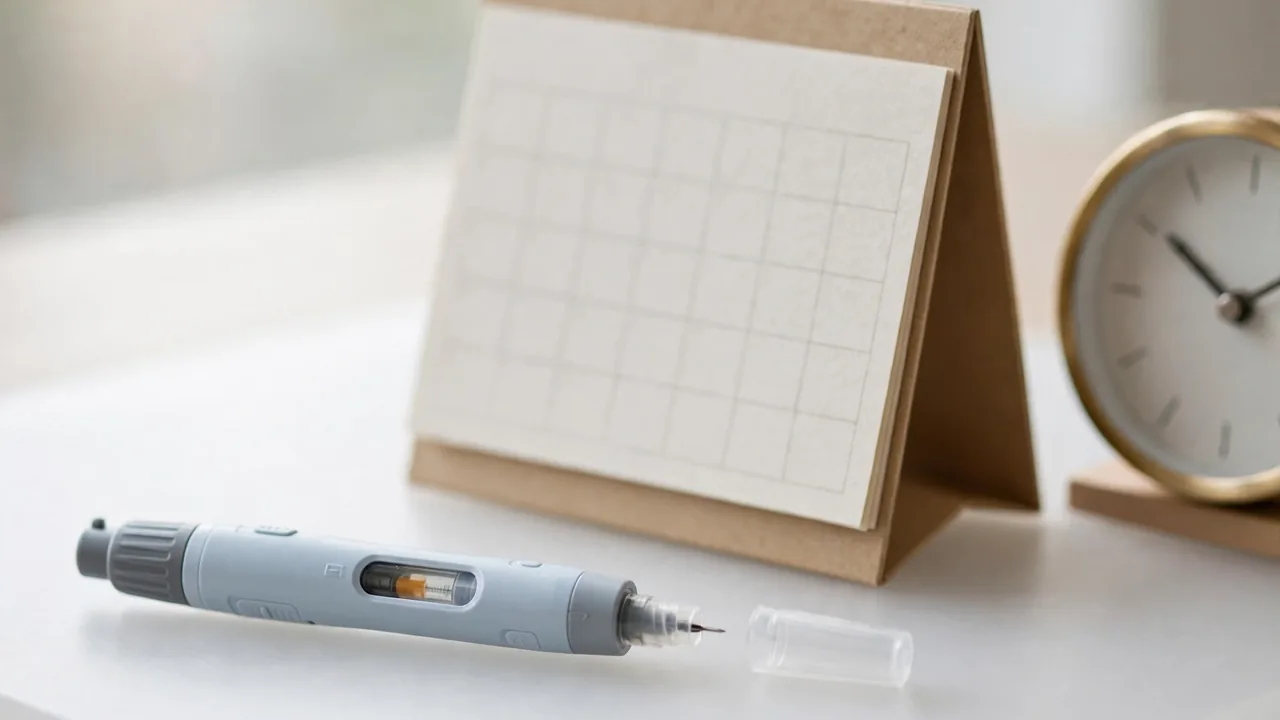
Timing is the part of the trigger shot that patients most often underestimate — and the part where precision matters most. Here is how the countdown works in each setting:
IVF: about 34 to 36 hours before retrieval
In IVF, egg retrieval is scheduled roughly 34 to 36 hours after the trigger injection. That window is chosen deliberately: the eggs are mature, but natural ovulation has not yet happened, so they are still inside the follicles where they can be collected. If retrieval were much later, some follicles could ovulate on their own and those eggs would be lost. If it were much earlier, some eggs would still be immature.
A typical example: trigger shot Monday at 9:00 PM, egg retrieval Wednesday at 9:00 AM — a 36-hour interval. Your clinic will give you your own exact times; the example is only to show how the arithmetic works, not a schedule to follow.
What retrieval day itself involves — sedation, the collection procedure, and what happens afterward — is covered in detail in our guide to egg retrieval day.
IUI: usually 24 to 36 hours before insemination
In an IUI cycle, insemination is typically scheduled 24 to 36 hours after the trigger shot, timed so sperm are present when ovulation occurs. The exact interval depends on your clinic’s protocol and whether a single or double insemination is planned.
Timed intercourse: ovulation about 36 hours after the shot
In a timed-intercourse cycle, your clinic will advise intercourse around the expected ovulation window, roughly 36 hours after the trigger, and sometimes on the day before and after as well.
The common thread is that none of these windows is approximate in practice. A difference of a few hours can matter, which is why clinics ask you to confirm the injection time in writing and to call immediately — not at your next appointment — if you think you took it at the wrong time or missed it.
How to Take the Trigger Shot and Does It Hurt?
Most trigger shots are self-administered at home, usually as an injection under the skin (subcutaneous) in the abdomen, though some hCG preparations are given into the muscle (intramuscular). Your clinic will show you the technique, and many clinics also provide a video or a practice demonstration. The practical points patients find most useful are:
- Follow the mixing and storage instructions exactly. Some preparations need to be mixed just before use; others come pre-filled. Check the expiry, keep the medication at the temperature on the label, and do not use a dose that looks cloudy or damaged unless your clinic tells you to.
- Rotate the injection site. If you have been doing daily stimulation injections, choose a fresh spot on the abdomen, away from bruised areas.
- Pain is usually mild. Most people describe the trigger shot as a brief sting or pressure, similar to their other stimulation injections. The needle is small, and the discomfort passes within seconds to minutes. Soreness, redness, or a small bruise at the site afterward is common and usually settles within a day or two.
- Do not repeat or adjust the dose on your own. If you are unsure whether the full dose went in — for example, if some liquid leaked — call your clinic right away rather than injecting again. A second dose without instruction can change the timing and the hormone levels your clinic is planning around.
- Keep your phone charged and your clinic’s after-hours number handy. Because the trigger is usually given in the evening, questions that come up at injection time need an after-hours contact, not a wait until morning.
Feeling nervous about the injection is normal, especially because this is the one dose you cannot easily redo. Nurses hear that worry every day, and most clinics would rather take a call at 9:00 PM than discover a timing problem at retrieval.
Symptoms and Side Effects After the Trigger Shot

Most side effects after a trigger shot are mild and short-lived, and many of them come from the stimulation itself — your ovaries are enlarged, and the trigger does not change that overnight. Common, expected symptoms in the day or two after the shot include:
- Bloating or a feeling of fullness in the lower abdomen
- Mild pelvic or abdominal discomfort, cramping, or heaviness
- Breast tenderness
- Soreness, redness, or bruising where the injection was given
- Mood changes, tiredness, or feeling emotional — understandable at this point in a cycle, and also a hormonal effect
- Mild nausea or headache in some people
These symptoms usually ease within a day or two, though bloating can linger until after retrieval, when the follicles have been drained.
Warning signs: when to call your clinic promptly
A more serious complication, ovarian hyperstimulation syndrome (OHSS), happens when the ovaries over-respond and fluid shifts out of the bloodstream. Mild OHSS causes bloating and digestive discomfort and is managed with rest and fluids. Severe OHSS is uncommon but needs prompt medical attention. Call your clinic the same day — or seek urgent care if you cannot reach them — if you notice:
- Severe or worsening pelvic or abdominal pain
- Rapid or significant bloating, or rapid weight gain
- Breathlessness or difficulty breathing
- Very low urine output
- Severe nausea or vomiting that prevents you from keeping fluids down
Early recognition changes how OHSS is managed, and sometimes changes the transfer plan — for example, freezing all embryos and postponing transfer until your body has settled. That decision protects your health and does not mean the cycle has failed; frozen embryos can be transferred in a later, calmer cycle.
What Happens After the Trigger Shot?
The trigger shot is the last step before the part of the cycle you have been waiting for. What follows depends on your treatment type:
- IVF: Egg retrieval about 34 to 36 hours later, then fertilization in the laboratory, embryo development over the next 5 to 6 days, and either a fresh transfer or freezing for a later transfer. The full sequence, including how long each stage takes, is covered in our guide to how long IVF takes.
- IUI: Insemination 24 to 36 hours after the shot, then the two-week wait until a pregnancy test.
- Timed intercourse: Intercourse around the ovulation window, then the same wait.
After retrieval or insemination, you enter the two-week wait — the stretch between the procedure and the pregnancy test. Our day-by-day guide to the two-week wait after embryo transfer explains what symptoms mean (and do not mean) during that period, and why symptom-spotting cannot tell you the result.
Your clinic may also start or continue progesterone support, and will give you instructions about activity, medications, and what to avoid before the test. Follow those instructions even if you feel well; they are written for the cycle plan, not for how you feel on a given day.
Can a Trigger Shot Cause a False Positive Pregnancy Test?
Yes — and this is the most common source of confusion after a trigger shot. A pregnancy test detects hCG, the same hormone in most trigger shots. That means a test taken too soon after the trigger can show positive from the injected hormone, not from a pregnancy.
How long the trigger hormone lingers depends on the dose and on how quickly your body clears it. As a rough guide, a 10,000 IU hCG trigger can remain detectable for up to about 10 to 14 days, while a 5,000 IU dose clears faster. Individual variation is wide, so there is no day on which a home test becomes guaranteed reliable for everyone.
That is why clinics do not rely on early home tests. The reliable check is a blood beta hCG test, usually about 14 days after retrieval or transfer (your clinic will give you the exact day). Our guide to beta hCG levels after IVF explains the chart, the doubling timeline, and what different levels mean — and our guide to when to take a pregnancy test after IVF covers the day-by-day timing in full.
Practical advice: if you test at home before your clinic’s test day, treat any result with caution. A positive may be the trigger; a negative may simply be too early. Neither result changes what your clinic’s blood test will show, and early testing mostly adds anxiety to an already anxious wait. If you do test early and get a confusing result, tell your clinic — they have seen it many times and can tell you whether it changes anything about your test day.
What If You Miss the Trigger Shot or Take It at the Wrong Time?
If you miss the dose, take it late, or think you took it at the wrong time, call your clinic immediately — even if it is late at night. Do not wait until your next appointment, and do not try to fix it yourself by taking another dose or shifting your retrieval time.
What happens next depends on how far off the timing is and what your clinic can rearrange. Sometimes retrieval can be moved slightly; sometimes the cycle plan changes to a freeze-all or a converted cycle; sometimes the cycle cannot be salvaged and the honest advice is to start again. Those outcomes are disappointing, but they are far better than a retrieval booked around a timing your clinic does not know about.
The best prevention is boring but effective: write the date and time down when your clinic gives it to you, set two alarms, confirm the time back to your nurse, and keep the medication and instructions together in one place the evening before.
Does the Trigger Shot Guarantee Mature Eggs or Pregnancy?
No. The trigger shot improves the odds that mature eggs are available at retrieval, but it cannot create eggs that were not there, fix egg quality, or guarantee fertilization or pregnancy. Some follicles will contain immature eggs even with perfect timing; some mature eggs will not fertilize; some fertilized eggs will not develop into embryos suitable for transfer. That attrition is a normal part of IVF, not a sign that the trigger failed.
What the trigger shot does guarantee is timing: it gives your clinic a predictable window in which to collect the eggs that are ready. Within that window, the outcome depends on the same factors that shape every IVF cycle — age, ovarian reserve, sperm factors, embryo development, and uterine receptivity. If your retrieval yields fewer mature eggs than expected, ask your clinic whether the trigger type, dose, or timing should change next time. That conversation is often more useful than any single-cycle result on its own.
For independent patient guidance on fertility treatment options, the American Society for Reproductive Medicine (ASRM) publishes patient education materials that explain stimulation, trigger, and retrieval in plain language.
The Bottom Line
A trigger shot in IVF is a single, precisely timed injection that finishes egg maturation and sets the clock for retrieval about 34 to 36 hours later. hCG is the standard trigger; a GnRH agonist (Lupron) trigger or a dual trigger is used when OHSS risk or a previous response calls for it. Most symptoms afterward — bloating, mild cramping, breast tenderness, injection-site soreness — are mild and brief, but severe pain, rapid bloating, breathlessness, or very low urine output need a prompt call to your clinic. And because the trigger hormone is hCG itself, early pregnancy tests can mislead: wait for your clinic’s blood test, usually about 14 days later, for a result you can trust. Get the time right, write it down, set the alarm, and call immediately if anything goes off plan — that one habit protects the whole cycle.
Frequently Asked Questions (FAQs)
What is a trigger shot in IVF?
A trigger shot in IVF is an injection, usually of hCG, given at the end of ovarian stimulation to finish egg maturation and set the timing for egg retrieval. It mimics your body’s natural LH surge, which normally triggers ovulation about 36 hours later.
How long after the trigger shot is egg retrieval?
Egg retrieval is usually scheduled about 34 to 36 hours after the trigger shot. That window lets the eggs mature fully while still being inside the follicles, so they can be collected before natural ovulation happens.
Does the trigger shot hurt?
Most people feel only a brief sting or pressure, similar to other stimulation injections. Soreness, redness, or a small bruise at the injection site afterward is common and usually settles within a day or two.
What are normal symptoms after a trigger shot?
Bloating, mild pelvic discomfort or cramping, breast tenderness, injection-site soreness, tiredness, and mood changes are common and usually ease within a day or two. Severe pain, rapid bloating, breathlessness, or very low urine output are not normal — call your clinic promptly if they occur.
Can a trigger shot cause a false positive pregnancy test?
Yes. Most trigger shots contain hCG, the same hormone pregnancy tests detect. A test taken too soon — within roughly 10 to 14 days of a 10,000 IU trigger — can show positive from the injected hormone. Wait for your clinic’s blood beta hCG test, usually about 14 days after retrieval or transfer.
What happens if I miss my trigger shot or take it late?
Call your clinic immediately, even at night, and do not take another dose on your own. Your clinic may be able to adjust the retrieval time or the cycle plan, depending on how far off the timing is. Waiting until your next appointment can cost the cycle.
What is the difference between an hCG trigger and a Lupron trigger?
An hCG trigger supplies an LH-like hormone directly and gives a sustained signal, making it the standard choice. A Lupron (GnRH agonist) trigger prompts your own body to release an LH surge, which is shorter — that lowers OHSS risk but usually means embryos are frozen for a later transfer rather than transferred fresh.
When can I take a pregnancy test after a trigger shot?
For a reliable result, wait until your clinic’s scheduled blood test, usually about 14 days after retrieval or transfer. Home tests taken earlier can be misleading in both directions: positive from the trigger hormone, or negative simply because it is too early.
About the Author
About the author: Emily Johnson is a Content Writer & Fertility Advocate who covers IVF and fertility treatment topics. Meet the team
Medical review: This article was medically reviewed by Dr. Sarah Ahmed, Medical Content Advisor, for clinical accuracy. Meet the team
Medical disclaimer: This article is for informational purposes only and is not medical advice, diagnosis, or treatment. Due dates are estimates, and every pregnancy is different. Always confirm your due date and any testing or treatment decisions with your clinic or healthcare provider.
