What Is a Fertilized Egg? From Fertilization to Implantation & What Happens Next

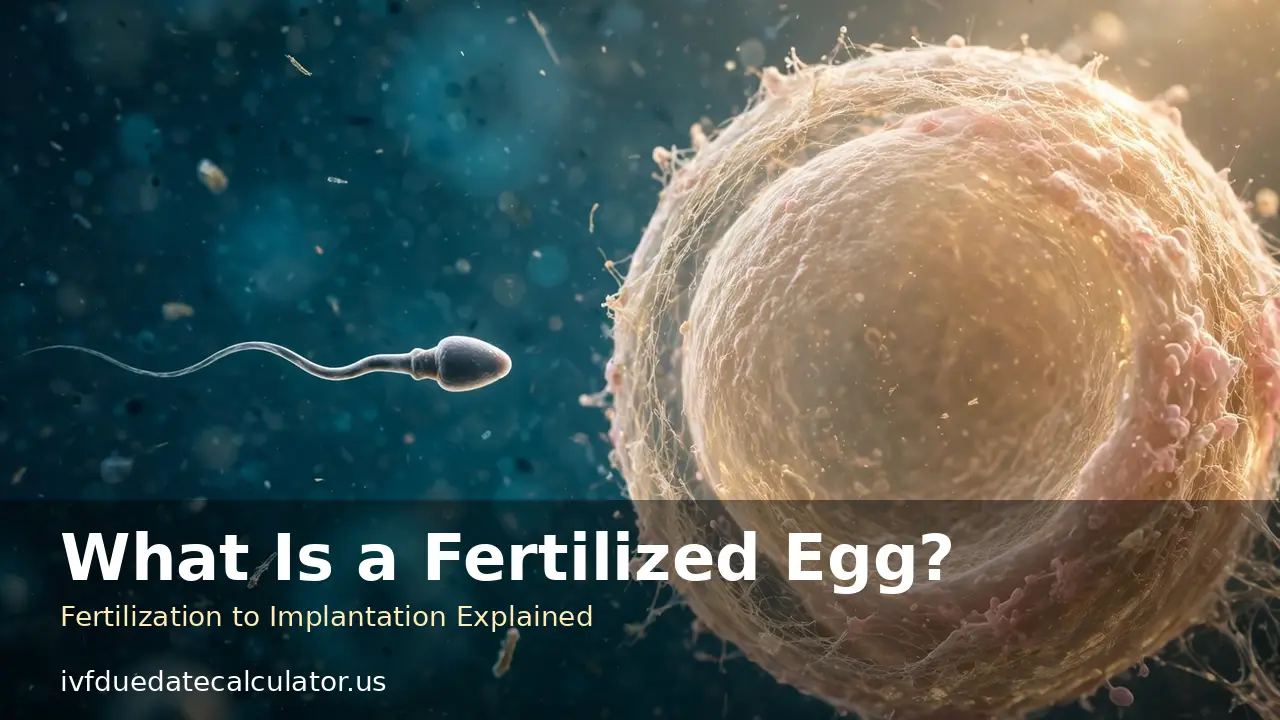
A fertilized egg is a single cell called a zygote — the very first cell of a potential pregnancy. It forms when one sperm penetrates a mature egg, usually in a fallopian tube, and the genetic material from both parents joins together. That one cell carries 46 chromosomes, 23 from the egg and 23 from the sperm, and within about a week it divides again and again, travels to the uterus, and — if all goes well — implants in the uterine lining. This guide explains what a fertilized egg is, how fertilization happens step by step, the journey from zygote to blastocyst, when implantation happens, and what it all means if you are trying to conceive or going through IVF.
Table of Contents
What Is a Fertilized Egg?
A fertilized egg is an egg cell that has been penetrated by a sperm cell. Before fertilization, the egg (ovum) carries 23 chromosomes and the sperm carries 23 chromosomes. When they join, the result is a single diploid cell with 46 chromosomes — a complete set of genetic instructions for a new human being. That is why a fertilized egg is not just an egg anymore: it is the earliest stage of a developing embryo.
Fertilization almost always happens in a fallopian tube, most often in its widest part, called the ampulla. The egg is only able to be fertilized for about 12 to 24 hours after ovulation, which is why timing matters so much when you are trying to conceive. Sperm, on the other hand, can survive in the reproductive tract for about 3 days, so intercourse in the days leading up to ovulation can still result in fertilization.
It is worth being precise about one thing: a fertilized egg is not yet a pregnancy in the medical sense. Pregnancy is generally considered to begin at implantation, when the developing blastocyst attaches to the uterine lining and starts producing the hormone hCG. Fertilization is the first step — implantation is what makes it a clinical pregnancy. For the medical detail behind this article, see the MSD Manual’s guide to fertilization and development of the embryo
What Is a Fertilized Egg Called?
Once an egg is fertilized, its proper scientific name is a zygote. You may also see the term “fertilized ovum” in medical textbooks — it means the same thing. The name changes as the cell develops:
- Zygote: the single cell formed at fertilization, present for roughly the first day.
- Morula: a solid ball of about 16 cells, reached around day 3 to 4 after fertilization.
- Blastocyst: a hollow ball of roughly 100 cells, reached around day 5 to 6, with an inner cell mass that becomes the embryo and an outer layer that becomes the placenta.
- Embryo: the name used from implantation until about 8 weeks after fertilization.
So when people ask “what is a fertilized egg called,” the short answer is a zygote — and the longer answer is that the name keeps changing as it grows. Our ovulation calculator can help you work out when ovulation, and therefore fertilization, is most likely to happen in your cycle.
How Does Fertilization Happen? Step by Step
Fertilization is a quiet, cellular process — you cannot feel it happening. It unfolds in five steps:
Step 1: Ovulation. About once a month, an ovary releases a mature egg. The finger-like ends of the nearby fallopian tube, called fimbriae, sweep the egg into the tube.
Step 2: The sperm’s journey. Millions of sperm are released during ejaculation, but only a few hundred reach the fallopian tube. They swim through the cervix and uterus, a journey that takes minutes to hours.
Step 3: Penetration. One sperm breaks through the egg’s outer layers using enzymes in its head. The moment it enters, the egg triggers a reaction that blocks every other sperm — so only one sperm ever fertilizes an egg.
Step 4: Fusion. The sperm’s nucleus and the egg’s nucleus merge, combining their 23 chromosomes each into a single set of 46. The sex of the future baby is set at this moment: an X-carrying sperm makes a girl (XX), a Y-carrying sperm makes a boy (XY).
Step 5: Division begins. Within about 30 hours of fertilization, the zygote divides for the first time — one cell becomes two, then four, then eight — while it slowly travels down the fallopian tube toward the uterus. This rapid division without growth is called cleavage.
For a fuller picture of the cycle around these events, see our guide on how to get pregnant, which covers timing and the fertile window in detail.
The Fertilized Egg’s Journey: Zygote to Blastocyst
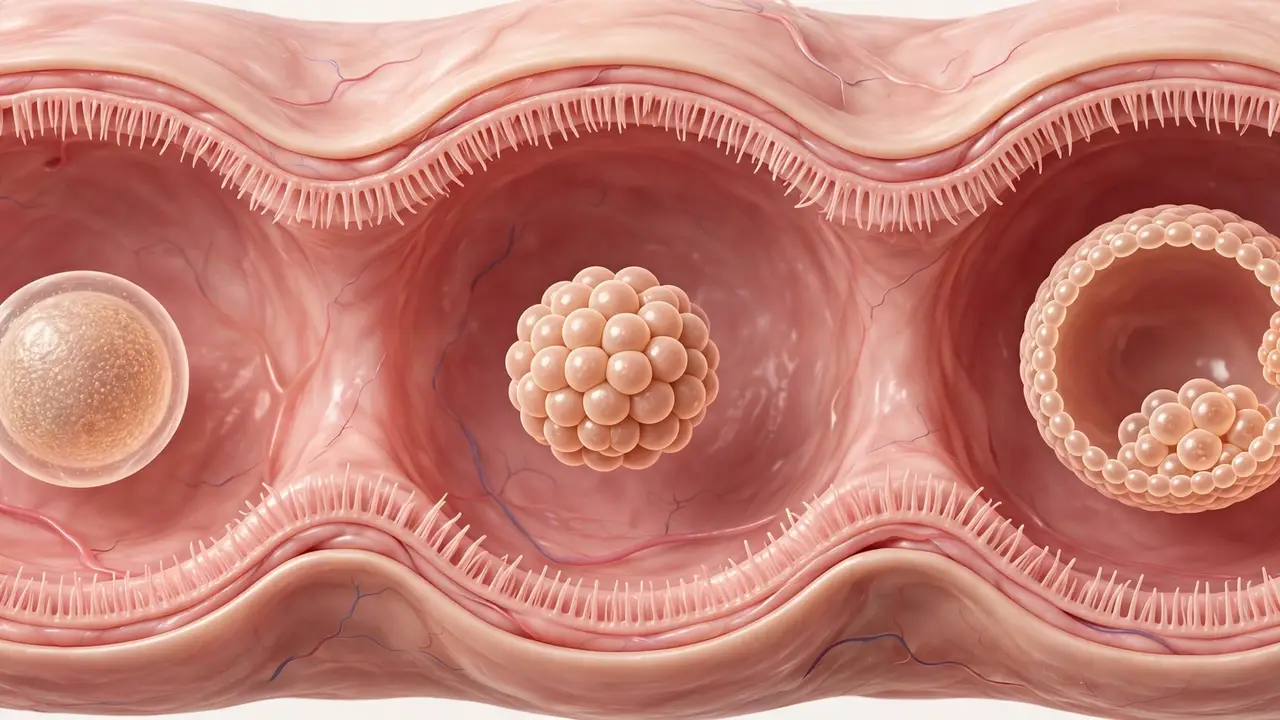
After fertilization, the developing embryo travels and transforms over about a week. Here is the timeline, day by day:
| Day after fertilization | Stage | What happens |
|---|---|---|
| Day 0 | Fertilization | One sperm enters the egg in the fallopian tube; the zygote forms with 46 chromosomes. |
| About 30 hours | First division | The zygote divides into 2 cells, then 4, then 8, while moving toward the uterus. |
| Day 3–4 | Morula | A solid ball of about 16 cells reaches the uterus. |
| Day 5–6 | Blastocyst | A hollow ball of about 100 cells forms; the inner cell mass will become the embryo, the outer layer will become the placenta. |
| Day 6–10 | Implantation | The blastocyst attaches to the uterine lining and begins producing hCG. |
The whole structure stays roughly the same size as the original egg during this first week — it is dividing, not growing. Growth in size only begins in earnest after implantation, once the embryo connects to the mother’s blood supply.
Implantation: When the Fertilized Egg Attaches
Implantation is the moment a fertilized egg becomes a pregnancy. About 6 to 10 days after fertilization, the blastocyst reaches the uterus and embeds itself in the endometrium, the lining of the uterus. The outer layer of the blastocyst, called the trophoblast, does the work of burrowing in and eventually forms the placenta.
Once implantation happens, the trophoblast begins producing human chorionic gonadotropin (hCG) — the hormone that pregnancy tests detect. That is why a pregnancy test cannot turn positive the day after fertilization: there is simply no hCG yet. Some people notice light spotting or mild cramping as the blastocyst attaches, known as implantation bleeding, but many notice nothing at all.
Not every fertilized egg implants. In fact, a large share of fertilized eggs never attach — often because of chromosomal errors — and the cycle simply continues with a normal or slightly late period. If you want to work out your own implantation window, our implantation date calculator can estimate it from your ovulation, transfer, or IUI date. And if you do notice spotting around this time, our implantation bleeding guide explains what is normal and what is not.
Fertilized Egg vs Embryo vs Fetus: What’s the Difference?
These three words describe the same developing baby at different stages — they are often mixed up, so here is the clear distinction:
| Term | When | What it means |
|---|---|---|
| Zygote / fertilized egg | Fertilization to about day 1 | A single cell with 46 chromosomes, formed when sperm meets egg. |
| Morula | Days 3–4 | A solid ball of about 16 cells. |
| Blastocyst | Days 5–6 | A hollow ball of about 100 cells, ready to implant. |
| Embryo | Implantation to about 8 weeks after fertilization | The developing baby once implanted; all major organs form during this period. |
| Fetus | From about 9 weeks after fertilization until birth | The stage after the embryonic period, when growth and maturation take over. |
In IVF, you will hear “embryo” most often, because by the time embryos are transferred — usually on day 3 or day 5 — they have already passed the zygote stage. Our embryo grading guide explains what those day-5 blastocyst grades actually mean.
Can You Feel When an Egg Is Fertilized?
No — fertilization itself has no symptoms. It happens at a cellular level inside a fallopian tube, and there is nothing to feel. Claims about feeling a “pinch” or a “twinge” at the moment of fertilization are myths; what some people feel days later is more likely ovulation pain or, around a week later, implantation cramping.
The earliest real signs appear only after implantation, when hCG starts rising — and even then they are subtle: light spotting, mild cramps, breast tenderness, or fatigue. Our guide to the early signs of pregnancy covers these in detail. If you are in the two-week wait after an embryo transfer, our day-by-day guide explains what to expect and what not to worry about.
What Happens If a Fertilized Egg Does Not Implant?
A fertilized egg that does not implant simply stops developing and is shed with the uterine lining when your period arrives. This is very common and usually passes unnoticed — your period may come on time or a day or two late, with no way to know fertilization ever happened.
The most common reason is a chromosomal abnormality in the embryo: the cells do not divide normally, and the blastocyst cannot attach. Other factors include a uterine lining that is not ready, hormonal issues, or structural problems in the uterus. A single failed implantation is not a sign of infertility — it happens in many healthy, fertile cycles. Repeated implantation failure, however, is something to discuss with a fertility specialist, who can investigate the lining, hormones, and embryo quality.
In IVF, the same thing can happen after a transfer: a good-looking embryo may not implant, and the cycle ends with a negative test. Our guide on periods after a failed IVF cycle explains what to expect next.
Fertilized Eggs in IVF: How Fertilization Works in the Lab
In IVF, fertilization happens outside the body, in a laboratory dish — and that gives the embryology team a front-row view of exactly what happens to each fertilized egg.
After egg retrieval, mature eggs are combined with sperm in one of two ways. In conventional IVF, eggs and sperm are placed together in a dish and fertilization happens naturally. In ICSI (intracytoplasmic sperm injection), a single sperm is injected directly into each egg — this is used when sperm count, motility, or shape is a concern, or after previous fertilization failure.
The next morning, about 16 to 18 hours later, the embryologist checks each egg for two pronuclei — one from the egg and one from the sperm — the visible proof that fertilization happened. Normally, around 70 to 80 percent of mature eggs fertilize. The fertilized eggs are then watched day by day: day 2 (4 cells), day 3 (6 to 8 cells), day 5 (blastocyst). Only the strongest reach blastocyst stage and are chosen for transfer or freezing.
If you are planning IVF, our IVF treatment calendar walks through the whole timeline from stimulation to transfer day. And if you have already had a transfer, our IVF due date calculator can estimate your due date from your transfer date.
When Can You Take a Pregnancy Test After Fertilization?

Because hCG is only produced after implantation, the earliest a test can work is about 10 to 14 days after ovulation — roughly the day your period is due. Testing earlier often gives a false negative, even if fertilization and implantation both happened, because hCG has not risen enough yet.
Blood tests (beta hCG) can detect pregnancy a little earlier than urine tests, usually from about 9 to 10 days after ovulation, but even they need implantation to have happened first. Our guide on when to take a pregnancy test after IVF explains the day-by-day timing for transfer cycles. For a visual explainer of the cycle itself, MedlinePlus has a short ovulation video
Common Myths About Fertilized Eggs
Myth 1: You can feel fertilization happening. False. Fertilization is a microscopic event in a fallopian tube. Any sensations around ovulation are from the egg being released, not fertilized.
Myth 2: A fertilized egg always becomes a baby. False. Many fertilized eggs never implant, and some that implant stop developing very early — sometimes before a period is even missed. This is a normal part of human reproduction, not a failure.
Myth 3: Twins happen when one egg is fertilized by two sperm. False. One egg is fertilized by exactly one sperm. Twins come either from one fertilized egg splitting into two (identical twins) or from two separate eggs each fertilized by its own sperm (fraternal twins).
Myth 4: You can tell if an egg was fertilized by how you feel in the first few days. False. There are no reliable symptoms before implantation. Only a pregnancy test after implantation — or a blood test — can confirm it.
Frequently Asked Questions (FAQs)
What is a fertilized egg called?
A fertilized egg is called a zygote. It is a single cell with 46 chromosomes, formed when one sperm penetrates an egg. As it divides it becomes a morula (around day 3), then a blastocyst (around day 5), and after implantation it is called an embryo.
How long does it take for a fertilized egg to implant?
About 6 to 10 days after fertilization. The fertilized egg divides as it travels down the fallopian tube, becomes a blastocyst around day 5 or 6, and then attaches to the uterine lining. hCG production — and therefore a positive pregnancy test — only starts after implantation.
Where does fertilization happen?
Fertilization usually happens in a fallopian tube, most often in its widest section, the ampulla. The egg is picked up by the tube after ovulation, and sperm meet it there. In IVF, fertilization happens in a laboratory dish instead.
Can a fertilized egg be felt?
No. Fertilization has no symptoms and cannot be felt. The earliest possible signs — light spotting or mild cramps — come from implantation, about a week later, and many people feel nothing at all until their period is late.
How long does a fertilized egg live if it does not implant?
A fertilized egg that does not implant stops developing within days and is shed with the uterine lining when your period arrives. This is common and usually passes completely unnoticed.
What is the difference between a fertilized egg and an embryo?
A fertilized egg (zygote) is the single cell formed at fertilization. An embryo is the name used from implantation until about 8 weeks after fertilization, once the cells have organized into a developing baby with forming organs.
How soon after fertilization can a pregnancy test detect pregnancy?
Not until after implantation, about 10 to 14 days after ovulation. Home urine tests are most reliable from the day your period is due; blood tests can detect hCG a few days earlier.
In IVF, how do doctors know an egg was fertilized?
About 16 to 18 hours after eggs and sperm are combined (or after ICSI), the embryologist looks for two pronuclei inside the egg — one from the egg and one from the sperm. Two pronuclei confirm normal fertilization; the fertilized egg is then watched as it divides over the next five days.
By Emily Johnson, Content Writer & Fertility Advocate · Medically reviewed by Dr. Sarah Ahmed, Medical Content Advisor
About the author: Emily Johnson is a Content Writer & Fertility Advocate who covers IVF and fertility treatment topics. Meet the team.
Medical review: This article was medically reviewed by Dr. Sarah Ahmed, Medical Content Advisor, for clinical accuracy. Meet the team.
Medical disclaimer: This article is for informational purposes only and is not medical advice, diagnosis, or treatment. Due dates are estimates, and every pregnancy is different. Always confirm your due date and any testing or treatment decisions with your clinic or healthcare provider.
